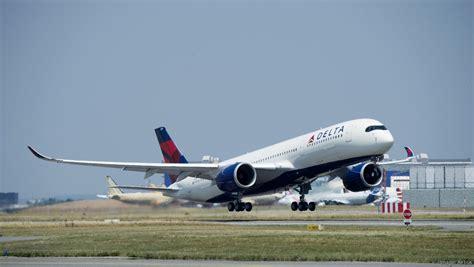
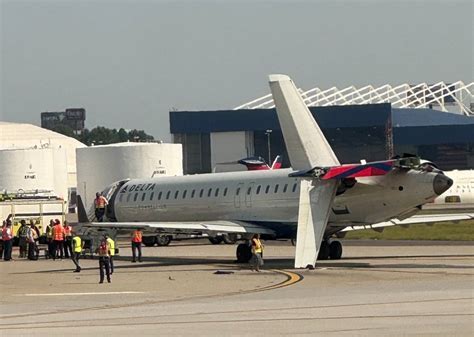
Delta Air Lines experienced significant operational disruption on Thursday after its regional subsidiary, Endeavor Air, abruptly grounded 45 CRJ-900 regional jets for urgent inspections. The sudden withdrawal of these aircraft from service, specifically to assess their onboard Wi-Fi systems, led to dozens of flight cancellations and created a ripple effect throughout the airline’s domestic network.
The action, which began late Thursday afternoon, forced Delta to cancel as many as 75 flights by 9:30 p.m. EDT, and projections initially estimated that the number could reach 150 cancellations before the day ended. The airline later confirmed that disruptions would likely extend into Friday, with nearly three dozen Friday departures already pulled from the schedule.
Immediate Operational Impact and Delta’s Response
In an official statement, Delta acknowledged the sweeping impact of the grounding: “We apologize to customers whose Delta Connection flights, operated by our regional partner Endeavor Air, were disrupted Thursday.” The airline further noted that its customer service teams are actively working to rebook travelers and provide alternative accommodations, including vouchers and overnight stays where needed.
Importantly, Delta emphasized that the issue prompting these inspections was not related to flight safety. Instead, the inspections were prompted by concerns surrounding the aircraft’s in-flight connectivity systems, which are often integrated into other avionics and cabin electronics. While technical in nature, the disruption underscored how even non-critical systems can cause significant operational strain when multiple aircraft are affected simultaneously.
Strategic Significance of Endeavor Air to Delta’s Regional Network
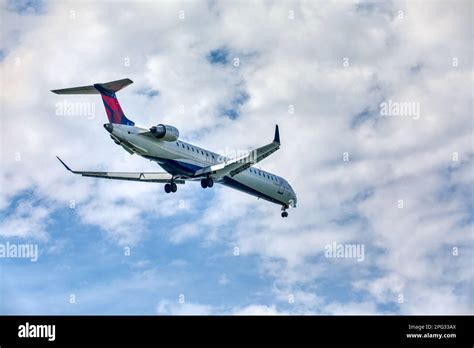
Endeavor Air, a wholly owned subsidiary of Delta, plays a critical role in maintaining connectivity between smaller regional markets and Delta’s major hubs, particularly those located in the Midwest and East Coast. Operating exclusively for Delta under the Delta Connection brand, Endeavor’s fleet of Bombardier CRJ-900 aircraft is heavily concentrated in high-frequency routes linked to Hartsfield-Jackson Atlanta International Airport (ATL) and other key airports such as Detroit (DTW), Minneapolis-St. Paul (MSP), and New York’s LaGuardia (LGA).
With Delta’s entire mainline and regional fleet totaling close to 1,300 aircraft, the grounding of 45 Endeavor jets represented roughly 3% of total operational capacity. While seemingly minor as a fraction, the localized nature of these aircraft to short-haul and high-frequency routes meant that a disproportionate number of customers felt the impact in specific geographic corridors.
Technical Inspections Focused on Wi-Fi Infrastructure
Although Delta has not disclosed the precise reason for the abrupt inspections, sources familiar with regional airline operations suggest the issue may be related to equipment compatibility or interference concerns involving Gogo’s 2Ku satellite Wi-Fi systems or onboard antennae installations. Since aircraft certification and modification compliance fall under FAA oversight, even small anomalies can trigger fleet-wide inspections, particularly if multiple aircraft exhibit similar irregularities.
Delta’s fast response to ground the jets voluntarily suggests that the airline acted out of an abundance of caution, aiming to resolve the issue proactively before any regulatory intervention. Such action is consistent with the airline’s reputation for operational discipline, though the resulting disruption remains a reminder of the fragility of integrated airline systems.
Customer Impact and Compensation Policies
Delta has stated that it is assisting affected passengers through rebooking channels, hotel accommodations, and transport vouchers. Moreover, travelers whose flights were canceled are eligible for full refunds if they choose not to be rebooked, in accordance with U.S. Department of Transportation regulations.
This is a key distinction in U.S. air travel policy: when cancellations arise from issues within the airline’s control—such as mechanical inspections, crew scheduling, or software malfunctions—airlines are expected to provide not only rebookings but also measurable compensation. Delta has indicated it is honoring this responsibility, working to minimize inconvenience where possible.
Broader Context: Reliance on Regional Operations
The incident underscores the extent to which major U.S. carriers depend on regional subsidiaries to maintain a dense domestic network. While the Delta mainline fleet serves long-haul and higher-capacity routes, regional partners like Endeavor fill critical gaps, operating smaller jets in lower-demand markets that still require frequent service. This model enables Delta to maintain its presence in a wide array of destinations without compromising cost efficiency.
However, the model also exposes vulnerabilities. When a single regional partner experiences an operational issue, the disruption can spread quickly across the entire route structure, particularly during peak travel times or in weather-sensitive geographies.
Flight Safety and Communication Strategy
Crucially, Delta has maintained a clear and proactive communication strategy, emphasizing that there is no flight safety concern associated with the grounded jets. This distinction is vital not just for public perception but for regulatory transparency. By distinguishing this as a technical systems inspection, rather than a mechanical or structural issue, Delta helps maintain customer confidence during a sensitive operational period.
Additionally, the airline’s fast response—grounding aircraft before any potential incident—demonstrates a preemptive safety culture, one that values predictive maintenance and technical accountability. In an era where customer trust is often shaken by communication missteps or delayed responses, Delta’s swift public acknowledgment, combined with direct customer outreach, mitigated reputational damage to some degree.
Looking Ahead: Operational Recovery and Lessons
As of Friday morning, Endeavor’s Technical Operations teams were still working to return the affected CRJ-900s to service. It remains unclear how long the inspections will take or whether any aircraft will require retrofits or further modifications. However, the airline’s maintenance crews, often unsung in the commercial aviation process, are now on the front lines of the recovery process.
The timing of the incident—at the start of the summer travel season—adds complexity. June through August represents one of the busiest periods for U.S. domestic travel, and any systemic strain, even localized, can lead to scheduling ripple effects, crew displacement, and hub bottlenecks.
Conclusion: A Cautionary Tale in Airline Systems Management
While Thursday’s grounding may fade from headlines in days, it will likely remain a case study in how minor systems issues can escalate when they affect multiple aircraft types at once. For Delta, the experience highlights the importance of robust systems auditing, real-time fleet monitoring, and fleet-specific contingency planning.
More broadly, for travelers and industry analysts alike, the event reaffirms the essential truth that aviation reliability is not just about engines and wings, but increasingly about the technology that connects passengers, crew, and infrastructure. Whether it’s Wi-Fi antennas or embedded software, every component now plays a part in keeping modern fleets flying on time.
As Delta moves to restore its CRJ-900 fleet to full operational status, the airline’s handling of this incident will be watched closely—not only by passengers but also by regulators and industry competitors seeking lessons in crisis containment and service resilience.