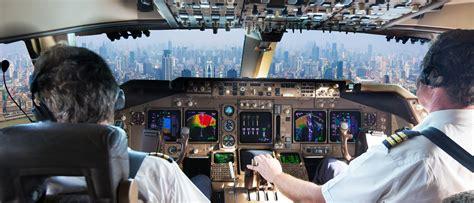
Passengers aboard two unrelated commercial flights experienced moments of acute uncertainty within days of each other, as cockpit medical emergencies forced urgent interventions high above the ground. What unfolded on a Jet2 Airbus A321neo over the Atlantic and a Delta Connection regional jet over the American Midwest was not just a test of nerves—but a powerful demonstration of aviation’s deeply embedded safety systems under real-world pressure.
Mid-Air Crisis Over the Atlantic: Jet2 Flight LS1266 Diverts to Porto
The first incident began quietly before escalating into a full-scale in-flight emergency. Jet2 flight LS1266 had departed Tenerife South Airport bound for Birmingham, cruising steadily at 35,000 feet when the situation inside the cockpit abruptly changed. Without warning to passengers, the captain reportedly suffered a serious medical event, later suspected to be a heart attack.
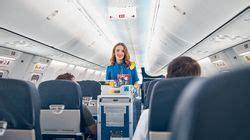
For those seated in the cabin, the first sign of trouble came not from turbulence or alarms, but from urgency in human voices. Cabin crew moved swiftly through the aisles, asking a question rarely heard outside of films: was there a doctor onboard?
The shift in atmosphere was immediate. What had been a routine holiday flight transformed into a tense and uncertain situation, as passengers realized the severity of what was unfolding behind the cockpit door. The responsibility for the aircraft fell entirely to the first officer, who now had to manage navigation, communication, and decision-making alone.

Flight tracking data later revealed a decisive change in course. The aircraft diverted south toward Porto, Portugal, descending from cruising altitude in a controlled but urgent maneuver. The choice of Francisco de Sá Carneiro Airport was strategic—close enough for rapid landing, equipped for emergency response, and capable of handling a narrowbody jet without delay.
Despite the gravity of the situation, passengers described the landing as remarkably smooth. The calm execution reflected the first officer’s training and composure, supported by coordinated communication with air traffic control and the disciplined actions of the cabin crew.
Emergency medical teams were already waiting on the ground. The captain was removed from the aircraft alive and transferred immediately to a hospital for treatment. Behind the scenes, Jet2 initiated contingency protocols, arranging a replacement crew to resume the journey after several hours on the ground.
High-Stakes Emergency During Approach: Delta Connection Flight DL5827
Just days later, a second incident unfolded under even more demanding conditions. Delta Connection flight DL5827, operated by a Bombardier CRJ-900, was on approach to Cedar Rapids after departing Detroit when one of the pilots became incapacitated.
Unlike the Jet2 emergency, which occurred during the relatively stable cruise phase, this incident struck at one of the most critical points in flight. The approach phase is a compressed window of intense workload, where pilots must simultaneously manage aircraft configuration, descent profiles, communication with air traffic control, weather conditions, and traffic separation.
The sudden loss of a pilot during this phase introduces immediate complexity. There is no buffer, no extended time to assess the situation. Every decision must be made in real time.
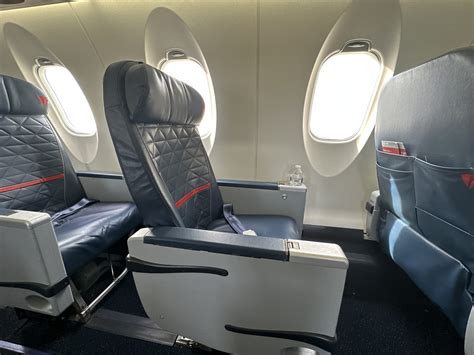
Air traffic control recordings captured the urgency in the cockpit. The remaining pilot declared an emergency and requested priority landing clearance into Cedar Rapids. Controllers responded instantly, clearing airspace and ensuring a direct path to the runway.
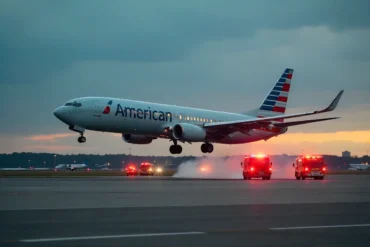
Despite the pressure, the aircraft touched down safely. Many passengers were unaware of the full extent of the emergency until they saw emergency vehicles surrounding the aircraft upon arrival at the gate. The incapacitated pilot was conscious and transported for medical evaluation, while passengers disembarked without injury.
Inside the Cockpit: What Happens When a Pilot Goes Down
To the untrained observer, the idea of a single pilot handling a commercial aircraft mid-crisis might seem alarming. In reality, modern aviation is designed precisely for such contingencies.
Commercial pilots undergo rigorous simulator training that repeatedly exposes them to pilot incapacitation scenarios. These simulations cover every phase of flight—takeoff, cruise, and landing—ensuring that pilots can seamlessly transition to single-pilot operations when necessary.
Aircraft systems themselves are engineered to support this redundancy. Advanced autopilot functions can maintain stable flight paths, manage altitude and speed, and assist with navigation, reducing workload at critical moments. This allows the remaining pilot to focus on communication and decision-making rather than manual control alone.
Equally important is the role of cabin crew. Their responsibilities extend far beyond passenger service. In emergencies, they act as critical links between cockpit and cabin, managing passenger safety, coordinating medical assistance, and maintaining order under pressure.
Passenger Experience: When Routine Turns Into Reality
For passengers, these events are anything but routine. The psychological shift from normalcy to emergency can be abrupt and disorienting. Hearing a call for medical professionals or witnessing unusual cabin activity introduces an element of vulnerability that few anticipate when boarding a flight.
Yet, in both incidents, the professionalism of the crew played a decisive role in maintaining calm. Clear communication, composed behavior, and visible control helped prevent panic from spreading through the cabin.
Passengers later described a mix of fear and admiration—fear of the unknown, but respect for the crew’s ability to manage an extraordinary situation with precision.
Aviation Safety Systems: Designed for the Unexpected
Two pilot incapacitations in such close succession might appear statistically alarming, but within the aviation industry, they reinforce a different narrative: resilience by design.
Safety in commercial aviation is built on layers—redundant systems, cross-trained personnel, standardized procedures, and continuous simulation training. Each layer is intended to compensate for potential failure in another, creating a system that can absorb shocks without catastrophic consequences.
Air traffic controllers, often overlooked in public perception, are also integral to this system. Their ability to rapidly adapt, prioritize distressed aircraft, and provide clear instructions ensures that emergencies are managed not just in the air, but across an entire network.
The Quiet Success Behind the Headlines
In both the Jet2 and Delta Connection incidents, the outcome was the same: safe landings, no passenger injuries, and immediate medical care for the affected pilots. These are not coincidences—they are the result of decades of refinement in aviation safety protocols.
What stands out is not the rarity of such events, but the predictability of their resolution. When something goes wrong, the system responds exactly as intended.
That predictability is the true hallmark of modern aviation. Beneath the surface of every routine flight lies a complex framework designed to handle the unexpected with precision and reliability.
Moments like these pull back the curtain, revealing not fragility, but strength—a system where even in the face of sudden human vulnerability, safety remains firmly in control.