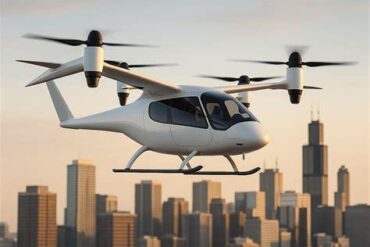
Dubai has just crossed a defining threshold in the future of urban aviation. The city has officially completed the world’s first commercial vertiport, a purpose-built hub designed to support electric vertical take-off and landing aircraft—better known as eVTOL air taxis. This milestone is more than symbolic. It marks the transition of urban air mobility from concept to infrastructure reality, with the United States now rapidly positioning itself as the next battleground for this transformative technology.
Dubai’s Vertiport Signals a New Era of Urban Flight
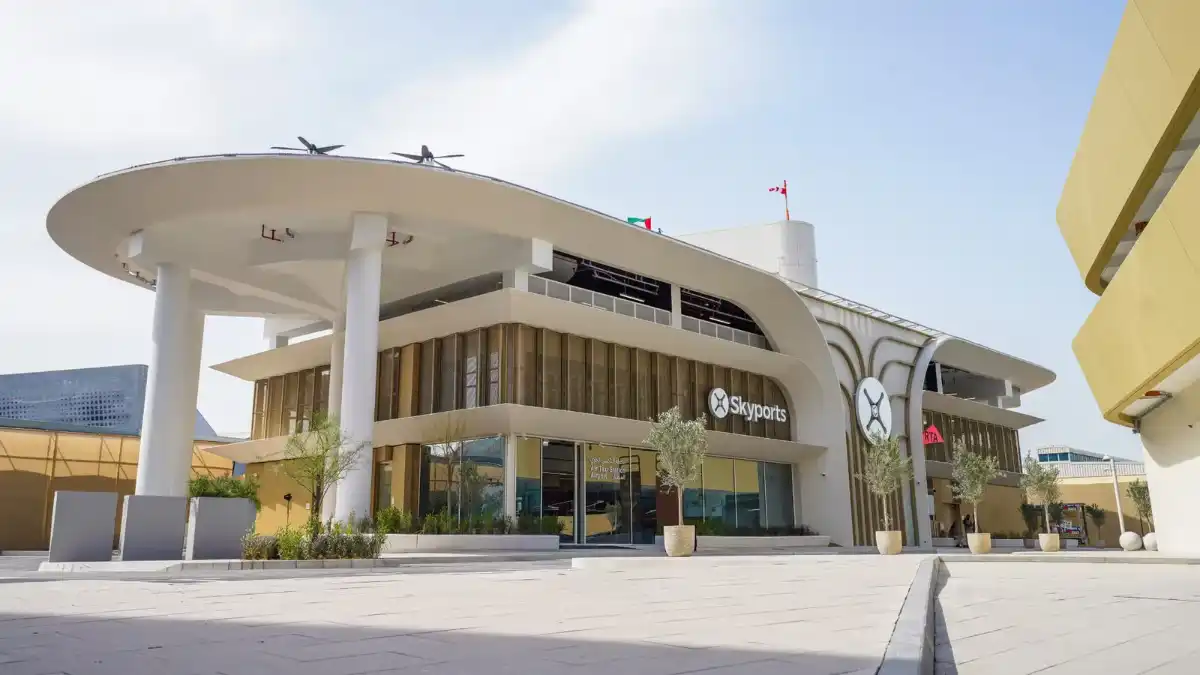
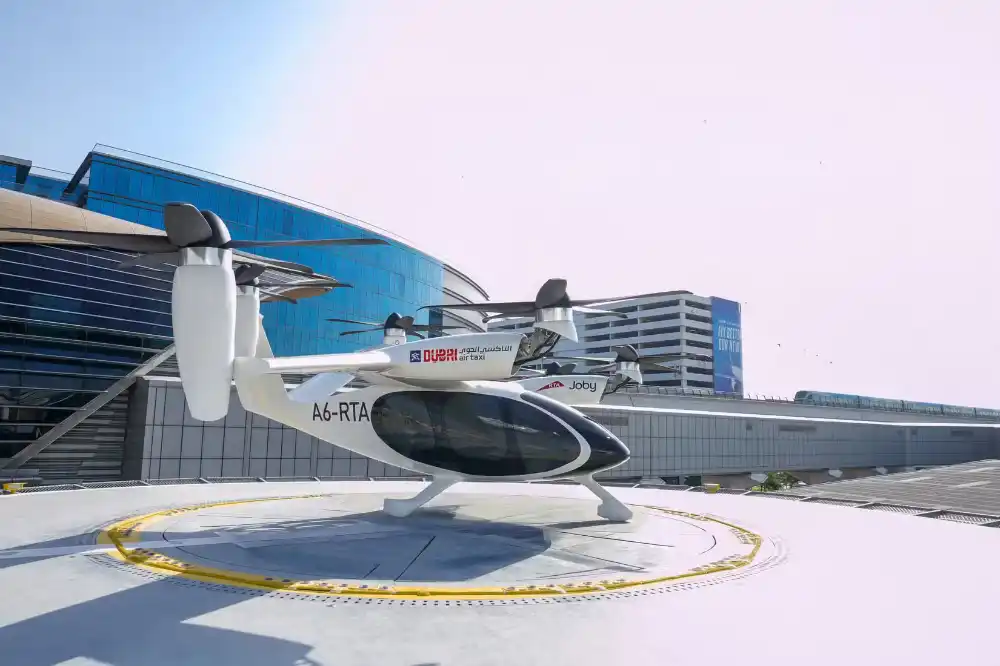
The newly completed facility, developed through a collaboration between Skyports Infrastructure and Dubai’s Roads and Transport Authority, is strategically located near Dubai International Airport. Designed as the flagship hub of the city’s air taxi network, the vertiport spans four floors and integrates seamlessly with existing transportation systems.
Its architecture is purpose-driven. Two dedicated take-off and landing zones enable continuous aircraft movement, while an integrated passenger terminal ensures a streamlined flow from arrival to departure. Unlike traditional heliports, this vertiport is engineered specifically for high-frequency electric aviation, reflecting a future where aerial commuting becomes routine rather than exceptional.
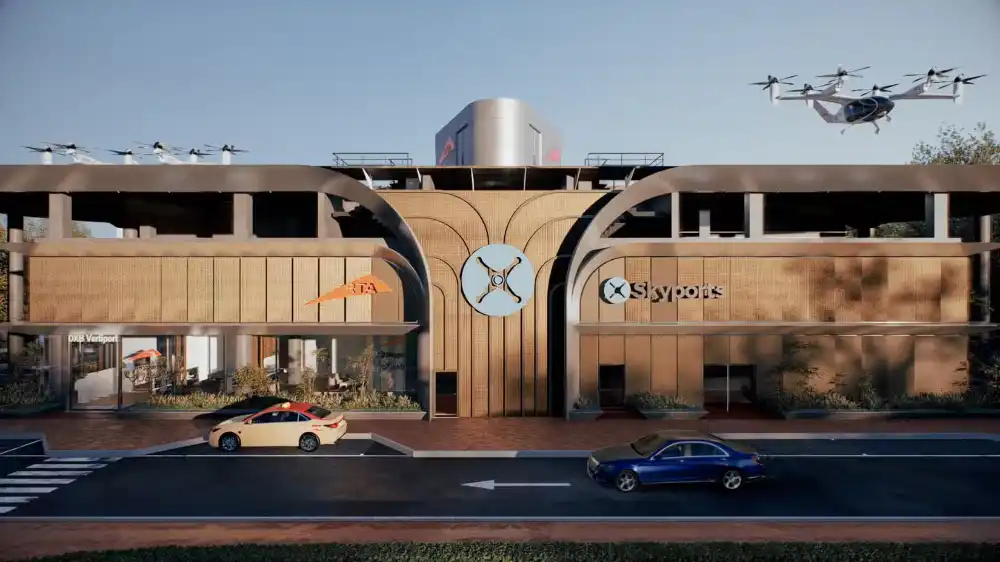
What makes this development particularly significant is its readiness. The facility has reached “technical completion,” meaning it is now capable of handling operational eVTOL flights. This positions Dubai as the first city globally to move beyond pilot projects and into real-world deployment readiness.
Inside the Vertiport: Technology, Scale, and Passenger Experience
At the core of this infrastructure lies a sophisticated blend of aviation technology and passenger-centric design. The vertiport incorporates the Global Electric Aviation Charging System (GEACS), developed by Joby Aviation. This ultra-fast charging solution is critical for maintaining rapid turnaround times, ensuring aircraft can recharge quickly between flights without compromising operational efficiency.
Passenger experience has not been overlooked. The system introduces a fully digital journey, from booking to boarding, via a dedicated mobile platform. Automated check-in processes, minimal waiting times, and premium lounge facilities elevate the experience to rival high-end airport terminals, but on a far more compact and efficient scale.
Capacity projections highlight the ambition behind the project. Once fully operational, the vertiport network is expected to handle up to 170,000 passengers annually, alongside approximately 42,000 aircraft movements. These figures underscore the intent to integrate air taxis into daily urban mobility, rather than positioning them as a niche luxury service.
Connectivity is another defining strength. The vertiport links directly to Dubai’s metro system and major road networks, enabling passengers to transition seamlessly from international flights to intra-city air travel. This multi-modal integration could redefine how cities approach congestion, offering a vertical dimension to urban transport.
A Hybrid Regulatory Framework Unlocks Flexibility
One of the less visible—but equally critical—innovations lies in regulation. The vertiport operates under a hybrid framework developed with the General Civil Aviation Authority. This allows the facility to accommodate both eVTOL aircraft and conventional helicopters, maximizing operational flexibility while maintaining safety standards.
This regulatory adaptability is essential. Urban air mobility exists at the intersection of aviation and city infrastructure, requiring new rules that balance innovation with risk management. Dubai’s approach demonstrates how governments can act as enablers rather than bottlenecks, accelerating deployment timelines without compromising oversight.
The United States Moves to Catch Up
While Dubai leads in infrastructure deployment, the United States is rapidly building momentum on the regulatory and operational front. The Federal Aviation Administration has launched the Advanced Air Mobility and eVTOL Integration Pilot Program (eIPP), selecting multiple proposals across 26 states to test real-world applications of air taxi technology.
This initiative, supported by the U.S. Department of Transportation, is designed to evaluate a wide spectrum of use cases. These range from urban passenger transport to cargo logistics, emergency medical services, and even autonomous flight systems. The breadth of these trials reflects a strategic effort to integrate eVTOLs across multiple sectors, not just commercial travel.
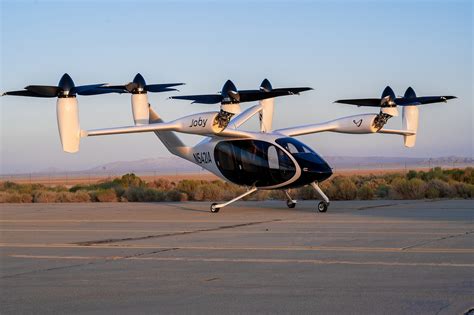
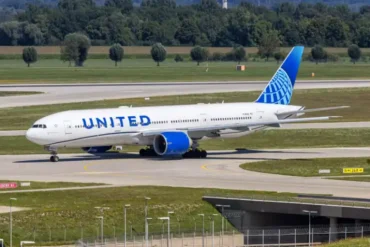
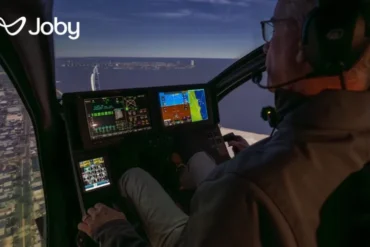
At the same time, Joby Aviation has begun testing its first FAA-conforming aircraft, marking a critical step toward certification. Partnerships are also forming at the airline level, with major carriers exploring how air taxis can complement existing networks, particularly in congested metropolitan areas.
Infrastructure Challenges in Dense Urban Environments
Despite this progress, the U.S. faces a fundamentally different challenge compared to Dubai: space. American cities, particularly legacy urban centers, often lack the available land required to build entirely new vertiports. This constraint is driving a different strategy—one focused on adapting existing infrastructure.
Rooftops, parking structures, and underutilized airport facilities are being evaluated as संभावable vertiport locations. While this approach reduces construction costs and accelerates deployment, it introduces complexity in design, safety compliance, and integration with existing airspace.
The contrast is stark. Dubai benefits from centralized planning and rapid execution, while the U.S. must navigate fragmented urban landscapes and layered regulatory environments. Yet this very complexity could ultimately lead to more adaptable and scalable solutions.
Why the Race for Air Taxi Dominance Matters
The emergence of vertiports is not just about convenience—it represents a structural shift in transportation. By enabling point-to-point aerial mobility within cities, eVTOL networks have the potential to dramatically reduce travel times, ease ground congestion, and reshape urban planning.
Dubai’s early lead offers a live blueprint of what a fully integrated air taxi ecosystem can look like. Meanwhile, the United States, with its technological depth and market scale, has the potential to drive mass adoption once regulatory frameworks solidify.
The race is no longer theoretical. Infrastructure is being built, aircraft are being tested, and regulatory pathways are taking shape. The question is no longer if air taxis will become part of everyday life—but which regions will define how that future operates.