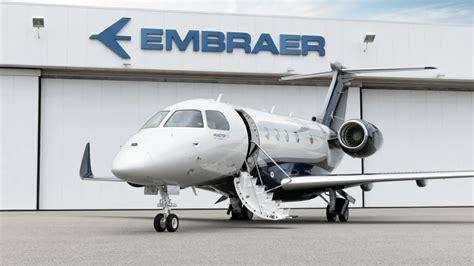
Brazilian aerospace and defense giant Embraer has taken a decisive step toward solidifying its position in the Indian market with the establishment of a new wholly owned subsidiary in AeroCity, New Delhi. This landmark move, announced at the end of May 2025, underscores Embraer’s long-term ambition to become a significant player across India’s aerospace ecosystem, encompassing defense, commercial aviation, business jets, and urban air mobility. The announcement signals more than just a geographic footprint—it’s a clear statement of strategic intent to align with India’s rising aviation demand and defense modernization drive.
India has emerged as a focal point for global aerospace manufacturers, and Embraer’s move is a direct response to both market opportunity and policy alignment. With the Indian government’s continued emphasis on the ‘Make in India’ initiative, which encourages foreign manufacturers to invest locally and boost indigenous manufacturing, Embraer’s on-ground presence lays the groundwork for high-level collaboration. The company’s new operations will go beyond administrative functions, incorporating procurement, engineering, supply chain management, and other specialized functions critical to high-value aerospace production.
Embraer’s Vision: Long-Term Commitment to the Indian Aerospace Sector
Embraer’s president and CEO Francisco Gomes Neto emphasized that India is not just another market—it’s a strategic growth engine. “India is a key market for Embraer, and this expansion demonstrates our unwavering commitment to the country,” said Neto. His remarks are not hollow diplomacy but an indicator of deepening engagement, as the company positions itself to play an integral role in India’s aviation evolution.
India, with its rapidly growing domestic air travel market and robust defense requirements, presents a dual opportunity. On one hand, the civil aviation sector is poised for exponential growth, especially in under-served tier-two and tier-three cities, which lack sufficient air connectivity. On the other hand, the country is aggressively modernizing its defense forces, including the Indian Air Force (IAF) and paramilitary branches.
A Proven Track Record in Indian Skies
While Embraer’s latest corporate move may seem like a new chapter, it builds on a long history of operational success in India. Currently, 50 Embraer aircraft operate across the country, ranging from commercial jets and business aircraft to military platforms. Notably, the IAF and Border Security Force utilize Embraer’s Legacy 600 jets for VIP transport, highlighting the reliability and versatility of the manufacturer’s platforms.

A particularly strategic asset is the Netra Airborne Early Warning and Control (AEW&C) aircraft, based on Embraer’s ERJ-145 platform. These aircraft form a crucial part of India’s surveillance and command infrastructure, offering advanced airborne monitoring capabilities and mission flexibility. The Netra’s success story further validates the platform’s adaptability to India’s defense requirements and terrain complexities.
The C-390 Millennium and India’s MTA Program: A Perfect Match?
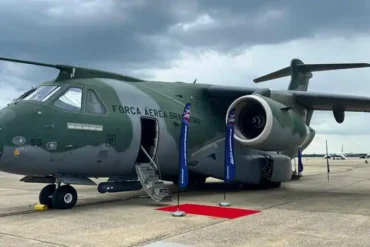
In February 2024, Embraer took another bold step by signing a memorandum of understanding (MoU) with Mahindra Defence Systems. The aim: to evaluate collaborative participation in the IAF’s Medium Transport Aircraft (MTA) program with Embraer’s flagship military transport aircraft—the C-390 Millennium. This move could become a cornerstone for Embraer’s defense strategy in India.
The C-390 Millennium is not just a tactical transporter. Its multirole capabilities allow it to handle a wide range of missions, including:
- Cargo and troop transport
- Medical evacuation (MEDEVAC)
- Search and rescue (SAR)
- Humanitarian aid delivery
- Firefighting
- Air-to-air refueling (as tanker and receiver)
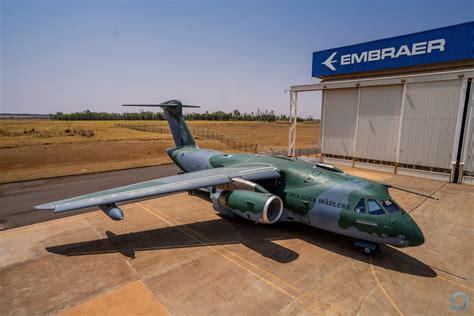
Unlike older platforms, the C-390 offers superior speed, flexibility, and payload capacity. For India, which faces logistical challenges across varied geographies—from the Himalayas to island territories—the C-390 offers a modern, resilient alternative to legacy fleets. The collaboration with Mahindra would also align with Make in India mandates, potentially involving local assembly, component manufacturing, and supply chain partnerships.
Tapping into India’s Civil Aviation Boom
Parallel to its defense strategy, Embraer is eyeing the civil aviation landscape in India, which is undergoing a structural transformation. The government’s push to improve regional air connectivity under the UDAN scheme (Ude Desh ka Aam Naagrik) has spotlighted the untapped potential of smaller cities. Yet, the challenge remains: most runways and terminals in these regions are not suited for large, widebody aircraft.
This is where Embraer’s E-Jets family comes in, particularly the E170, E175, E190, and E195-E2 models. These narrowbody aircraft offer the perfect combination of lower operating costs, short takeoff and landing capabilities, and right-sized capacity. They can bridge the connectivity gap, making regional routes profitable without the need for deep subsidies.
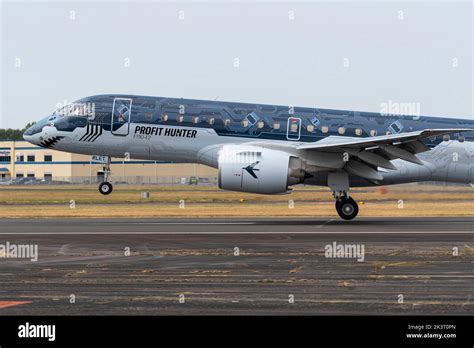
Moreover, Embraer has hinted at enabling Indian carriers to deploy E-Jets on “blue ocean” routes—routes with minimal competition but significant latent demand. By offering aircraft that fit operationally and financially into these markets, Embraer provides a compelling value proposition to low-cost carriers, regional airlines, and start-ups aiming to scale.
Local Talent, Global Strategy: Embraer’s Workforce Plans in India
Beyond products and platforms, Embraer is investing in human capital. The new subsidiary in New Delhi will eventually house teams across corporate, engineering, and technical functions. More importantly, Embraer is setting up specialized verticals that will focus on procurement strategies, supply chain localization, and co-development with Indian partners.
This effort will also contribute to knowledge transfer and capability building. Embraer’s history of successful partnerships globally—with firms in Brazil, Portugal, and the UAE—positions it well to integrate into India’s evolving aerospace supply web. This means more than just assembling aircraft; it’s about creating design, engineering, and lifecycle support ecosystems.
Strategic Timing in a Shifting Geopolitical Landscape
Embraer’s Indian expansion comes at a time when global aerospace dynamics are undergoing significant shifts. With increased geopolitical tension, supply chain decoupling, and growing demand for non-Western military equipment alternatives, India finds itself in a unique position. The country seeks diversification of defense imports, looking beyond traditional suppliers to find capable partners who are willing to invest, co-develop, and co-produce.
Brazil, through Embraer, offers an attractive middle path—technologically advanced yet flexible, committed yet not encumbered by geopolitical baggage. This enhances the appeal of Embraer’s platforms in both military and civilian sectors.
Challenges Ahead and Competitive Landscape
Despite these advances, Embraer is not entering a vacuum. India’s aerospace sector is witnessing intense competition from giants like Boeing, Airbus, Lockheed Martin, and Dassault Aviation, all of which have a presence or partnerships within the country. The MTA program, for instance, has attracted interest from other global players, making Embraer’s path to contract acquisition anything but guaranteed.
Moreover, the ability to scale operations, manage local regulatory frameworks, and integrate with Indian suppliers will be key challenges. Success will hinge not just on product quality, but on execution speed, industrial cooperation, and value creation for Indian stakeholders.
Conclusion: A Defining Chapter in Embraer’s Global Playbook
Embraer’s expansion into India represents more than a business decision—it’s a strategic inflection point. By embedding itself deeply within the Indian ecosystem, the company is not only positioning its aircraft for immediate sales but also laying the foundation for multi-decade collaboration. This includes potential joint ventures, defense offset programs, and possibly even R&D centers and assembly lines.
India, for its part, gains access to proven platforms tailored for its unique requirements, along with the industrial depth of a company that has mastered aerospace engineering, military innovation, and commercial aviation integration. If executed well, this partnership could redefine the contours of regional aerospace dynamics, making India not just a market, but a cornerstone in Embraer’s global strategy.