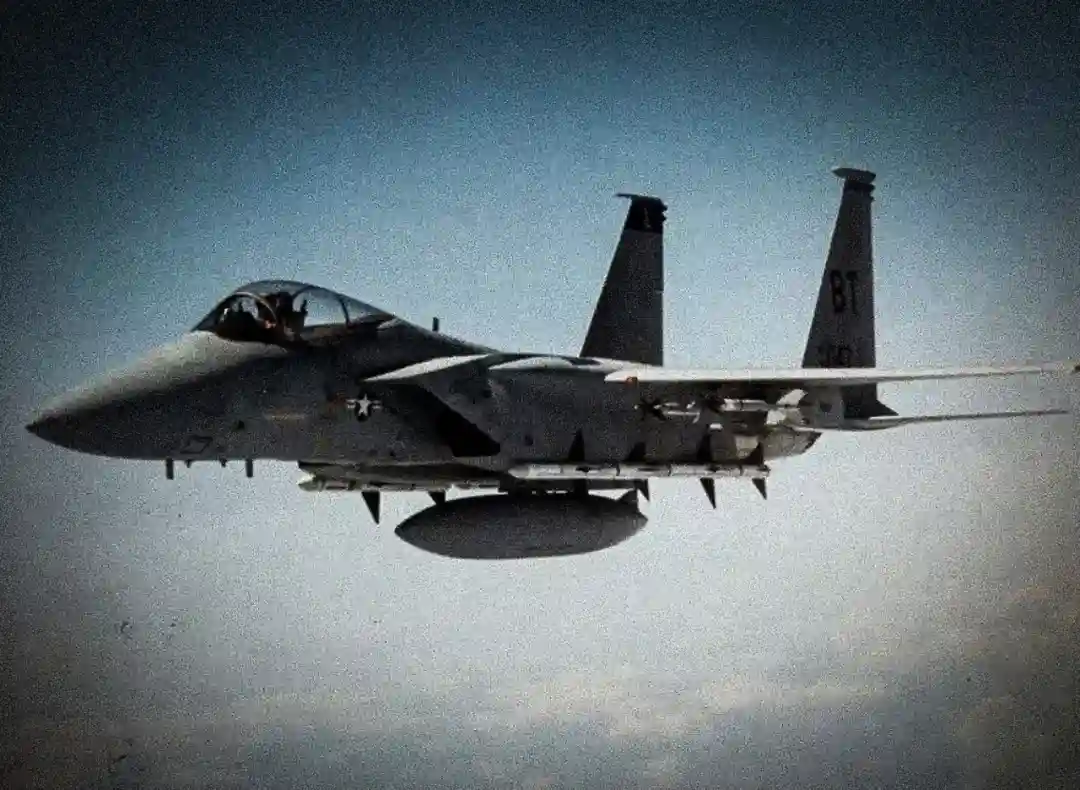
The McDonnell Douglas F-15 Eagle, a twin-engine, all-weather tactical fighter, is renowned for its superior speed, agility, and endurance. One of its key operational advantages is its fuel capacity, which directly impacts its range, mission duration, and combat effectiveness. The fuel system of the F-15 includes internal fuel tanks, conformal fuel tanks (CFTs), and external drop tanks, allowing it to sustain long-range operations without immediate refueling.
Internal Fuel Capacity
The F-15 Eagle features an internal fuel capacity of 6,103 kg (13,442 lbs), approximately 7,850 liters. This fuel is distributed across four fuselage tanks and two wing tanks, ensuring a balanced fuel distribution for optimal aerodynamics.
Internal fuel alone provides the F-15 with an impressive unrefueled operational range, allowing it to execute air superiority missions, interceptions, and patrols without relying on external fuel sources. However, to extend endurance further, the aircraft utilizes external fuel tanks and conformal fuel tanks (CFTs).
External Fuel Options
Conformal Fuel Tanks (CFTs)
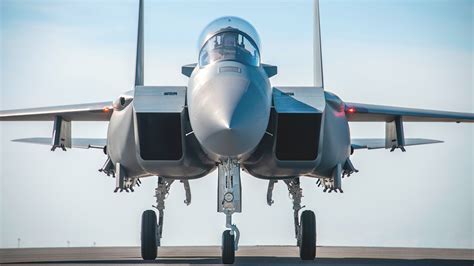
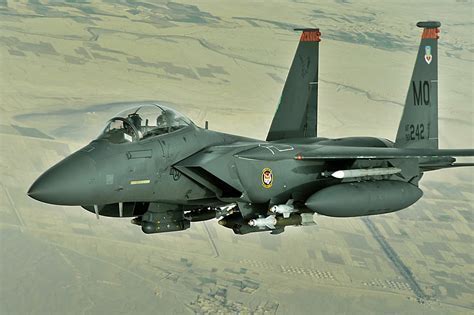
Conformal Fuel Tanks (CFTs) are streamlined, aerodynamically efficient fuel tanks that attach along the fuselage of the F-15C/D and F-15E models. These tanks are designed to increase fuel capacity while minimizing drag and preserving hardpoints for weapon payloads.
- Capacity: Each set of CFTs holds 3,200 liters (2,560 kg or 5,644 lbs) of fuel.
- Aerodynamic Advantage: Unlike traditional drop tanks, CFTs do not significantly increase drag, ensuring that the aircraft retains much of its high-speed maneuverability.
- Combat Utility: Frequently used for long-range interception, deep strike missions, and prolonged air patrols.
External Drop Tanks
For extended range missions, the F-15 can carry up to three external fuel tanks mounted under the fuselage and wings. These tanks are typically 600-gallon (2,300-liter) tanks and provide additional fuel storage without requiring modifications to the aircraft’s structure.
- Total Fuel Load from Drop Tanks: Up to 6,900 kg (15,200 lbs).
- Mission Use: Ideal for ferry missions, extended patrols, and transcontinental deployments.
- Operational Flexibility: Can be jettisoned in combat scenarios to enhance maneuverability and speed.
Total Maximum Fuel Load & Range
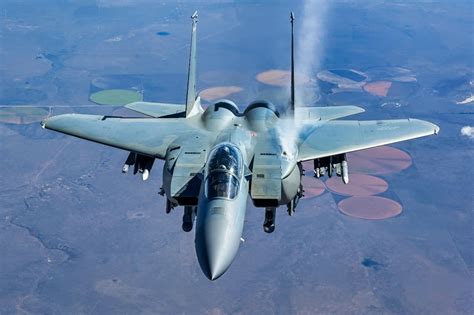
When internal fuel, CFTs, and external drop tanks are fully utilized, the F-15’s total fuel capacity reaches approximately 14,663 kg (32,300 lbs). This configuration enables an unrefueled range of up to 5,745 km (3,570 miles) for F-15C/D models.
This extended range makes the F-15 an ideal platform for deep penetration strikes, prolonged air defense operations, and overseas deployment without immediate aerial refueling.
Model-Specific Variations
F-15E Strike Eagle
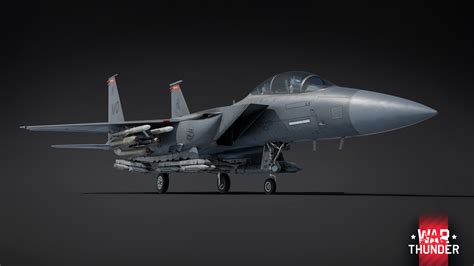
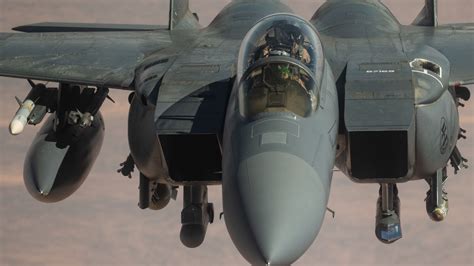
The F-15E Strike Eagle, a variant optimized for ground attack and multi-role operations, has a slightly altered fuel configuration due to additional avionics and weapon systems.
- Baseline Range: 4,445 km (2,762 miles) without CFTs.
- Extended Range: Significantly increases with CFTs and external drop tanks, allowing deep penetration strike missions without tanker support.
- Fuel vs. Payload Balance: The Strike Eagle sacrifices some fuel capacity for a greater weapons payload compared to the air superiority-focused F-15C/D models.
F-15EX Advanced Eagle
The latest variant, the F-15EX, retains the legacy fuel system but incorporates advanced fuel management software. This allows for:
- Improved Fuel Efficiency: More optimized fuel burn rates for extended loiter time.
- Enhanced Combat Radius: Despite carrying modern weapons and avionics, the F-15EX maintains a range comparable to the F-15E.
- Refueling Compatibility: Fully compatible with modern aerial refueling tankers, allowing for near-unlimited operational endurance.
Operational Impact of Fuel Capacity
The F-15 Eagle’s large fuel capacity and advanced fuel management systems have profound operational benefits:
- Extended Air Superiority Missions: During the Gulf War, F-15Cs flew over 5,900 sorties, demonstrating their endurance and fuel efficiency.
- Long-Range Strategic Operations: With external fuel and aerial refueling, the F-15 can conduct deep penetration missions with sustained combat effectiveness.
- Combat Readiness Balance: Pilots often balance fuel load with weapon payload, ensuring an optimal mix for combat endurance and maneuverability.
FAQ: Common Questions About F-15 Fuel Capacity
1. How far can an F-15 fly on a full fuel load?
With its maximum fuel configuration, including internal fuel, CFTs, and external drop tanks, the F-15C/D has an unrefueled range of 5,745 km (3,570 miles). However, aerial refueling significantly extends its endurance beyond this range.
2. Can an F-15 refuel in mid-air?
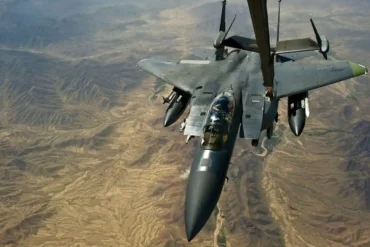
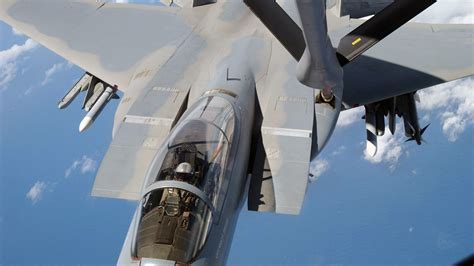
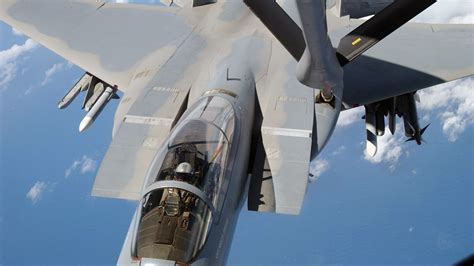
Yes, the F-15 is fully capable of aerial refueling via boom-type refueling systems, allowing it to extend its operational range indefinitely with tanker support.
3. Do all F-15 models use Conformal Fuel Tanks (CFTs)?
No, CFTs are primarily used on F-15C/D and F-15E variants. The F-15EX retains the option but focuses on improved internal fuel efficiency rather than relying solely on CFTs.
The fuel capacity of the F-15 Eagle plays a crucial role in its dominance as a long-range air superiority and multi-role fighter. With its combination of internal fuel storage, external tank options, and aerial refueling compatibility, the F-15 remains a formidable asset in modern air warfare.