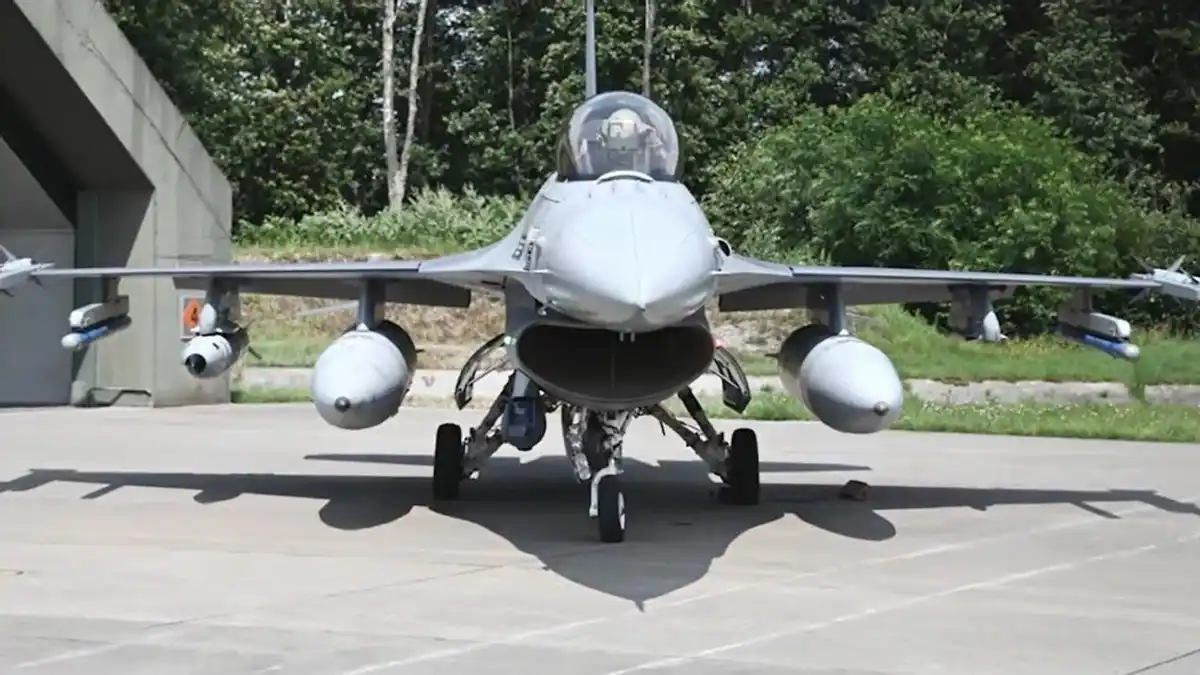
The F-16 Fighting Falcon is one of the most versatile multirole combat aircraft in modern military history. Designed for air superiority, it has also evolved into a formidable strike platform. Its bomb-carrying capabilities range from tactical nuclear weapons to precision-guided munitions, making it a critical asset in both strategic deterrence and combat operations. This article provides an in-depth look at the F-16’s bombing capabilities, including nuclear weapons, precision-guided munitions, stand-off attack weapons, and battlefield applications.
Nuclear Strike Capabilities
The F-16 plays a pivotal role in NATO’s nuclear sharing policy, enabling allied nations to carry out deterrence missions. Among its nuclear armament, the B61 nuclear bomb is the most significant.
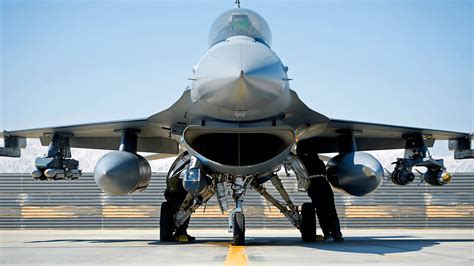
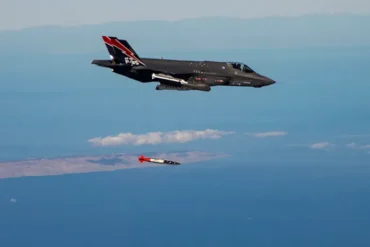
B61-12 Nuclear Bomb
The B61-12 is the latest version of the B61 nuclear bomb, featuring an advanced tail kit that significantly improves targeting precision.
- Guidance System: Precision-guided tail kit
- Yield Options: Variable, from low kilotons to 50 kt
- Deployment History: The Netherlands’ F-16s at Volkel Air Base have been used for training missions involving the B61-12.
Earlier variants, such as the B61-3 and B61-4, were also compatible with the F-16, but the B61-12 upgrade enhances its effectiveness in nuclear deterrence missions.
Precision-Guided Conventional Bombs
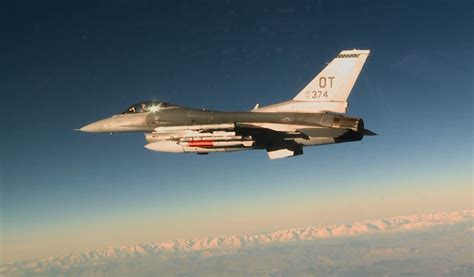
The F-16 is equipped to carry a variety of precision-guided bombs (PGBs), enabling it to execute highly accurate strikes against enemy forces and infrastructure.
JDAM (Joint Direct Attack Munition) Series
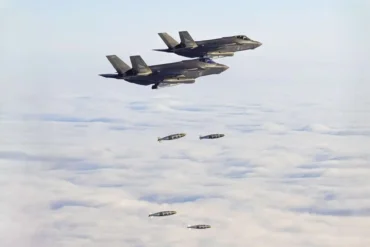
The JDAM system converts conventional bombs into GPS-guided munitions, allowing them to strike within 5 meters of their intended target.
- GBU-38 JDAM (500 lb variant) has been extensively used in Iraq, Afghanistan, and most recently in Ukraine.
- GBU-31 JDAM (2000 lb) delivers heavier payloads for fortified targets.
- Operational Range: Over 24 km when released from high altitudes.
- Historical Use: The US Air Force tested JDAMs on F-16s as early as 2004.
In 2024, Ukrainian F-16s reportedly employed JDAM bombs to strike Russian military facilities in Kursk, demonstrating their battlefield effectiveness.
Paveway Laser-Guided Bombs
The Paveway series is another key component of the F-16’s arsenal, relying on laser guidance for pinpoint accuracy.
- GBU-10 (2000 lb): Used against heavily fortified structures.
- GBU-12 (500 lb): Ideal for low-collateral engagements.
- GBU-24: Designed for bunker penetration.
These bombs offer greater accuracy than free-fall munitions and are particularly effective in environments with GPS jamming threats.
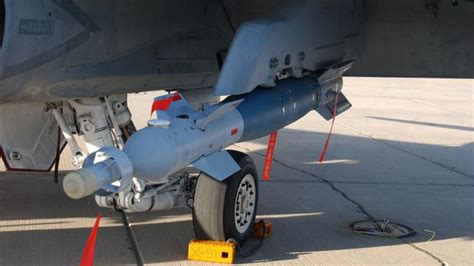
GBU-39 Small Diameter Bomb (SDB)
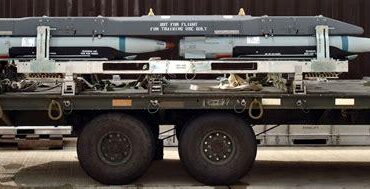
The GBU-39 SDB is a lightweight bomb designed for low collateral damage and high penetration power.
- Weight: 250 lbs
- Penetration: Can breach over 3 feet of reinforced concrete
- Range: Up to 110 km when launched from high altitude
These bombs enable the F-16 to strike dispersed enemy positions with precision, minimizing civilian casualties.
Stand-Off Attack Weapons
For missions requiring long-range strike capability, the F-16 is equipped with stand-off weapons designed to neutralize enemy defenses before reaching the battlefield.
AGM-154 JSOW (Joint Standoff Weapon)
The AGM-154 JSOW is a glide bomb that allows the F-16 to attack ground targets from outside enemy air defenses.
- Range: Up to 130 km
- Guidance: GPS and infrared seeker
- Operational Use: Deployed in Operation Enduring Freedom
This weapon is ideal for hitting high-value targets deep inside enemy territory.
AGM-158 JASSM (Joint Air-to-Surface Standoff Missile)
The AGM-158 JASSM is a stealthy, long-range cruise missile capable of striking targets over 370 km away.
- Low radar signature enhances survivability
- Used in air campaigns against high-threat areas
- Potential deployment for Ukraine’s F-16 fleet
With its combination of stealth and precision, the JASSM allows the F-16 to deliver strikes without entering contested airspace.
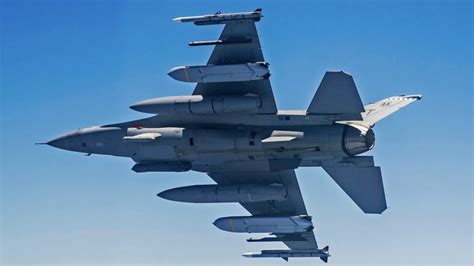
Combat Applications and Tactical Value
Ground Attack Missions
The F-16 has been used extensively in combat operations, demonstrating its effectiveness in precision strikes.
- 1981: Operation Opera – Israeli F-16s destroyed Iraq’s Osirak nuclear reactor in a low-altitude strike.
- 2024: Ukrainian JDAM strikes – Reports suggest F-16s were used to attack Russian air defense sites.
Electronic Warfare and SEAD Missions
The F-16CJ variant specializes in Suppression of Enemy Air Defenses (SEAD) by using the AN/ASQ-213 HARM Targeting System and AGM-88 HARM missiles to disable enemy radar installations.
- Range: 80+ miles
- Operational Role: Neutralizing surface-to-air missile (SAM) sites
These capabilities allow the F-16 to escort strike packages and clear airspace for follow-on attacks.
Future Upgrades and Multi-National Operations
NATO Standardization & Link-16 Integration
To enhance interoperability, NATO allies have upgraded their F-16 fleets with:
- Link-16 data link for real-time targeting
- AESA radar systems for better situational awareness
- Compatibility with AIM-120 AMRAAM air-to-air missiles
Shift Towards F-35, But F-16 Remains Essential
As NATO members transition to the F-35 Lightning II, the F-16’s role will shift primarily to close air support (CAS) and tactical bombing. However, its proven combat reliability ensures that it will remain in service for decades to come.
FAQ
1. What types of bombs can the F-16 carry?
The F-16 can carry a wide variety of bombs, including nuclear bombs (B61 series), precision-guided bombs (JDAM, Paveway, SDB), and stand-off weapons (JSOW, JASSM).
2. Has the F-16 been used in nuclear strike training?
Yes. NATO forces, including the Netherlands, Belgium, and Germany, regularly conduct nuclear strike training missions using B61 nuclear bombs on F-16s.
3. How effective is the F-16 in modern warfare?
Despite its age, the F-16 remains highly effective due to continuous upgrades, making it a key asset in precision bombing, electronic warfare, and air defense suppression.
With its versatile bombing capabilities, the F-16 Fighting Falcon continues to be an indispensable force in modern air combat.