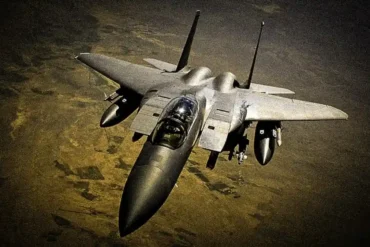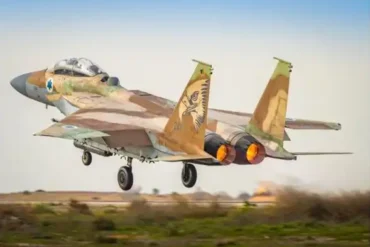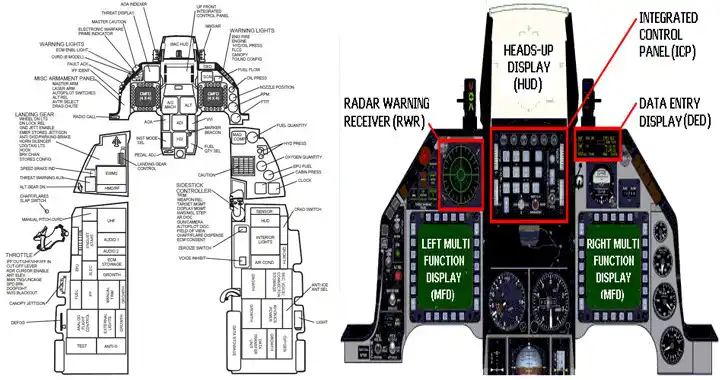
The F-16 Fighting Falcon is renowned for its advanced cockpit layout, designed to optimize pilot control, situational awareness, and operational efficiency. Since its inception, the F-16 cockpit has undergone significant advancements, integrating cutting-edge avionics, ergonomic enhancements, and modernized displays to ensure superior combat effectiveness. This article provides an in-depth examination of the F-16 cockpit, covering its structural design, instrumentation, ergonomic considerations, and technological advancements.
Fundamental Layout and Functional Zones
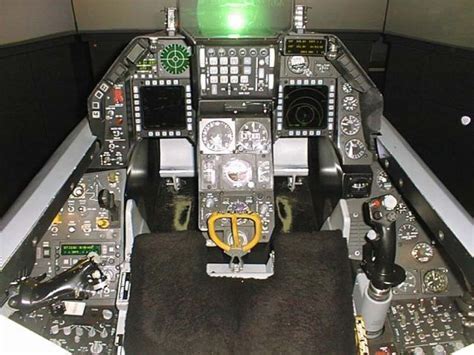
The F-16 cockpit is systematically divided into five functional areas, each serving a specific operational purpose:
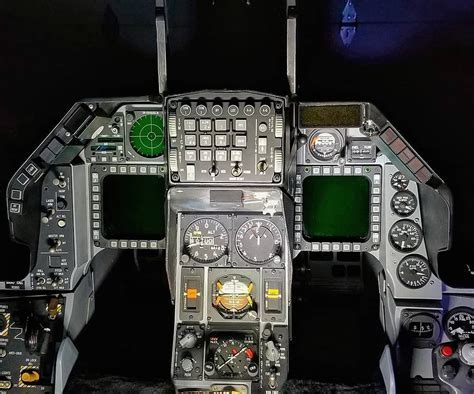
1. Forward Instrument Panel
The forward instrument panel is the primary interface for critical flight and mission data. It houses:
- Primary Flight Display (PFD) – Provides essential flight parameters such as airspeed, altitude, vertical speed, and artificial horizon.
- Integrated Control Panel (ICP) – Used for navigation, target acquisition, and radio frequency management.
- Data Entry Display (DED) – Allows pilots to input mission-specific parameters and receive system alerts.
2. Left and Right Forward Consoles
The forward consoles contain high-frequency operational controls, including:
- Engine monitoring instruments – Displays parameters such as RPM, fuel flow, and temperature.
- Landing gear control – Includes gear position indicators and emergency retraction systems.
- Electronic Warfare (EW) Suite – Manages radar warning receivers, countermeasure dispensers, and threat indicators.
3. Left and Right Side Consoles
The side consoles primarily manage auxiliary systems such as:
- Navigation systems – Includes TACAN, GPS, and INS (Inertial Navigation System).
- Communication panels – Provides access to UHF/VHF radios and secure datalink systems.
- Environmental controls – Regulates cockpit temperature, oxygen flow, and pressurization.
360-Degree Visibility and Seat Ergonomics
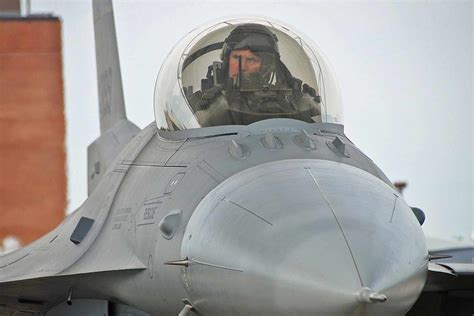
Bubble Canopy for Enhanced Situational Awareness
One of the F-16’s most distinctive features is its single-piece polycarbonate bubble canopy, offering unobstructed 360-degree visibility. The design ensures:
- 40° lateral downward visibility, providing superior ground awareness.
- 15° forward nose-down visibility, crucial for close air support (CAS) missions.
- Reduced structural obstructions, enhancing threat detection in dogfights.
Ergonomic Reclined Seat Design
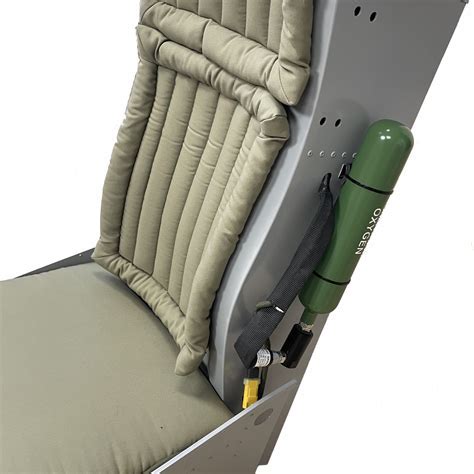
The F-16 cockpit seat is angled at a 30-degree recline, optimizing pilot endurance and high-G tolerance by:
- Reducing gravitational stress, enabling 9G maneuvers.
- Lowering cockpit height requirements, facilitating a more compact fuselage.
- Enhancing pilot comfort, although early models faced neck strain issues, later adjusted to a 20-degree recline for balance.
Hands-On Throttle and Stick (HOTAS) System
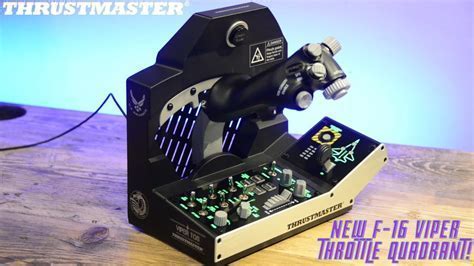
The HOTAS (Hands-On Throttle and Stick) concept in the F-16 integrates all critical combat functions into the throttle and side-stick controls, allowing for seamless operation without removing hands from controls.
Side-Stick Controller
Unlike traditional center-stick designs, the F-16 employs a right-side stick controller, which:
- Enhances cockpit space by eliminating mechanical linkages.
- Improves flight precision with force-sensing inputs instead of large deflections.
- Originated from the YF-16 prototype, designed to accommodate the aircraft’s limited vertical cockpit space.
Throttle Quadrant
Located on the left side console, the throttle integrates:
- Weapon release controls – Ensures rapid response in air-to-air and air-to-ground engagements.
- Radar and targeting functions – Allows control of the fire-control radar, targeting pods, and sensor suite.
- Autopilot and air refueling switches – Streamlines long-duration missions.
Modernization and Block Upgrades
The F-16 has evolved through multiple block upgrades, enhancing its cockpit technology and combat capabilities.
Block 40/42 Enhancements
- Wide-angle Head-Up Display (HUD) – Expands symbology projection for improved targeting accuracy.
- Targeting pod integration – Supports LANTIRN and Sniper ATP for night operations.
- GPS navigation capabilities – Augments inertial systems with precision satellite guidance.
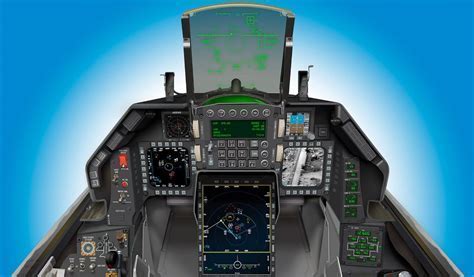
Block 70/72 (F-16V) Advancements
The latest F-16V variant incorporates:
- “One High, Three Low” Display Layout – Features a central color display (CPD) and three multifunction displays (MFDs) for enhanced data presentation and mission flexibility.
- AN/APG-83 AESA Radar – Provides higher-resolution tracking, jamming resistance, and extended range.
- Enhanced avionics with Auto-GCAS (Ground Collision Avoidance System) – Prevents controlled flight into terrain (CFIT) incidents.
- Two-seat coordination (F-16D models) – Enables front-rear cockpit collaboration in training and complex mission scenarios.
Conclusion
The F-16 cockpit layout has evolved significantly, adapting to new mission profiles, avionics advancements, and ergonomic improvements. Its modular design, HOTAS controls, and superior situational awareness ensure it remains one of the most effective multirole fighter aircraft in the world. The continuous evolution of the F-16 Block variants, particularly with the Block 70/72 enhancements, extends the aircraft’s operational viability well into the future.
Frequently Asked Questions (FAQs)
1. How does the F-16 cockpit differ from older fighter jets?
The F-16 cockpit differs by employing a side-stick controller, bubble canopy for superior visibility, and HOTAS system that integrates all critical functions onto the throttle and stick, unlike older aircraft that rely on traditional center-stick and analog instrumentation.
2. What are the key advantages of the F-16’s bubble canopy?
The bubble canopy provides an unobstructed 360-degree view, enhancing situational awareness, target acquisition, and dogfighting capabilities. It eliminates forward canopy frames that obstruct vision in older fighters.
3. What upgrades are included in the F-16 Block 70 cockpit?
The F-16 Block 70 cockpit features a central digital display (CPD), advanced AN/APG-83 AESA radar, improved avionics, and an Auto-GCAS system to enhance mission effectiveness, survivability, and pilot interface.