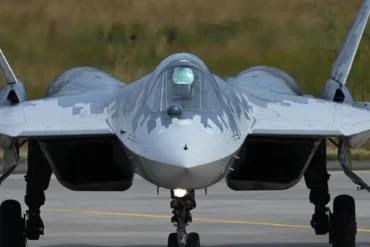
The Lockheed Martin F-22 Raptor, a fifth-generation air superiority fighter, incorporates a groundbreaking approach to deceleration, distinct from traditional airbrakes found on previous-generation aircraft. Instead of relying on a dedicated mechanical airbrake, the F-22 utilizes a sophisticated combination of aerodynamic surfaces and thrust vectoring to achieve effective speed reduction while maintaining its stealth and maneuverability. This innovative design plays a crucial role in ensuring high-speed agility, supercruise capability, and reduced radar signature, setting a benchmark for future stealth fighters.
Aerodynamic Control Surfaces Replacing Traditional Airbrakes
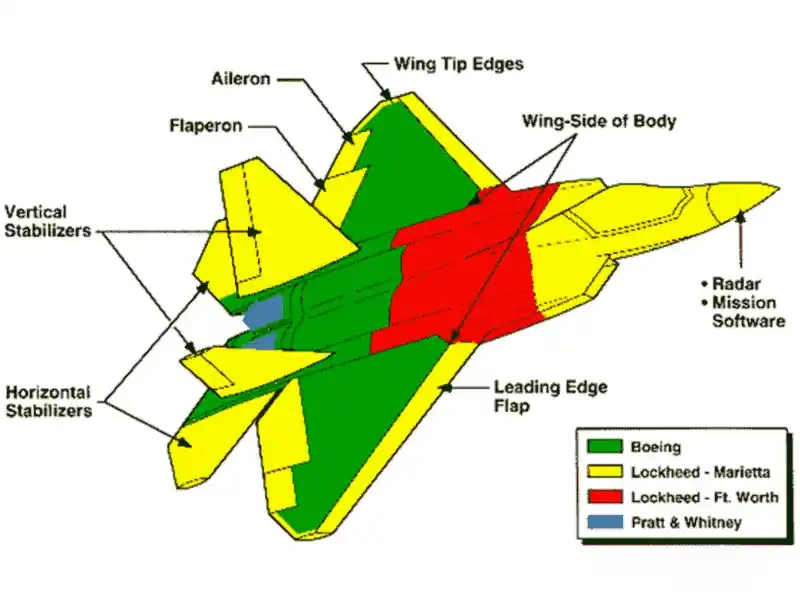
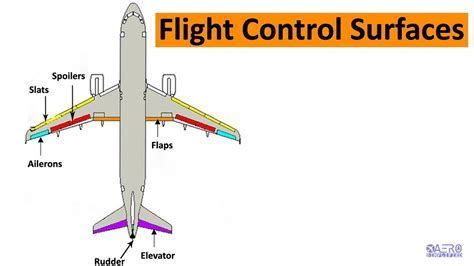
Unlike conventional fighters that employ dedicated speed brakes, the F-22 Raptor relies on its control surfaces—flaps, ailerons, rudders, and horizontal stabilizers—to generate aerodynamic drag when deceleration is required. The aircraft’s fly-by-wire flight control system (FCS) automatically coordinates these surfaces to achieve controlled speed reduction without compromising its stealth profile.
Key Control Surface Mechanisms for Deceleration
- Horizontal Stabilizers (Elevators)
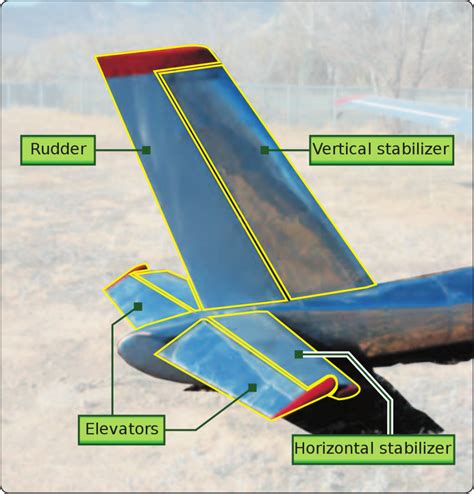
- The twin horizontal stabilizers deflect upward simultaneously, creating an aerodynamic braking effect similar to a split-flap airbrake.
- This increases the air resistance while maintaining pitch control, effectively reducing speed.
- Rudders
- The twin vertical stabilizers’ rudders deflect outward rather than in the same direction, creating additional drag.
- This maneuver enhances deceleration while avoiding undue yawing moments that could destabilize the aircraft.
- Flaps and Ailerons
- Flaps and ailerons work in tandem to modify the wing’s camber, increasing drag when needed.
- This function becomes crucial in landing configurations where controlled deceleration is essential.
By integrating these aerodynamic braking techniques, the F-22 eliminates the need for traditional speed brakes, reducing structural complexity and minimizing potential failure points.
Engine Thrust Management for Deceleration
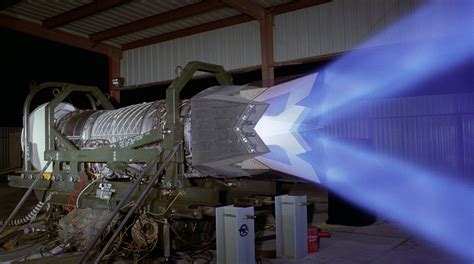
The Pratt & Whitney F119-PW-100 engines of the F-22 play a critical role in managing speed reduction, even in the absence of thrust reversers. The aircraft’s engine control system works in conjunction with its fly-by-wire controls to optimize thrust settings for effective deceleration.
Thrust Adjustment Techniques
- Idle Power During Landing
- When preparing for landing, the F-22’s flight control system automatically reduces engine power to idle, supplementing aerodynamic braking.
- Afterburner Modulation During Supercruise
- At high speeds, the FCS manages afterburner intensity, regulating thrust to aid in controlled deceleration without abrupt power loss.
- Vectoring Nozzles for Drag Induction
- The F-22’s thrust-vectoring nozzles assist in rapid pitch adjustments, indirectly increasing drag for smoother deceleration.
This engine-aided deceleration system enhances combat survivability, allowing for efficient speed modulation without compromising stealth.
Stealth Integration and Aerodynamic Efficiency
One of the core principles guiding the F-22’s airbrake design philosophy is its need to maintain a low observable (LO) radar signature. Traditional mechanical airbrakes introduce gaps and moving parts that can become radar reflectors, making an aircraft more detectable. Instead, the F-22’s seamless aerodynamic braking strategy ensures that its stealth characteristics remain uncompromised.
Key Stealth and Aerodynamic Features
- Blended Wing-Body Design
- The F-22’s fuselage and wing integration minimize radar cross-section (RCS), preventing unnecessary drag while optimizing control surface effectiveness.
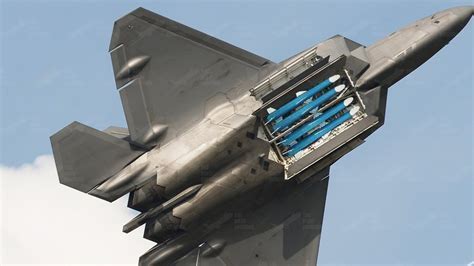
- Internal Weapon Bays
- Unlike fourth-generation fighters that carry external stores contributing to drag, the F-22’s weapons are housed internally, allowing its aerodynamics to remain optimized for both speed and maneuverability.
- Optimized Engine Inlets
- The serpentine air inlets reduce radar reflectivity while ensuring sufficient airflow, crucial for maintaining high-speed stability.
By utilizing these stealth-centric design choices, the F-22 ensures that it retains superior aerodynamic performance while avoiding the penalties of traditional airbrake systems.
Operational and Maintenance Advantages
The elimination of a traditional airbrake offers several benefits beyond stealth and maneuverability. These include enhanced reliability, lower maintenance requirements, and increased operational efficiency.
Reliability and Maintenance Benefits
- Reduced Mechanical Complexity
- Without a dedicated airbrake, the hydraulic and mechanical subsystems associated with speed brake actuators are removed, enhancing overall aircraft reliability.
- Fewer Maintenance Points
- Eliminating an airbrake system means fewer wear-and-tear components, leading to lower maintenance costs.
- Uncompromised Airframe Integrity
- Mechanical airbrakes often require additional structural reinforcements that increase weight and complexity; the F-22 avoids this issue entirely.
These factors contribute to longer operational lifespan, reduced ground crew workload, and improved combat readiness.
Conclusion
The F-22 Raptor’s airbrake system is a testament to fifth-generation fighter innovation. By integrating aerodynamic control surfaces, advanced thrust management, and stealth-optimized design, the aircraft achieves superior deceleration without traditional speed brakes. This approach ensures seamless performance in high-speed engagements, minimal radar detectability, and enhanced reliability. As a pioneer of stealth fighter design, the F-22 has set a precedent for future low-observable air superiority platforms, influencing aircraft like the F-35 Lightning II.
Frequently Asked Questions
1. Why does the F-22 not have a traditional airbrake?
The F-22 Raptor lacks a traditional airbrake because it uses its aerodynamic control surfaces and thrust modulation to achieve speed reduction. This design choice helps maintain stealth, reduce weight, and enhance reliability.
2. How does the F-22 slow down during landing?
The aircraft coordinates its horizontal stabilizers, rudders, and flaps to create drag while reducing engine thrust to idle. This method effectively slows down the aircraft without requiring a dedicated mechanical speed brake.
3. Does the F-22’s airbrake system impact its maneuverability?
No. In fact, the aerodynamic control-based deceleration system enhances maneuverability by allowing precise speed adjustments without compromising agility or stealth. This makes the F-22 highly effective in dogfights and high-speed engagements.