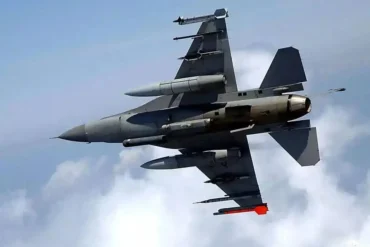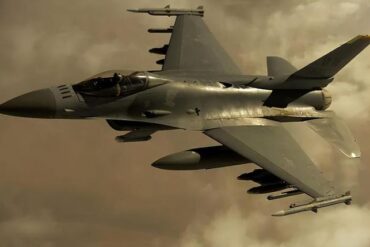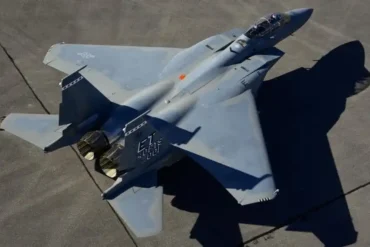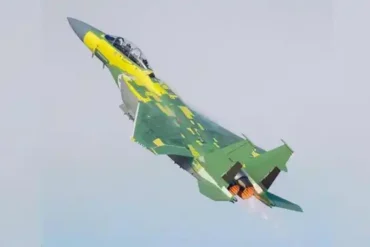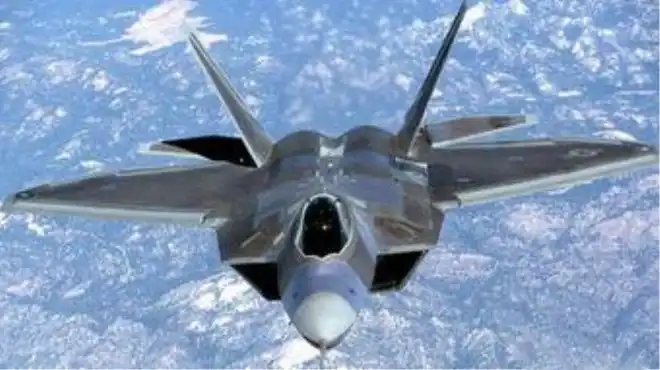
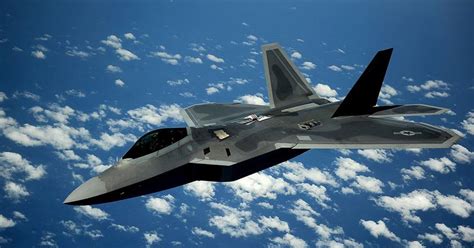
The F-22 Raptor, developed by Lockheed Martin, is one of the most advanced fifth-generation stealth fighters in the world. Designed for air superiority, deep strike capability, and network-centric warfare, its combat range is a crucial factor in determining its operational effectiveness. The aircraft’s range is influenced by mission configuration, fuel efficiency, and external loadouts. This article explores the F-22’s combat range under different operational scenarios, including its baseline combat radius, extended range capabilities, refueling support, and real-world tactical applications.
Baseline Combat Radius
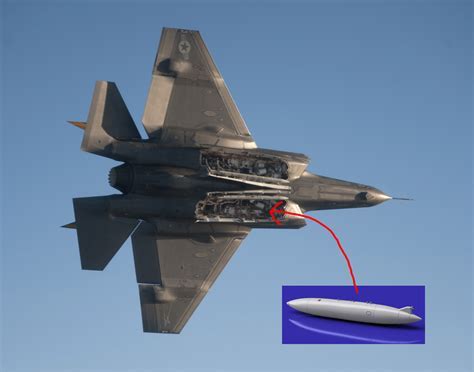
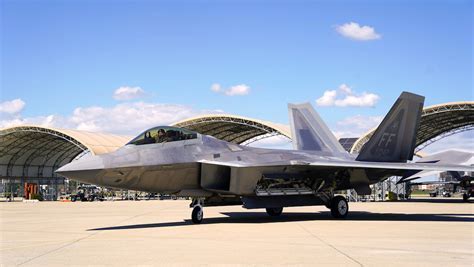
The officially stated combat radius of the F-22 Raptor is 760 kilometers (410 miles) under standard operational conditions. This figure is based on a high-altitude cruise, subsonic combat maneuvering, and return-to-base flight profile, utilizing internal fuel while carrying four AIM-120 AMRAAM air-to-air missiles and additional AIM-9 Sidewinders. The aircraft’s stealth-optimized conformal fuel tanks enhance range while maintaining low observability, though they are designed to be jettisoned if stealth is compromised.
Extended Combat Radius Using Subsonic Economy Mode
If the F-22 adopts a fuel-efficient cruise mode, its combat radius can be extended to 1,550 kilometers (840 miles). This is achieved by flying at subsonic speeds, minimizing fuel burn at optimal altitudes. However, this operational choice limits the fighter’s ability to perform high-speed penetration into contested airspace, making it a trade-off between fuel conservation and mission effectiveness.
Maximum Range with External Fuel Tanks
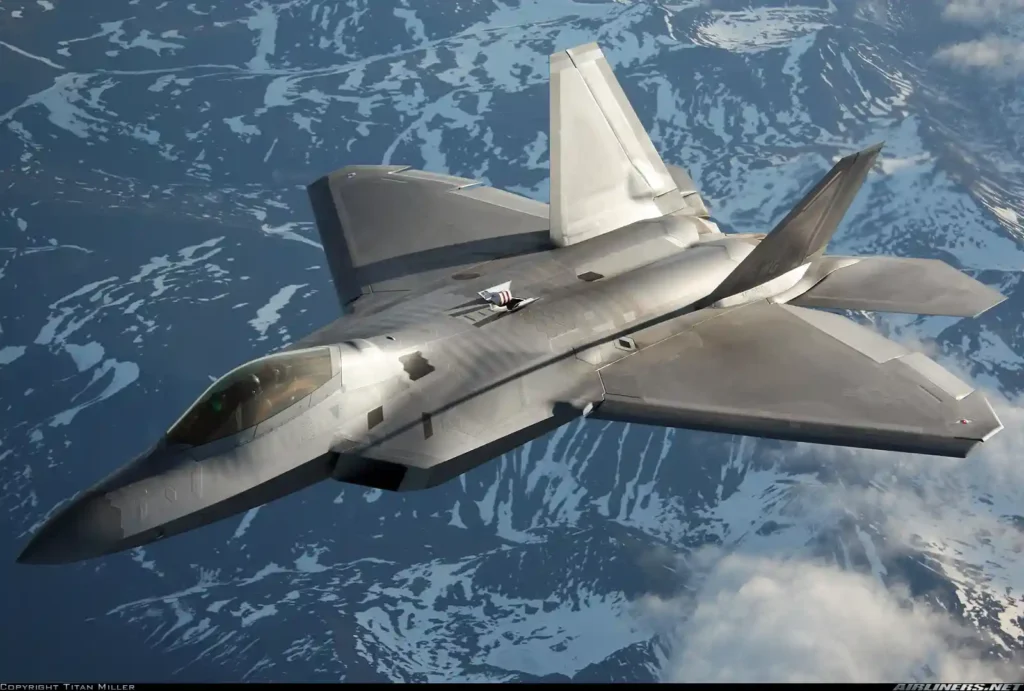
Under non-stealth missions, the F-22 can carry two external fuel tanks, significantly increasing its range. In this configuration, the aircraft’s total range can reach 3,000 kilometers (1,864 miles). However, this compromises stealth, making it more susceptible to enemy radar detection. This setup is typically used for ferry flights or missions where stealth is not a primary requirement.
Certain sources suggest that, under ideal conditions and an entirely subsonic flight profile, the F-22 could theoretically achieve a combat radius of 2,177 kilometers (1,353 miles). This estimate assumes no external stores, minimal fuel consumption, and a carefully optimized flight profile.
Airborne Refueling and Global Reach
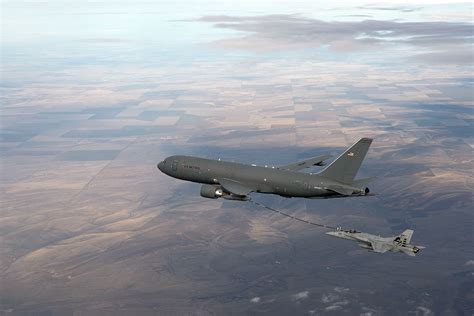
A major factor extending the F-22’s operational reach is its dependence on aerial refueling. The aircraft is compatible with KC-135, KC-10, and KC-46 tankers, enabling it to conduct long-range missions beyond its internal fuel limitations. This capability allows the F-22 to operate across intercontinental distances, as demonstrated in Syria and other global conflict zones, where it has executed missions requiring multiple aerial refueling cycles.
Operational Impact of Combat Radius
The F-22’s combat radius influences tactical and strategic deployments. While some critics argue that the aircraft has a shorter range compared to legacy fighters like the F-15E, it compensates through superior stealth, advanced avionics, and high-speed interception capabilities. In high-intensity air combat, the F-22’s ability to engage targets and exit hostile airspace quickly outweighs the disadvantages of a relatively limited range.
Strategic Force Projection
- In the Pacific theater, the F-22 operates from bases in Guam, Japan, and Alaska, with refueling support ensuring it can cover China’s air defense zones.
- In Europe, F-22 deployments in Poland, Germany, and the UK extend deterrence capabilities against potential Russian air threats.
- During Middle East operations, F-22s have been used in Syria and Iraq, demonstrating effective combat radius expansion through tanker support.
Comparison with Other Fighters
The F-22’s combat range is often compared with other modern fighters:
| Aircraft Model | Combat Radius | Max Ferry Range | Aerial Refueling Capability |
|---|---|---|---|
| F-22 Raptor | 760 km (410 mi) | 3,000 km (1,864 mi) | Yes |
| F-35A Lightning II | 1,100 km (685 mi) | 2,200 km (1,367 mi) | Yes |
| F-15EX Eagle II | 1,200 km (746 mi) | 3,900 km (2,423 mi) | Yes |
| Su-57 Felon | 1,500 km (932 mi) | 4,500 km (2,796 mi) | Yes |
While the F-22 has a shorter combat radius than some of its contemporaries, its supersonic cruise speed (Mach 1.8 without afterburners) and stealth technology allow it to engage and disengage rapidly, reducing fuel consumption in high-threat environments.
Conclusion
The F-22 Raptor’s combat radius is a function of multiple operational variables, including speed, loadout, and mission type. While its official combat radius is 760 km, its range can be significantly extended through economical flight modes, external tanks, and aerial refueling. Though some limitations exist compared to multi-role fighters with greater range, the F-22’s primary advantage lies in its stealth, supercruise capability, and role as an air superiority platform. In real-world operations, its reach is effectively enhanced through aerial refueling, making it a dominant force in modern aerial warfare.
FAQ
1. Why is the F-22’s combat radius shorter than some other fighters?
The F-22 prioritizes stealth and high-speed interception over fuel storage. While aircraft like the F-15EX and Su-57 have larger fuel reserves, they lack the F-22’s ability to supercruise and evade radar detection. The Raptor’s range is optimized for high-intensity air combat scenarios.
2. Can the F-22 perform long-range missions without refueling?
Without aerial refueling, the F-22 is limited to approximately 760-1,550 km depending on its flight mode. However, with mid-air refueling, its operational range can extend intercontinentally, as demonstrated in combat deployments in the Middle East and the Pacific.
3. What factors affect the F-22’s fuel efficiency?
The F-22’s fuel efficiency depends on speed, altitude, payload, and external tank usage. Supersonic speeds require more fuel, while subsonic cruise modes extend range. External tanks increase capacity but compromise stealth capabilities.