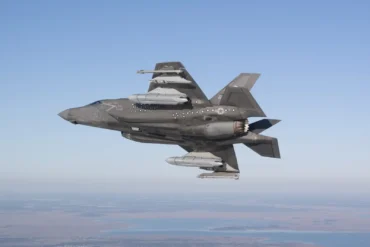
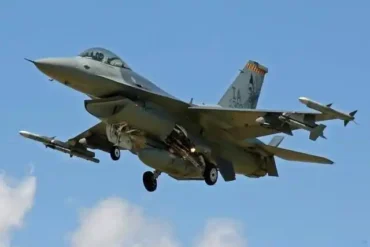
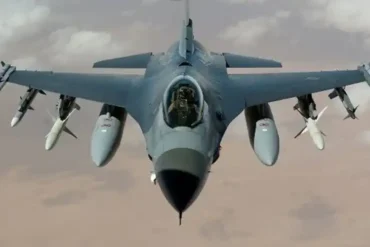
The F-35 Lightning II, developed by Lockheed Martin, has long been at the forefront of advanced fighter jet technology, revolutionizing air combat with its stealth features, multi-role capabilities, and cutting-edge avionics. With the advent of the F-35 Block 4 upgrade, this fighter jet is set to enter a new era of enhanced operational capabilities. The Block 4 upgrade is not just a minor enhancement; it is a complete overhaul designed to ensure the F-35 remains at the pinnacle of modern warfare for decades to come.
The primary goal of the F-35 Block 4 is to integrate a range of technological improvements that significantly enhance its combat effectiveness. These upgrades cover multiple domains, including hardware and computing architecture, weapon and payload enhancements, sensor and electronic warfare capabilities, and networked operations. Let us explore the details of these enhancements and the implications they have for future military operations.
Hardware and Computing Architecture Upgrades
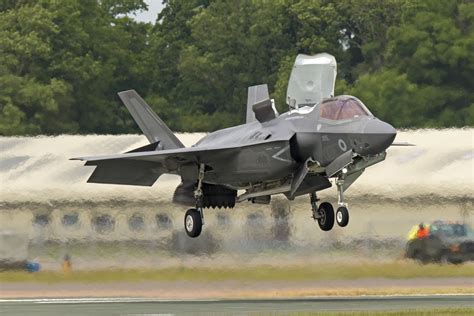
One of the most significant aspects of the F-35 Block 4 upgrade is the overhaul of its hardware and computing architecture. Central to these improvements is the introduction of the TR-3 technology package. This upgrade dramatically enhances the core processor of the aircraft, increasing its computational power by a factor of 25. The result is a jet that can handle more complex algorithms, artificial intelligence (AI)-assisted decision-making, and the processing of high-bandwidth data streams, all of which are critical for future combat scenarios.
Additionally, the TR-3 update incorporates a substantial expansion in the aircraft’s memory capacity, allowing the F-35 to manage and process even larger volumes of data. This advancement supports an array of real-time, mission-critical operations, such as radar tracking, weapons systems management, and sensor fusion.
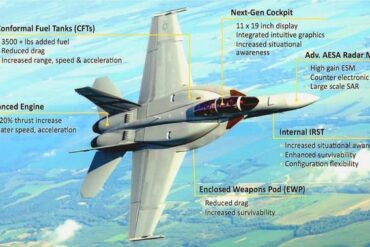
An equally important upgrade is the panoramic cockpit display. This new, high-resolution display offers a far greater field of view than previous systems, greatly enhancing the pilot’s situational awareness. Coupled with these upgrades, the computing power facilitates the smooth integration of AI for faster, more accurate decision-making in complex scenarios.

Power and Propulsion System Enhancements
The F-35 Block 4 also introduces significant upgrades to its power and propulsion system. The most notable of these upgrades is the improvement to the F135 engine by Pratt & Whitney. The engine’s thrust is increased by 6-10%, allowing for better maneuverability and a higher thrust-to-weight ratio. This enhancement is vital for maintaining air superiority, particularly in contested environments.
Furthermore, fuel efficiency is improved by a staggering 25%, which translates into an extended range and a more sustainable operational profile. These improvements help address the increasing power and cooling requirements brought about by the Block 4 upgrades.
Looking to the future, Pratt & Whitney is developing the XA101 adaptive cycle engine, which is poised to further extend the F-35’s range and thrust capabilities. This engine will play a crucial role in future-proofing the F-35, ensuring that it remains competitive against potential adversaries.
Weapons and Payload Capabilities
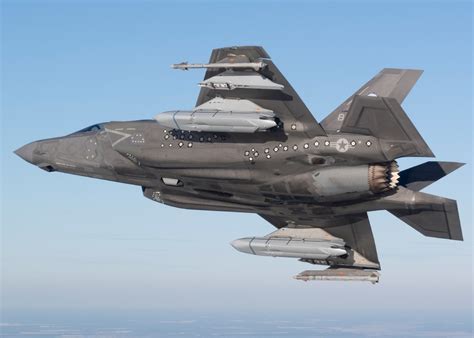
The F-35 Block 4 significantly enhances the aircraft’s ability to carry and deploy advanced weaponry. One of the most important upgrades is the increase in missile carrying capacity. The internal weapons bays of the F-35 now feature a new rack system, including the Sidekick missile rack, which allows the aircraft to carry up to six AIM-120 AMRAAM missiles, up from four in previous models. This increase in missile capacity enhances the aircraft’s air-to-air combat capabilities, providing it with more options in aerial engagements.
Moreover, the integration of the AIM-260 missile, with a range of 260 km, further bolsters the F-35’s air combat prowess, allowing it to engage enemy aircraft from even greater distances. The Block 4 upgrade also includes the integration of AGM-158C anti-ship missiles, which have a range of 550 km, as well as the JSM stealth anti-ship missile, which has an even longer range of 900 km. This expansion in weapon capabilities makes the F-35 a highly versatile platform capable of engaging targets in both air-to-air and air-to-ground combat scenarios.
Additionally, the F-35 Block 4 is compatible with the B61-12 and B61-13 nuclear bombs, expanding the aircraft’s capability to deliver nuclear deterrence if needed. This multi-role capability makes the F-35 an indispensable asset for strategic defense.
Sensor and Electronic Warfare Enhancements
The F-35 Block 4 brings substantial upgrades to the aircraft’s sensor and electronic warfare (EW) systems. One of the key improvements is the replacement of the existing radar with the new AN/APG-85 Gallium Nitride (GaN) radar. This radar offers significant improvements in both detection range and resolution, enabling the F-35 to detect and track targets at greater distances and with higher precision. Additionally, the radar system now includes electronic countermeasure (ECM) capabilities, allowing the F-35 to jam or spoof enemy radar systems.
The EOTS (Electro-Optical Targeting System) also receives an upgrade in the Block 4, moving to a second-generation 4K resolution system. This improvement enhances the infrared search and track (IRST) capability, making it even easier for the F-35 to detect stealth targets, such as the Chinese J-20 fighter.
Another critical enhancement is the increase in the number of electronic warfare receivers on the aircraft, which have been increased by 75%. This results in a significant boost in the aircraft’s ability to detect and disrupt enemy radar and communication systems, allowing the F-35 to operate effectively in denied environments.
Networked Operations and Data Fusion
In terms of networked warfare, the F-35 Block 4 introduces major advancements in cross-domain interoperability and data fusion. The CNI (Communication, Navigation, and Identification) suite has been upgraded to allow seamless integration with a variety of platforms, including KC-46 tankers and AWACS aircraft. This expanded connectivity enables the F-35 to operate as part of a networked kill chain, sharing real-time intelligence and targeting data with other assets in the battlespace.
Furthermore, the F-35 can now form a virtual early warning aircraft network, where four F-35s share data with each other, creating a combat information network that offers a coverage range equivalent to that of a traditional E-2D AWACS aircraft. This eliminates the need for traditional airborne radar platforms, making the F-35 even more capable in complex multi-domain operations.
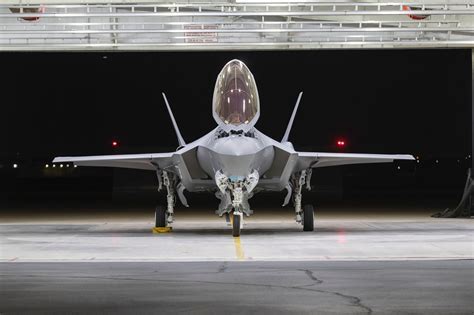
Deployment and Timeline
The F-35 Block 4 is being rolled out in stages, with the capabilities being introduced over a series of phases. These phases (4.1 to 4.4) will integrate new features and enhancements, with full operational capability expected by the early 2030s. The TR-3 software updates are expected to begin rolling out in summer 2025, though full certification may be delayed until 2026.
As for production, Block 4 upgrades will be incorporated into the 15th production lot, with earlier jets requiring an approximate 14-day retrofit to bring them up to the Block 4 standards.
Strategic Implications and Challenges
The F-35 Block 4 represents a leap forward in terms of combat capabilities and strategic deterrence. The enhanced range, payload, and versatility make it a formidable opponent against potential adversaries like China and Russia. With its multi-role capabilities, including both conventional and nuclear strike options, the F-35 strengthens the U.S. and its allies’ ability to project power globally.
However, the Block 4 upgrade has not been without its challenges. The cost overruns and delays associated with the development of this upgrade have raised concerns within the U.S. government, leading to calls for tighter oversight. Despite these issues, the F-35 Block 4 upgrade remains a critical investment in ensuring the aircraft’s relevance and superiority well into the 21st century.
FAQ
What is the main goal of the F-35 Block 4 upgrade?
The primary goal of the F-35 Block 4 upgrade is to enhance the aircraft’s combat capabilities, including sensor upgrades, weapon integration, and networked operations. These upgrades ensure that the F-35 remains effective against emerging threats and provides a long-term advantage in multi-domain warfare.
How does the Block 4 upgrade impact the F-35’s weapon capacity?
The Block 4 upgrade increases the F-35’s missile carrying capacity, enabling it to carry up to six AIM-120 missiles internally. It also integrates new weapons, such as the AIM-260 missile and AGM-158C anti-ship missiles, enhancing its air-to-air and air-to-ground strike capabilities.
What are the challenges associated with the F-35 Block 4 upgrade?
While the F-35 Block 4 brings critical advancements, challenges include cost overruns and delays in the development and certification processes. These issues have prompted calls for increased oversight and project management to ensure the timely delivery of upgrades.