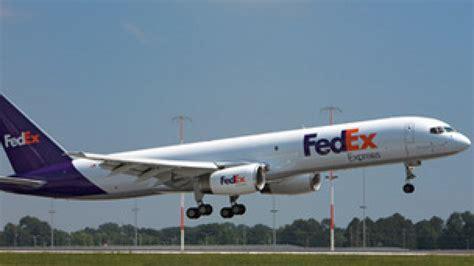
In the global air-cargo marketplace, few fleet decisions attract as much curiosity as FedEx’s determination to keep its Boeing 757 freighters flying well into their fourth decade. The aircraft is old by modern standards, thoroughly outpaced in passenger operations, and increasingly rare across the commercial landscape. Yet within FedEx’s network, the 757 remains not only viable but strategically valuable, functioning as a backbone asset in a system defined by tight schedules, regional density, and relentless cost control.
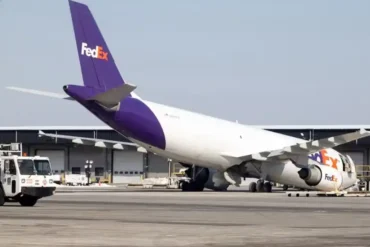
FedEx currently operates 85 Boeing 757-200 cargo aircraft, all of them converted from their former lives as passenger jets. These aircraft—ranging from 27 to 43 years old—have outlasted numerous industry cycles and continue to serve markets that would otherwise be constrained by infrastructure, economics, or pure geography. The logic behind their longevity is anchored in structural reliability, fleet economics, and the very nature of FedEx’s North American network. By retaining these aging jets, the company balances capital expenditure with operational flexibility at a moment when cargo demand faces unprecedented variability and global fleet availability remains historically tight.
The FedEx 757-200SF fleet is unusual not only for its age profile but also for the wide variety of airlines from which the aircraft were sourced. Monarch Airlines, Delta Air Lines, LTU SUD, Air 2000, Air Europa, and several others contributed to the now-standardized fleet FedEx employs today. This mosaic of aircraft origins reinforces a central point: FedEx identified commercial utility in these airframes even after their previous owners concluded their passenger service lives. Converted freighters are rarely uniform at birth, and yet the 757’s robust engineering makes it unusually adaptable to standardized cargo operations.
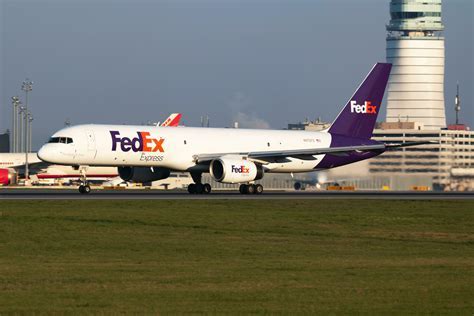
Many of these aircraft are likely in the twilight of their operational careers, with several already retired. Still, most remain active, and only a handful have formal retirement dates. The oldest examples—such as N935FD, originally delivered to Monarch Airlines over 42 years ago—continue regular service, a testament to the airframe’s longevity and the economic logic of extending its life where practical. While passenger airlines rely on fleet freshness to attract customers, cargo carriers prioritize cost-per-pound moved, dispatch reliability, and the ability to operate into and out of airports that do not require the scale of larger jets.
Technical Fundamentals That Still Deliver
At the heart of the 757’s enduring relevance lies its unique engineering blend: narrowbody dimensions, widebody-like performance, and an efficiency profile that, though dated, remains competitive for specific mission types. First introduced as a freighter in 1987 and converted for FedEx starting in 2001, the 757-200SF features reinforced upper-deck structures, a full cargo-handling system, and a port-side cargo door enabling efficient palletized operations.
The aircraft’s specifications make it compelling in ways few replacements can match. A payload of 6,600 cubic feet, takeoff capability from short or high-altitude runways, and powerful engines—either Pratt & Whitney PW2000-series or Rolls-Royce RB211 variants—give FedEx flexibility that extends beyond raw tonnage. The jet can lift meaningful cargo loads from runways shorter than 7,000 feet and reach destinations like Montreal, Anchorage, or Panama City from Los Angeles, all while consuming far less fuel than older tri-engined freighters.
Compared to contemporaries such as the Boeing 727-200F or the 707-320C, the 757 sits at a sweet spot: better range than the 727s it replaced, more efficient pallets per cubic foot than earlier-generation freighters, and simpler operations than the DC-8 family. It is an airplane that was designed for climbs, performance, and reliability—traits that, once adapted to cargo work, have only grown in value.
Network Flexibility: The 757’s Real Strategic Superpower
The 757’s ongoing relevance is intimately tied to the architecture of FedEx’s domestic network. Unlike intercontinental cargo operations dominated by widebodies, domestic express logistics relies on dense, repeatable schedules between secondary and tertiary airports. These markets require an aircraft that can handle:
- Rapid turnarounds.
- Moderate yet consistent cargo volume.
- Runways unsuited to larger jets.
- Variable daily and seasonal loads.
The 757 excels at all of these. While modern narrowbody freighters such as the A321P2F are entering the marketplace, feedstock availability remains limited, conversion capacity is tight, and acquisition costs remain high. FedEx’s 757s—fully amortized and operationally familiar to crews and maintenance teams—therefore deliver a cost advantage that newer types have yet to match.
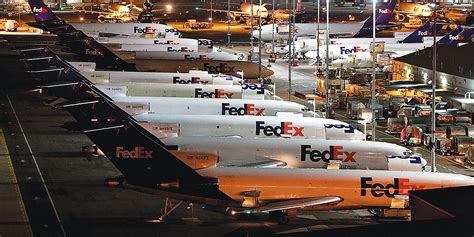
Cargo aircraft also fly fewer hours per day than passenger jets, meaning the economics of fuel burn versus capital cost shift dramatically. Where a passenger airline can absorb high capital costs through high utilization, cargo carriers must prioritize acquisition cost savings to offset lower annual hours. The 757’s low purchase price, often a fraction of a new-build narrowbody freighter, supports this equation.
The 757 in FedEx’s Broader Fleet Strategy
Even with its demonstrated value, the 757’s future within FedEx is finite. The company has already retired more than twenty examples—many in 2024—and further retirements are expected as market conditions evolve. These retirements occurred amid profit pressures, including a 53.2% year-on-year decline in operating income and the costly loss of major contracts such as the USPS air cargo agreement, which shifted to UPS.
Yet fleet changes are not driven by a chase for modernization alone. FedEx has been emphatic about “right-sizing” its air network as customers pursue cheaper, slower shipping options during softer macroeconomic cycles. The express model—in which the 757 excels—depends on premium demand, and recent trends have exposed the need for careful capacity management.
FedEx’s cost-optimization steps extend beyond aircraft. Pilot reductions, staff adjustments across European operations, and operational consolidation all point to an organization refining its network rather than pursuing large-scale fleet renewal at any cost. In this context, the 757 offers a stable, known, and economically efficient anchor until the strategic environment demands otherwise.
Next-Generation Replacements: The 767 and 777F Take Center Stage
FedEx’s modernization efforts increasingly focus on widebody aircraft capable of driving cost efficiency across intercontinental and trunk routes. The company has placed substantial orders for the Boeing 777F, with deliveries slated for 2026. The 777F’s payload capacity of 102 tonnes, range of nearly 5,000 nautical miles, and total cargo volume of over 23,000 cubic feet position it as the flagship of FedEx’s future fleet.
Unlike the aging MD-11 fleet—which the 777F is gradually replacing—the 777F brings fuel efficiency, maintenance simplification, and higher dispatch reliability. With eight new 777Fs ordered in 2025 alone, accounting for a significant portion of global orders that year, FedEx is clearly signaling long-term commitment to this platform.
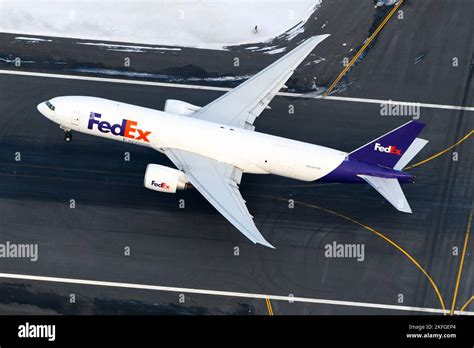
Parallel to the 777F expansion is FedEx’s increasing reliance on the 767-300F. Already the world’s largest operator of the type, FedEx continues to receive new 767s through 2026. These aircraft serve as midrange, medium-capacity workhorses ideal for domestic trunk operations and some shorter international routes. Their GE-powered engines and relatively low fuel burn make them the modern analog to what the 757 has represented for decades.
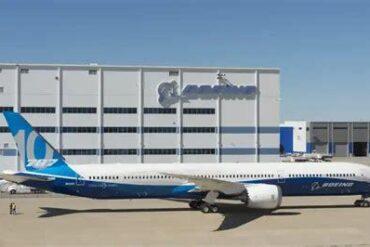
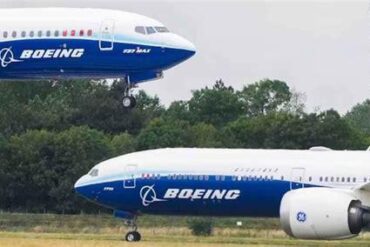
Notably absent from FedEx’s order book is the 777X Freighter, a next-generation variant delayed alongside the passenger 777X program. While the aircraft promises even greater efficiency, FedEx appears content to wait, both due to market uncertainty and the ongoing operational integration of the 777F. Should FedEx eventually pursue the 777X, the question will become whether its scale and operating profile suit the thinner long-haul routes previously dominated by types like the MD-11.
Aging but Adaptable: The MD-11 Parallel
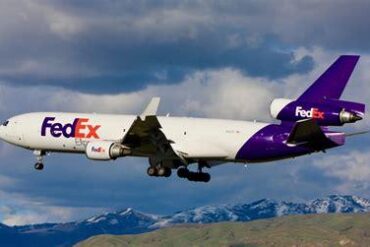
The 757 is not the only venerable aircraft still flying under the FedEx banner. The McDonnell Douglas MD-11, another once-maligned passenger jet, continues to serve long-haul cargo missions across the network. Like the 757, it never achieved the commercial success its designers envisioned, but in cargo operations its combination of volume, range, and capacity made it exceptionally effective.
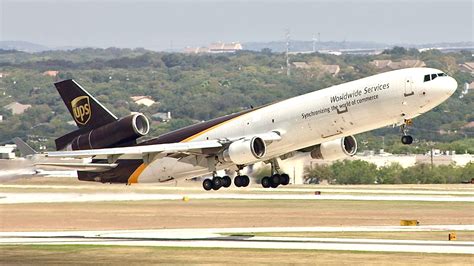
Although uncompetitive in fuel burn compared to the 777F, the MD-11 remains suitable for long, thin routes—niches where new widebodies may carry too much capacity. Both the MD-11 and 757 have benefited from substantial avionics and systems upgrades, ensuring compliance with evolving regulatory standards and extending service life beyond initial projections. This approach reflects a broader FedEx strategy: modernize selectively, retire judiciously, and extract maximum value from aircraft that still meet the operational brief.
Why FedEx Will Keep the 757—For Now
FedEx’s lingering reliance on the Boeing 757 is not nostalgia, but a pragmatic reflection of fleet economics, market strategy, and operational design. The aircraft remains unmatched in its combination of performance, availability, acquisition cost, and mission suitability. Replacing it one-for-one in the narrowbody segment would require either an A321P2F fleet scaling far beyond today’s capacity or the long-term development of a new-build narrowbody freighter—neither of which is imminent at scale.
Until those alternatives mature, the 757 will continue filling a critical role: serving airports that larger freighters cannot justify, sustaining the time-definite express system, and enabling FedEx to maintain flexibility across a volatile cargo market. Its retirement will come, but only when the cost curve, supply conditions, and network strategy align toward a successor.
In the meantime, the 757 remains a symbol of FedEx’s strategic discipline—an aircraft old enough to be a classic yet efficient enough, flexible enough, and reliable enough to stay indispensable in an era obsessed with newness. The future of the FedEx fleet will be shaped by the 767 and 777F, but the 757 will continue carrying the load, one pallet at a time, until its long service legacy reaches its natural conclusion.