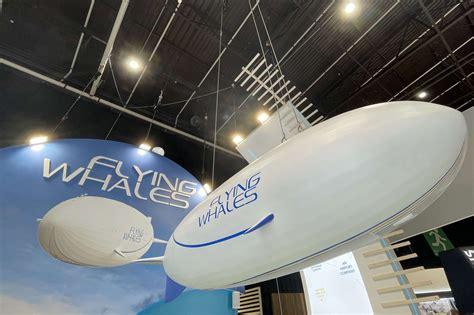
Flying Whales, a French aeronautic start-up based in Suresnes, is charting an ambitious course through the skies with a singular mission: revolutionizing heavy-lift logistics with sustainable, airborne transport technology. Established in 2012 by Sébastien Bougon, the company is developing the LCA60T, an immense hybrid airship engineered to transport massive loads—such as logs, industrial machinery, and wind turbine components—without reliance on traditional ground infrastructure. As the world seeks low-carbon solutions for mobility and logistics, Flying Whales positions itself at the intersection of ecological responsibility and industrial innovation.
The company was born from a collaboration with France’s Office National des Forêts (ONF), aiming to address the logistical challenges of timber extraction in remote regions. In its early stages, the vision centered on leveraging vertical take-off and landing capabilities to reduce deforestation impacts and open up isolated areas for responsible development. This ecological alignment garnered substantial public investment: the French government and the Nouvelle-Aquitaine region invested a combined €90 million into the initiative.
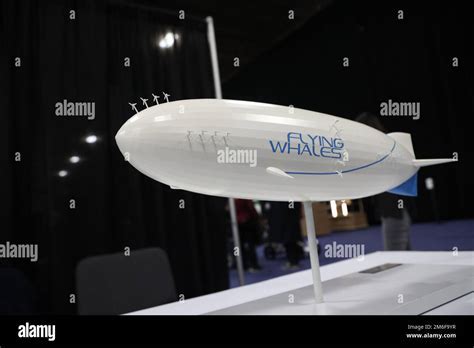
By 2024, Flying Whales had not yet delivered a prototype, yet its financial momentum had not faltered. The company secured a further €122 million in development funding from prominent backers including Bpifrance through the France 2030 initiative, Air Liquide, Société Générale Assurances, the Groupe ADP, and even the Principality of Monaco via the Société Nationale de Financement. These substantial investments underscore growing institutional confidence in airship cargo transport as a viable and strategically important sector for the future.
LCA60T: Engineering the Future of Air Cargo
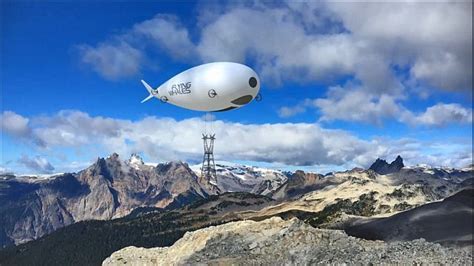
The centerpiece of Flying Whales’ vision is the LCA60T, a proposed 200-meter-long, 50-meter-high cargo airship that may become the largest aircraft ever built. With the capability to lift up to 60 tons of freight, the airship is being designed to operate without runways, making it particularly valuable for remote logistics, humanitarian missions, resource extraction, and infrastructure deployment in isolated regions.
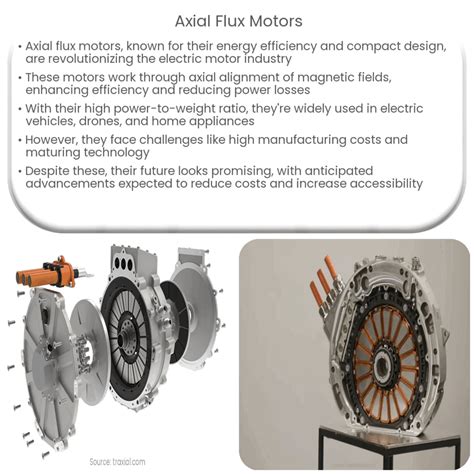
Powered by electric propulsion, the LCA60T promises a reduced environmental footprint compared to conventional cargo aircraft or road convoys. In 2025, Flying Whales announced that Evolito Ltd would supply its axial flux motors, a lightweight, high-efficiency technology critical for the ship’s operation. These motors not only contribute to lower emissions but also enable greater maneuverability and modular integration, ensuring the LCA60T’s adaptability to various mission profiles.
Technically, the LCA60T is a rigid-structure airship, a departure from the helium blimps of the past. Its architecture enables precision cargo handling, allowing the ship to hover while loading or offloading payloads without the need to land. This function is essential for forestry operations, energy infrastructure in hard-to-access locales, or post-disaster logistics. The concept redefines airborne logistics by eliminating logistical dependencies on roads, ports, or airstrips.
Overcoming Ownership and Geopolitical Barriers
Flying Whales faced international scrutiny in 2021 when the Canadian federal government blocked Quebec’s participation in the project due to the involvement of China’s AVIC (Aviation Industry Corporation of China), which held a 25% stake in the company. In response, Flying Whales organized a buyout of the Chinese stake, illustrating its strategic intent to retain Western government confidence and navigate the sensitive geopolitics of aerospace development.
This episode reflects the dual-natured reality of modern aerospace startups: balancing technological ambition with geopolitical sensitivities. With increasing emphasis on sovereign capabilities in aviation, Flying Whales’ maneuver to extricate itself from Chinese ownership reinforced its eligibility for public investment and multinational cooperation, particularly within the European Union and North America.
Industrial Revival and the Green Transition
At a time when Europe is seeking to revive its industrial base under the green banner of ecological transition, Flying Whales offers a symbol of what future aerospace innovation could look like: clean, efficient, and decentralized. With support from France’s France 2030 program, the airship project aligns with state-led ambitions to dominate emerging industries that marry climate policy and technological sovereignty.

The airship’s modular payload systems and hybrid energy profile cater to both commercial and public sectors, ranging from mining operations in the Amazon to medical equipment drops in crisis zones. Its potential extends to spaceport logistics, wind farm component delivery, and military applications, serving a broad spectrum of industries seeking low-carbon supply chain solutions.
Challenges Ahead: Certification, Scaling, and Market Adoption
Despite high-profile investment and an ambitious engineering agenda, Flying Whales must overcome substantial hurdles. Aircraft certification remains a lengthy and uncertain process, particularly for unconventional designs like airships. As of 2024, no prototype has yet flown, and the company has set a new target of 2028 for its first operational unit. The timeline reflects both the technological complexity and the regulatory maze that the firm must navigate.
Moreover, market readiness for airships remains untested. While the environmental logic is strong, inertia in the logistics sector, compounded by risk-averse procurement policies and lack of airship-specific infrastructure, could slow adoption. Nevertheless, Flying Whales argues that its core markets—forestry, energy, humanitarian aid, and isolated infrastructure projects—do not need conventional infrastructure, and may in fact be more willing to embrace paradigm-shifting innovations.
Flying Whales in the Global Airship Renaissance
Flying Whales is not alone in its aspirations. Around the world, a quiet airship renaissance is taking shape. Companies in Germany, the United States, and the UK are also developing new-generation airships, betting that advances in materials science, electric propulsion, and automation will enable a rebirth of lighter-than-air aviation.
What distinguishes Flying Whales is the scale and specificity of its ambition. By focusing on heavy-lift logistics, not tourism or surveillance, it targets a high-value niche with few direct competitors. Furthermore, the company’s strong institutional partnerships, especially with the French government, allow it to experiment within a stable regulatory and financial environment—a rare advantage in a volatile global aerospace market.
Its headquarters in Suresnes serves as the nerve center for a growing team of engineers, logistics experts, and policy strategists coordinating across France, Europe, and Canada. As industrial and ecological priorities converge, Flying Whales’ model could serve as a blueprint for future green-tech startups: deeply integrated with state objectives, globally agile, and uncompromising on environmental integrity.
Conclusion: Lifting the Future into the Sky
Flying Whales exemplifies a bold synthesis of ecological consciousness and industrial resurgence. Its LCA60T project encapsulates a forward-looking vision in which clean aviation, modular logistics, and strategic autonomy converge. Though still in its developmental phase, the company has galvanized attention not merely through its spectacular aircraft design, but through its capacity to inspire a reimagining of global logistics itself.
As climate concerns intensify and infrastructure bottlenecks choke supply chains, the notion of lifting 60-ton payloads over mountains, forests, and deserts without leaving a carbon footprint seems less like fantasy and more like strategic necessity. Should Flying Whales deliver on its promise, the sky will no longer be the limit—but the gateway to a cleaner, connected world.





![Big Drones & Heavy Lift Drones: A Comprehensive Guide for Drone Pilots [New for 2025]](https://boltflight.com/wp-content/uploads/2025/05/big-drones-heavy-lift-drones-comprehensive-guide-drone-pilots-new-2025-370x247.jpg "Big Drones & Heavy Lift Drones: A Comprehensive Guide for Drone Pilots [New for 2025]")