London Heathrow Airport has quietly crossed a psychological border in modern air travel: the end of “travel-size” anxiety. As of January 23, 2026, the UK’s busiest airport has fully activated next-generation CT security scanners across all terminals, allowing passengers to keep liquids and large electronics inside their hand luggage during screening. It is a change that reshapes one of the most ritualized frustrations of flying and signals where global aviation security is heading next.
For nearly twenty years, the choreography of airport security has been universal and unforgiving. Shoes off, laptop out, liquids decanted into tiny plastic bottles and sealed inside transparent bags. Those rules were introduced in the mid-2000s to counter credible threats, and they worked. They also slowed everything. Heathrow’s new system represents a decisive pivot away from manual compliance toward data-rich, automated threat detection, backed by a £1 billion ($1.4 billion) investment that redefines scale in aviation security modernization.
The stakes are uniquely high at Heathrow. With passenger volumes rebounding strongly and peak periods pushing terminals to their limits, security screening has become a strategic choke point. Heathrow officials say the new scanners materially improve throughput during morning and evening rushes, reducing queues without lowering standards. In practice, the technology replaces human guesswork with high-resolution, three-dimensional analysis of cabin baggage, allowing security officers to identify threats without forcing passengers to unpack their lives onto conveyor belts.
How CT Scanners Rewrite the Rules of Cabin Baggage
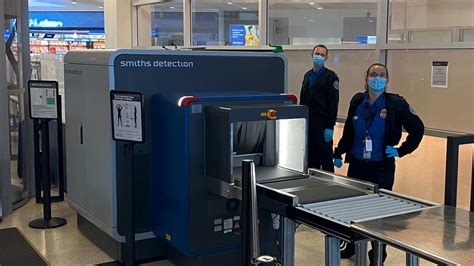
The heart of Heathrow’s upgrade is computed tomography, or CT scanning, a technology more familiar in hospitals than airports. Unlike traditional X-ray machines that flatten bag contents into a single image, CT scanners rotate around cabin baggage to produce detailed 3D models. Security staff can rotate, zoom, and analyze objects from multiple angles, while software flags anomalies automatically.
This capability changes the passenger experience in subtle but powerful ways. Liquids, gels, and aerosols no longer need to be separated or measured against the 100 ml rule. Laptops, tablets, and cameras stay put. The mental load of pre-screening preparation disappears, shaving seconds off each passenger’s journey and minutes off cumulative queue times. At Heathrow’s scale, those minutes add up to operational breathing room across entire terminals.
Crucially, the upgrade does not dilute security. On the contrary, CT scanners offer higher detection accuracy than legacy systems, reducing false alarms while sharpening focus on genuine risks. Heathrow becomes the largest airport in the world to complete a full rollout, turning what has been a pilot program elsewhere into a live, end-to-end operational model.
From Post-2006 Controls to Data-Driven Security
The 100 ml liquid rule was born in 2006, a response to plots that exploited the chemistry of everyday items. The solution was blunt but effective: limit volume, standardize containers, and enforce compliance visually. Over time, however, passenger numbers surged and airport footprints densified. Manual checks became a bottleneck, especially at global hubs designed for constant movement rather than prolonged inspection.
Heathrow’s shift reflects a broader industry recognition that risk mitigation now depends on information, not inconvenience. Modern threats are more complex, but so are the tools used to detect them. By automating analysis and reducing human intervention, CT-based screening aligns security with contemporary realities of scale, speed, and variability in passenger behavior.
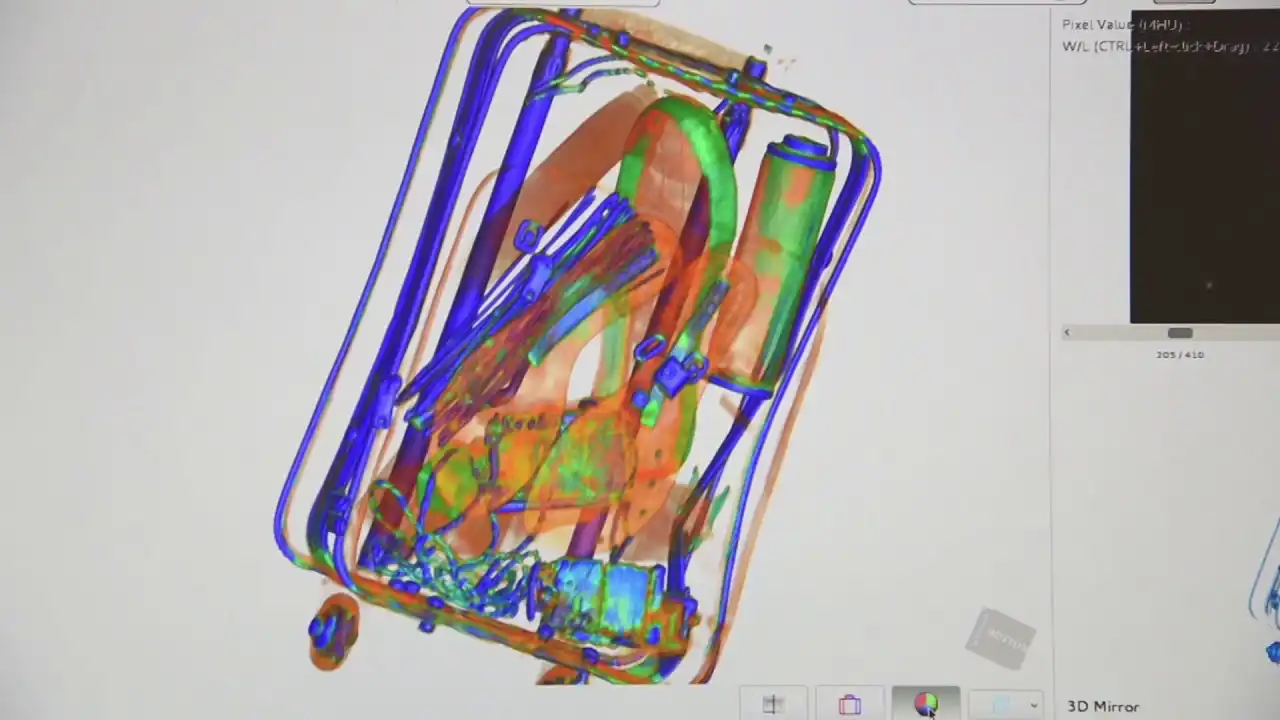
Thomas Woldbye, Heathrow’s CEO, framed the upgrade as both a customer and environmental win. Passengers spend less time preparing for security and more time moving freely through the airport, while the elimination of liquid bags cuts millions of single-use plastics from circulation each year. Heathrow estimates nearly 16 million plastic bags annually will no longer be needed, an unusually tangible sustainability gain from a security project.
Operational Gains Beyond the Checkpoint
Security screening does not exist in isolation. Delays at checkpoints ripple outward, affecting gate congestion, boarding punctuality, and even aircraft turnaround times. Heathrow’s management has been explicit about the wider performance logic behind the investment. Faster, more predictable screening supports stronger on-time performance and reduces pressure on downstream infrastructure.
The numbers suggest momentum. In 2025, Heathrow was named Europe’s most punctual hub airport, with over 97% of passengers clearing security in under five minutes. Baggage handling performance also improved markedly, with load rates exceeding 98% and an additional quarter-million bags reaching their intended flights compared with the previous year. While not all of these gains can be attributed to CT scanners alone, the technology reinforces a system already trending toward greater reliability.
A Blueprint for Other Global Airports
Heathrow’s full deployment positions it as a reference point for other major airports weighing similar investments. Many hubs have tested CT scanners in limited lanes, often rolling back relaxed liquid rules due to regulatory or capacity constraints. Heathrow’s scale removes ambiguity. If it works here, it can work elsewhere.
That said, travelers should resist assuming uniformity. Screening rules will continue to vary by airport and country, particularly on return journeys or connecting flights. Heathrow’s move highlights the fragmented pace of global aviation regulation, where technology may be ready before policy harmonization catches up.
Infrastructure, Resilience, and the Long Game
The security upgrade sits within a wider program of terminal refurbishments, baggage system enhancements, and digital infrastructure improvements. Recent disruptions, from extreme weather to equipment failures, have underscored the fragility of tightly coupled airport operations. Heathrow’s leadership has emphasized resilience as a guiding principle, investing not just in capacity but in systems that absorb shocks without cascading delays.
CT scanners contribute to that resilience by smoothing peak flows and reducing dependency on manual processes prone to human error or staffing constraints. Over time, additional technology deployments are expected to further automate security, border control, and passenger information systems, knitting together a more adaptive airport ecosystem.
What Hasn’t Changed, and Why It Matters
Despite the end of mandatory liquid removal and laptop unpacking, prohibited items remain prohibited. Weapons, explosives, and restricted materials are still subject to strict controls, and airline-specific carry-on rules continue to apply. Heathrow’s message is not that security has loosened, but that it has become smarter.
The deeper significance of Heathrow’s move lies in what it signals about trust between passengers and systems. By removing performative inconvenience and replacing it with invisible intelligence, the airport acknowledges a truth long felt by travelers: security works best when it is precise, proportionate, and largely out of the way. The era of “travel size” bottles may be ending, but the era of seamless, data-driven aviation security is just beginning.