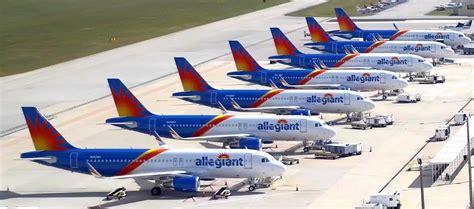
The story unfolding at Allegiant Air is not a gentle fleet evolution. It is a sharp, deliberate pivot that cuts against years of operational philosophy. For more than a decade, Allegiant’s identity was intertwined with the Airbus A320 family, a uniform fleet chosen to keep costs low, training simple, and maintenance predictable. That uniformity was hard-won after the airline exited its troubled MD-80 era under intense public scrutiny.
Yet within just two years, Allegiant is on track to become a Boeing-first operator, a label few industry watchers would have predicted in the early 2020s. This is not a symbolic change or a marginal experiment. It is a fleet transformation driven by timing, economics, and a rare moment of leverage in the commercial aircraft market.
What makes the shift fascinating is not simply the presence of Boeing aircraft on Allegiant’s ramps, but the speed and conviction with which the airline is rebalancing its future around the 737 MAX family. The airline is not hedging. It is committing.
A Strategic Break From Airbus Orthodoxy
For years, Allegiant’s all-Airbus strategy functioned as a financial stabilizer. Most of its A319s and A320s were acquired second-hand, often at bargain prices, allowing the airline to keep capital costs unusually low. This model fit neatly with Allegiant’s ultra-low-cost DNA, where aircraft ownership economics matter as much as fuel burn.
But time has a way of eroding even the best bargains. Many of Allegiant’s Airbus jets are now approaching or exceeding two decades of service, bringing higher maintenance costs, heavier checks, and declining efficiency. The A320ceo, once a fuel-efficient workhorse, is increasingly outclassed by new-generation narrowbodies.
At the same time, Airbus delivery slots for the A320neo family have stretched deep into the late 2020s. For an airline planning aggressive route expansion, waiting half a decade for capacity is not strategy—it is stagnation.
Why the Boeing 737 MAX Suddenly Made Sense
Boeing’s troubles following two fatal 737 MAX crashes created an unusual window in the market. In its push to rebuild trust and reclaim customers, Boeing was willing to offer pricing concessions rarely seen in modern commercial aviation. Allegiant, known for opportunistic fleet deals, recognized the opening immediately.
Beyond price, Boeing could offer something Airbus could not: near-term delivery positions. That timing aligned perfectly with Allegiant’s plan to add hundreds of new routes and increase aircraft utilization across underserved leisure markets.
The inclusion of the 737-8-200, a high-density variant capable of seating more passengers than Allegiant’s legacy A320s, sealed the case. Combined with roughly 20% lower fuel burn, the MAX delivered a dramatic reduction in cost per seat mile, the single most important metric for an ultra-low-cost carrier.
Early Performance Is Driving Confidence
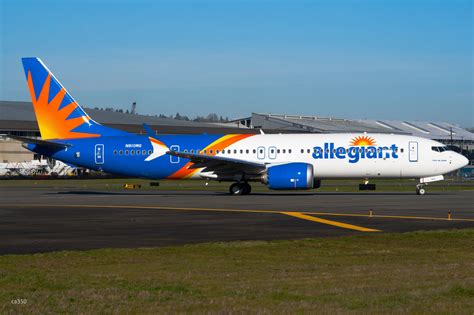
The first Boeing 737 MAX aircraft entered Allegiant service in late 2024, and their impact was immediate. Operational reliability exceeded internal forecasts, fuel efficiency tracked at the high end of projections, and passenger feedback reflected a quieter cabin and improved onboard experience.
Management has been unusually candid about the results. The airline’s leadership has openly credited the MAX with meaningful financial contribution, not merely future promise. That confidence matters, because airlines rarely accelerate fleet transitions unless early data is compelling.
The 737-8-200 is not just a replacement aircraft. It is enabling route economics that were previously marginal or impossible, particularly on longer leisure routes where fuel burn once constrained profitability.
Airbus Retirements Are Accelerating
As Boeing aircraft arrive, Airbus aircraft are leaving—quickly. Allegiant is prioritizing the retirement of its oldest and least efficient airframes, particularly early-build A319s and high-density A320s that no longer fit the airline’s cost profile.
Several former easyJet A319s have already exited the fleet, with more scheduled to follow. On the A320 side, Allegiant is systematically removing 177-seat configurations, which are both older and less flexible than its standard 180-seat models. This is not random downsizing. It is targeted pruning designed to maximize the performance gap between outgoing and incoming aircraft.
The result is a fleet that is shrinking in Airbus count while growing in total available seat capacity, an outcome only possible with higher-density, more efficient jets.
The MAX 7 Adds Tactical Flexibility
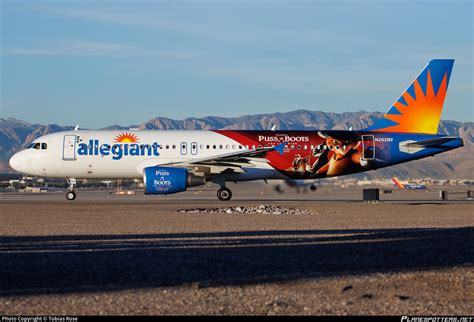
While the 737-8-200 grabs headlines, the 737 MAX 7 may prove equally important. With certification expected soon, the MAX 7 offers a smaller gauge aircraft optimized for thinner routes, seasonal demand swings, and airports with performance constraints.
For Allegiant’s network, which thrives on point-to-point leisure traffic, the MAX 7 provides a precision tool. It allows the airline to right-size capacity without sacrificing commonality benefits. Pilots, maintenance crews, and spare parts inventories remain largely aligned across the MAX family, preserving operational efficiency even as the fleet diversifies within Boeing’s ecosystem.
Sun Country: The Merger That Tips the Scale
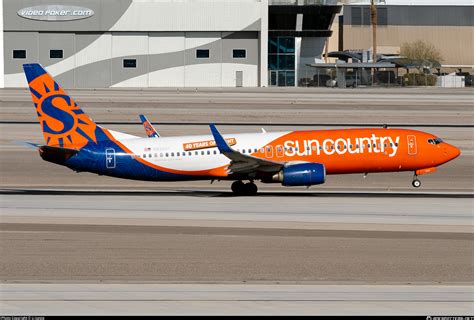
Even without additional MAX deliveries, Allegiant’s planned acquisition of Sun Country Airlines effectively flips the fleet balance overnight. Sun Country operates an all-Boeing fleet, including passenger 737-800s, 737-900ERs, and a substantial cargo operation flying 737-800BCFs for Amazon Air.
This is not just about numbers. It is about institutional gravity. Absorbing a Boeing-centric airline brings experienced crews, established maintenance programs, and operational muscle memory that further anchor Allegiant’s future around Boeing aircraft.
By year-end, the combined airline is projected to operate more Boeing aircraft than Airbus, a symbolic and practical milestone that would have seemed improbable just a few years ago.
Regulatory Reality Favors the Deal
Skepticism around airline mergers is understandable, especially after high-profile failures elsewhere in the industry. Yet the Allegiant–Sun Country deal occupies a very different regulatory landscape. Route overlap is almost nonexistent, competitive impact is minimal, and the combined carrier remains far smaller than dominant US players.
Market analysts have already reflected this reality, assigning a high probability of approval. More importantly, the merger aligns with broader policy goals of maintaining competition against much larger legacy and low-cost carriers, rather than reducing it.
A Fleet Strategy Built for the Next Decade
The most revealing detail may be the 50 additional Boeing 737 MAX options still on Allegiant’s books. Options are not obligations, but they are intent made visible. Exercised gradually, they provide a clear pathway to fully retiring the Airbus fleet without sudden capital shocks.
This does not mean Airbus aircraft vanish overnight. Allegiant will continue flying A320-family jets for years. But the center of gravity has shifted. New growth, new routes, and new economics are increasingly Boeing-shaped.
In commercial aviation, fleets tell the real story. Allegiant’s story is no longer about clinging to a single manufacturer for simplicity. It is about exploiting opportunity, timing the market, and reshaping its cost structure for a future where efficiency is non-negotiable. The airline that once defined itself as all-Airbus is rapidly becoming something else entirely—and doing so with uncommon speed and clarity.