On the night of May 9, 2025, a dramatic shift in South Asian warfare unfolded under cover of darkness. In a meticulously planned retaliation dubbed Operation Bunyaan al-Marsoos—a phrase lifted from the Quran meaning “a structure firmly joined together”—Pakistan unleashed a drone swarm of unprecedented scale, forcing military strategists worldwide to reassess the calculus of modern conflict. This operation did not merely signal a tactical counterstrike; it became the very definition of asymmetric technological warfare executed with surgical precision.
Pakistan’s Strategic Drone Doctrine Pays Off
For over a decade, Pakistan invested heavily in unmanned aerial systems (UAS), forging deep defense ties with Turkey and China, both of whom produce potent drone platforms at accessible costs. The investment was not rhetorical. When conflict erupted with India, Pakistan demonstrated its aerial capabilities with chilling effectiveness.
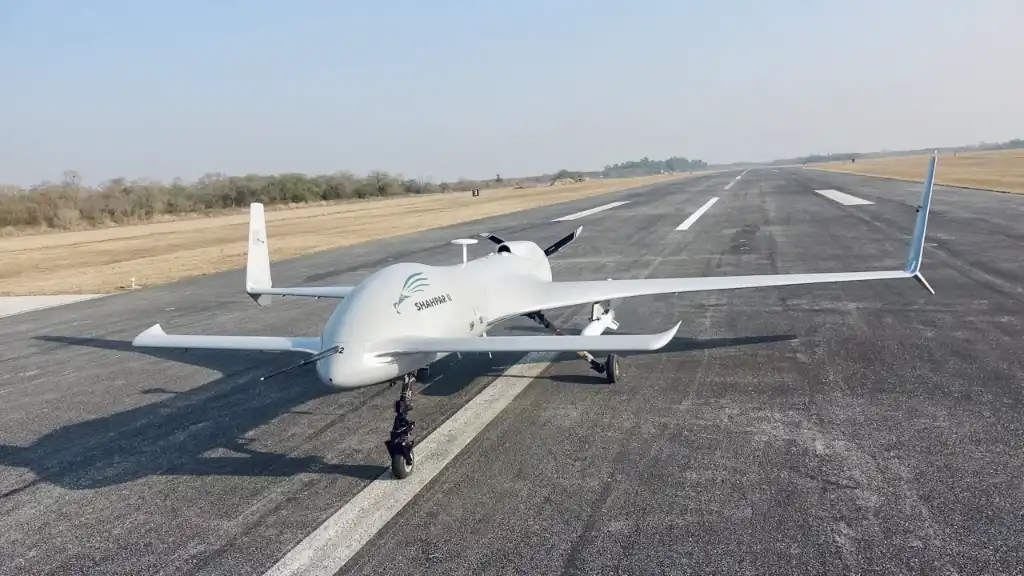
What transpired on May 9 was not an act of desperation, but a strategic chess move, employing a swarm of 400 to 500 drones—aerial, disposable, and semi-autonomous systems that infiltrated Indian airspace with alarming ease. These drones weren’t tasked with destruction alone. Their primary purpose was intelligence and disruption, to provoke and study India’s multi-layered air defense network.
Triggering Indian Defenses: A Calculated Risk
The swarm operation was textbook in execution. As Pakistani drones flooded Indian airspace, Indian radar systems and intercept platforms were forced into overdrive. SAM batteries lit up, and radars flickered across northern India. But every signal, every interception, every attempted takedown provided the Pakistanis with invaluable electromagnetic data. Pakistan was not attacking blindly—it was mapping.
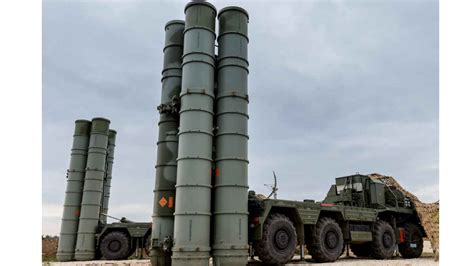
The very next day, on May 10, reports surfaced of a massive electronic warfare campaign. Pakistani forces allegedly jammed Indian air defense systems, targeting the crown jewels of India’s defensive infrastructure: the Russian-made S-400 Triumf air defense systems guarding key Indian airbases. These multi-billion dollar systems, acquired to counter Chinese and Pakistani threats, were reportedly blinded temporarily, allowing follow-up strikes and sowing confusion in Indian command structures.
Pakistan’s Multinational Arsenal: The Turkish and Chinese Edge
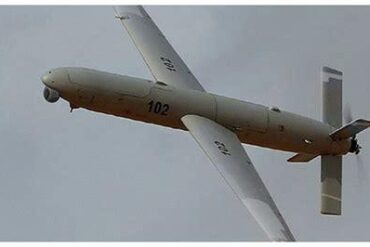
The drones used were largely Bayraktar TB2s and Chinese-made Wing Loong variants, both capable of medium-altitude long-endurance (MALE) operations. Turkey’s Baykar and China’s AVIC have carved a new doctrine for modern warfare—affordable, exportable drones with significant endurance, payload versatility, and intelligence capabilities.
For Pakistan, these systems provided force multiplication. Where once its air power was limited to manned jets and vulnerable ground systems, now it wielded an autonomous strike fleet, operable without risking human pilots, and scalable across large frontlines.
India’s Doctrinal Misstep: A Legacy of Western Emulation
While Pakistan went east and south for its military evolution, India looked westward—to the United States, the United Kingdom, and legacy Soviet designs. Heavily reliant on Russian platforms like the Su-30MKI and the S-400, India developed a military doctrine focused on conventional dominance, air superiority, and deterrence. However, as seen during this conflict, expensive, manned platforms are not infallible.
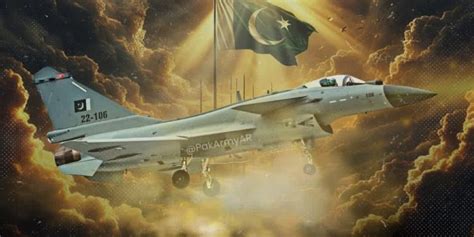
In the early hours of May 10, at least five Indian aircraft were shot down, reportedly including Su-30MKIs and Mirage-2000s. Pakistani missiles and manned fighters, many derived from Chinese JF-17s, combined with drone interference to overwhelm Indian defense bubbles.
Drone Swarms: The New Face of Asymmetric Warfare
Drones are no longer mere support units. Pakistan’s drone army proved they are primary assets capable of initiating and shaping battlefield dynamics. The May 9 swarm was likely programmed with pre-set coordinates, AI-assisted navigation, and decentralized communication protocols—making the swarm resilient against jamming and loss of command links.
These machines operated in a distributed pattern, confusing radar arrays, and even simulating decoy strikes, luring Indian interceptors to engage false positives. Behind this was a sophisticated software ecosystem, probably developed in collaboration with Chinese and Turkish defense firms, and refined through smaller operational trials in tribal zones and border skirmishes.
Why the Air War Wasn’t One-Sided
Despite the technological leap shown by Pakistan, India was not defenseless. In retaliation, India launched extensive air raids, damaging multiple Pakistani airbases and logistics hubs. Reports indicate strikes near Sargodha and Jacobabad. Indian stand-off weapons, including BrahMos cruise missiles, were deployed to cripple Pakistan’s supply chain and communication lines.
However, the Indian strategy took a controversial turn. Targeting near economic centers like Karachi and reportedly striking near nuclear sites, India appeared to escalate the conflict beyond conventional rules of engagement. These moves, rather than signaling confidence, suggested strategic desperation, a last attempt to regain dominance in the face of a surprisingly competent foe.
Lessons from Ukraine and Gaza Echo in South Asia
The Pakistan-India conflict mirrors a growing trend in global combat: high-impact, low-cost warfare. From Ukrainian drone strikes on Russian tanks to Houthi drones over Red Sea shipping lanes, the game has changed. National power no longer rests solely on GDP or fifth-generation fighter counts. Instead, adaptive tactics, electronic warfare, and drone saturation dictate tempo and outcome.
Pakistan’s rise as a drone warfare power challenges the assumption that technology dominance belongs to the West or the wealthiest. By leveraging partnerships and focusing on pragmatic solutions over prestige platforms, Pakistan disrupted India’s superior war machine. That shift should not be underestimated.
Implications for Future Conflict in Asia
If the fragile ceasefire collapses, and open hostilities resume, India will almost certainly recalibrate. There is no doubt that India holds the advantage in raw power: more jets, better funding, and a wider industrial base. But unless India develops its own drone swarms, anti-drone measures, and hardened comms infrastructure, it risks repeating the same vulnerabilities.
For Taiwan, South Korea, and even NATO planners, the message is clear: invest in drone warfare, or fall victim to it. No longer can legacy systems alone guarantee dominance. Software-centric, adaptive tactics, AI-integrated warfare, and unmanned systems form the triad of future combat preparedness.
Pakistan’s Tactical Success Was Not Inevitable—But It Was Earned
It is tempting to write off Pakistan’s battlefield success as a one-off or a stroke of luck. But that would ignore years of deliberate procurement strategy, doctrinal evolution, and combat simulations. Pakistan didn’t just buy drones—it built an ecosystem that allowed them to operate effectively: EW battalions, satellite-based comms, decentralized control nodes, and rapid recovery units.
On the battlefield, Pakistan’s human element was just as crucial. Military planners didn’t mimic the West blindly. Instead, they looked at regional needs, terrain realities, and budget constraints, crafting a defense strategy uniquely suited for South Asia.
A War Still Undecided, But a Chapter Already Written
Both nations now claim victory. Both celebrate battlefield successes, and both lament their losses. The truth lies somewhere in between. Yet, one thing remains undeniable: Pakistan’s drone army did not just resist India’s advance—it redefined the rules of engagement.
In this first major drone-driven war between two nuclear powers, Pakistan didn’t just survive. It stunned the world.