Understanding How to Get a Sport Pilot License in 2025
For those seeking an affordable and efficient entry point into aviation, the sport pilot license offers an accessible pathway. Officially introduced by the Federal Aviation Administration (FAA) in 2007, this certification was designed to simplify general aviation training, reduce costs, and increase accessibility. It allows pilots to fly Light Sport Aircraft (LSAs) under a streamlined regulatory framework while still enjoying the freedom of the skies.
The sport pilot certificate is ideal for hobbyists, aviation enthusiasts, and those who want to fly for recreation without the burdensome requirements of private or commercial licenses. It also serves as a foundational step for those who may wish to progress to more advanced certifications later.
Eligibility Requirements for a Sport Pilot License
To qualify for a sport pilot license, prospective aviators must meet specific criteria set by the FAA. These requirements ensure that candidates possess the minimum age, language skills, and health standards to operate safely:
- Age: You must be at least 16 years old to begin training and 17 years old to take the FAA practical test.
- Language Proficiency: You must be able to read, speak, write, and understand English.
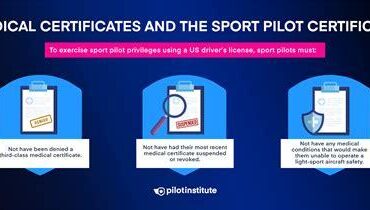
- Medical Requirements: A valid U.S. driver’s license can be used in lieu of an FAA medical certificate, provided the applicant hasn’t been previously denied or had their FAA medical revoked.
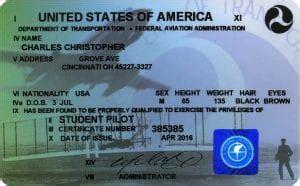
- Student Pilot Certificate: Required prior to solo flight, obtained via the Integrated Airman Certification and Rating Application (IACRA) system or via FAA Form 8710-1.
- Flight Training: You must log the necessary flight and ground training hours.
- Testing: Both a written knowledge exam and a practical check ride must be successfully passed.
Aircraft Allowed Under a Sport Pilot License
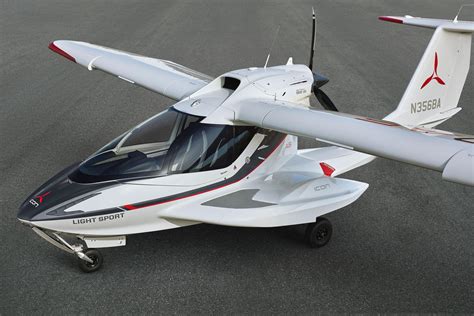
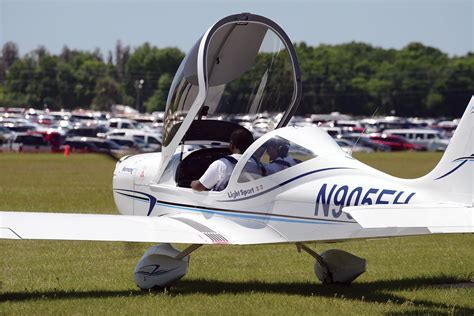
The Light Sport Aircraft (LSA) category is specific and clearly regulated. These aircraft are designed to be simpler, lighter, and easier to fly. According to FAA definitions, LSAs must meet the following characteristics:
- Maximum Gross Takeoff Weight: Less than 1,320 pounds for land planes and 1,430 pounds for seaplanes
- Maximum Stall Speed: 51 mph (45 knots CAS)
- Maximum Level Flight Speed: 139 mph (120 knots CAS)
- Seating: Two seats maximum
- Engine Configuration: Single engine only
- Propeller Type: Fixed-pitch or ground-adjustable
- Cabin: Unpressurized
- Landing Gear: Fixed (except for gliders and seaplanes)
Categories of LSA that sport pilots can fly include:
- Fixed-wing airplanes
- Gliders
- Lighter-than-air aircraft (balloons and airships)
- Gyroplanes
- Powered parachutes
- Weight-shift control aircraft (e.g., trikes)
Key Flight Restrictions for Sport Pilots
Sport pilots operate under specific regulatory and safety limitations. These are intended to ensure safety while still granting considerable freedom for recreational flight:
- Daylight Only: Flying is limited to daytime operations under Visual Flight Rules (VFR).
- Minimum Visibility: At least 3 miles visibility is required.
- Passenger Limit: You may carry only one passenger.
- Altitude Restrictions: Maximum of 10,000 feet MSL, or 2,000 feet above ground level (AGL), whichever is higher.
- Compensation: No flying for compensation or hire is permitted.
- Airspace Access: Cannot fly into Class B, C, or D airspace without a specific endorsement.
- U.S. Only: Flights must remain within U.S. airspace.
Comparing Sport, Recreational, and Private Pilot Licenses
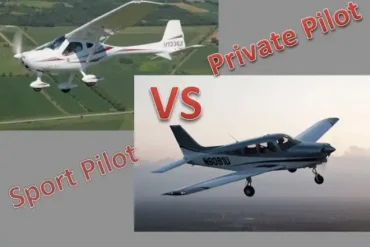
Understanding the distinctions between different pilot licenses helps applicants make informed decisions based on cost, privileges, and long-term goals.
Sport Pilot vs. Recreational Pilot
| Feature | Sport Pilot | Recreational Pilot |
|---|---|---|
| Medical | Driver’s license | Class 3 FAA medical |
| Seats | 2 | Up to 4 |
| Engine Power | Not specified | ≤180 hp |
| Training Hours | Minimum 20 | Minimum 30 |
| Night Flying | Not allowed | Allowed with rating |
| Passenger Limit | One | No passengers allowed |
Sport Pilot vs. Private Pilot
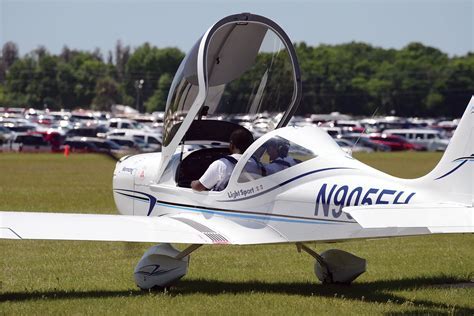
| Feature | Sport Pilot | Private Pilot |
|---|---|---|
| Medical | Driver’s license (in most cases) | Class 3 FAA medical |
| Aircraft Weight | ≤1,320 lbs | No weight restriction |
| Seats | 2 | No limit (aircraft-dependent) |
| Training Hours | Minimum 20 (avg. 33) | Minimum 40 (avg. 55–70) |
| Night Flights | Not allowed | Allowed |
| Airspace Access | Endorsement needed for Class B/C/D | Full access |
| Passenger Limit | One | No limit |
| International Flights | Not allowed | Permitted |
The Step-by-Step Process: How to Get a Sport Pilot License
1. Confirm Your Eligibility
Ensure you meet the age, language, and medical requirements. For most people, a valid driver’s license suffices in place of an FAA medical.
2. Apply for a Student Pilot Certificate
Use the IACRA online portal or FAA Form 8710‑1. This certificate is mandatory before you can solo.
3. Medical Considerations
If you’ve ever had a denied or suspended FAA medical, you must obtain a new third-class certificate. Use the MedXPress system and consult an Aviation Medical Examiner (AME).
4. Complete Ground School Training
Gain a solid foundation in:
- Aerodynamics
- Weather patterns
- Aircraft systems
- FAA regulations
- Navigation and radio procedures
This can be done through in-person classes, online platforms, or self-study using FAA-approved materials.
5. Pass the FAA Written Knowledge Exam
Administered via FAA testing centers, this computer-based exam evaluates your grasp of ground school material. A passing score is typically 70% or higher.
6. Flight Training Requirements
You must log a minimum of 20 flight hours, typically broken down as follows:
- 15 hours of dual instruction with a Certified Flight Instructor (CFI)
- 5 hours of supervised solo flight
Most students, however, average closer to 33 total hours before taking the check ride.
7. Complete the Check Ride
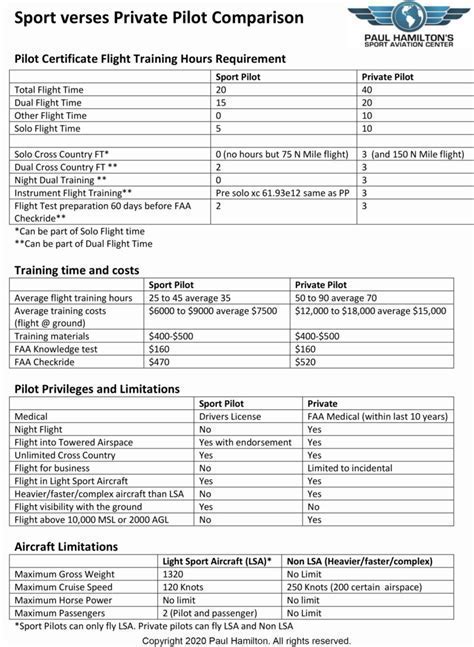
The check ride includes a verbal oral exam and a flight test, both conducted by a Designated Pilot Examiner (DPE). This final step confirms your readiness to fly safely under real-world conditions.
How Much Does It Cost to Get a Sport Pilot License?
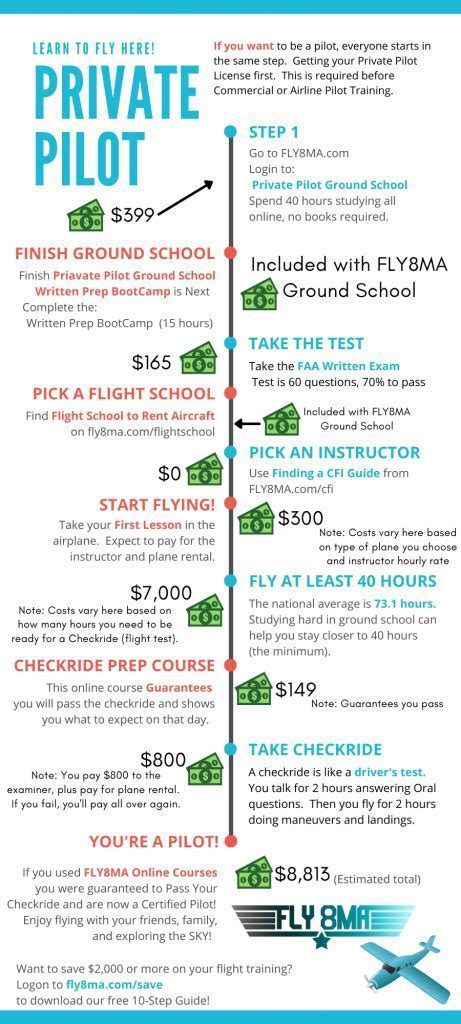
On average, the total cost of obtaining a sport pilot license ranges from $4,400 to $5,500. This includes:
- Ground school materials and tuition: $250–$500
- FAA written exam: $150
- Flight instructor fees: $1,500–$2,000
- Aircraft rental (approx. 20–33 hours): $2,000–$3,000
- Check ride and examiner fees: $300–$500
By contrast, a recreational pilot license can cost $6,000 to $7,000, and a private pilot license often exceeds $10,000. The sport pilot certificate can thus save learners $1,500 to $5,000, depending on their goals and pace of learning.
FAQ: Common Questions About the Sport Pilot License
Can I become a sport pilot without a medical certificate?
Yes. In most cases, a valid U.S. driver’s license is all that’s needed unless you’ve previously been denied an FAA medical. If that’s the case, you must reapply through the proper medical channels.
Can I upgrade from a sport pilot license to a private pilot license later?
Absolutely. Many sport pilots transition to private certification. You’ll need to complete additional flight training and meet higher hour and medical requirements, but previous sport hours can often count toward the total.
What happens if I want to fly into controlled airspace?
You’ll need an endorsement from a certified instructor verifying your proficiency in Class B, C, or D airspace operations. Without it, you must avoid towered airports and certain airspace classifications.