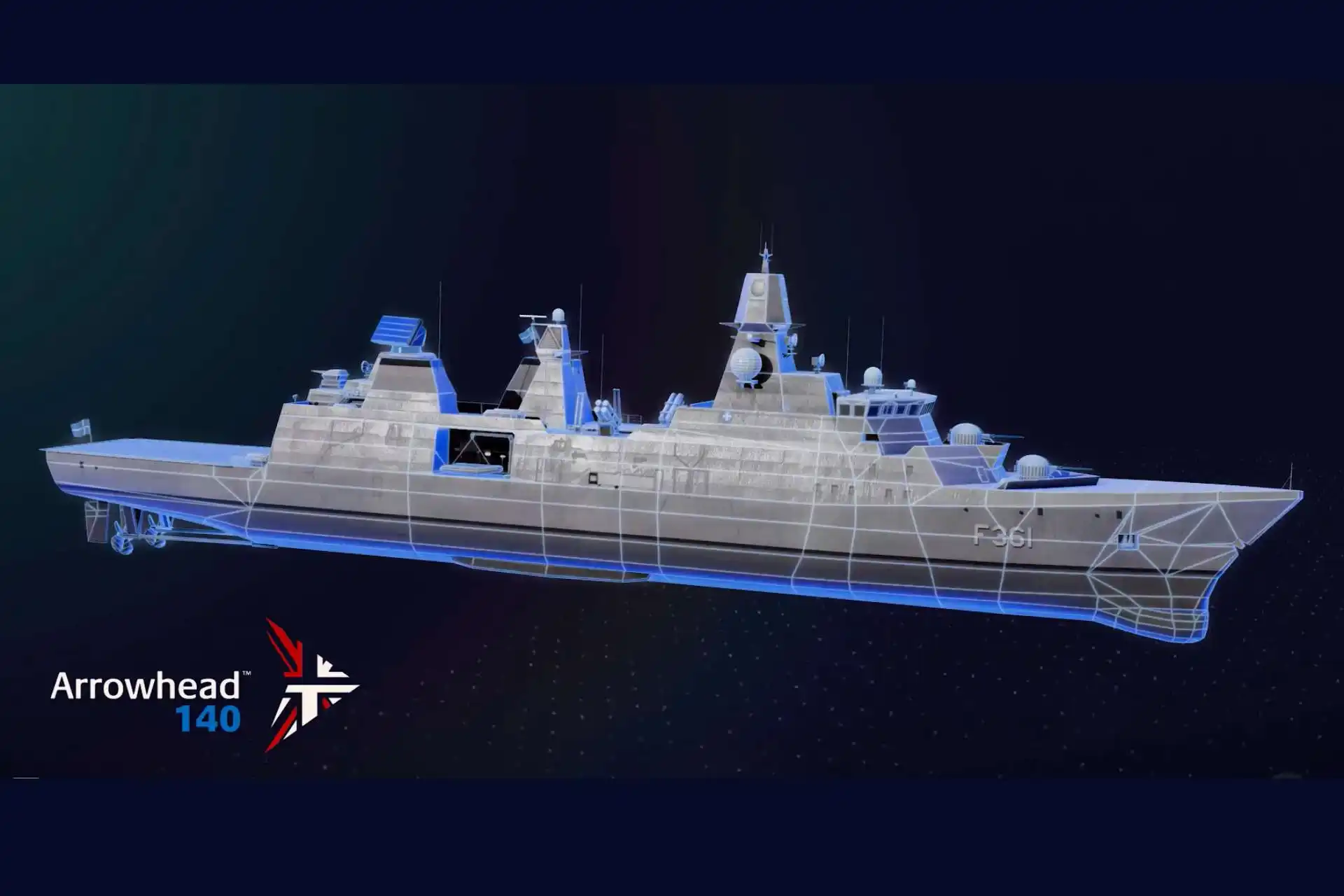
Indonesia and the United Kingdom have moved decisively from strategic alignment to execution, formalising a major step in Southeast Asia’s naval modernisation with the confirmation of additional Arrowhead 140 frigate design licences under a £4 billion Maritime Partnership Programme. The agreement embeds British naval design expertise into Indonesia’s long-term maritime ambitions, while accelerating Jakarta’s drive to strengthen indigenous shipbuilding and secure its vast archipelagic waters.
Announced on 21 January 2026, the deal marks the first concrete contract to emerge from the Maritime Partnership Programme unveiled in late 2025. Babcock International confirmed the sale of two additional Arrowhead 140 design licences, giving operational substance to what had previously been a policy framework. For Indonesia, the move reinforces a deliberate transition toward execution-focused defence planning, while for the UK it consolidates the Arrowhead 140 as a globally exportable frigate architecture.
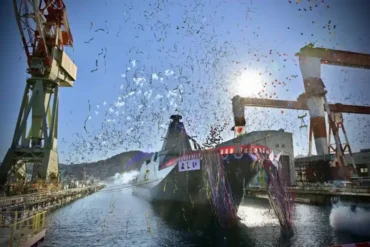
The timing of the announcement is telling. It follows closely on the launch of KRI Balaputradewa, Indonesia’s first domestically constructed frigate derived from the Arrowhead 140 design and the largest principal surface combatant ever built in the country. That milestone transformed the programme from an aspirational procurement into a visible industrial reality, setting the stage for expansion.
The new agreement does more than add licences. It is accompanied by a Letter of Intent outlining plans for the local construction of an additional pair of frigates, potentially bringing the Red White, or Balaputradewa-class, programme to a minimum of four ships. This builds directly on the two design licences originally secured in 2021 and reflects growing confidence on both sides in Indonesia’s ability to absorb advanced naval design and translate it into serial production.
From Framework to Execution in a Strategic Maritime Partnership
At its core, the £4 billion Maritime Partnership Programme is designed to be broader than a conventional arms sale. Signed on behalf of President Prabowo Subianto and Babcock’s senior leadership, the framework is intended to support Indonesia’s naval development while also addressing wider maritime priorities, including fisheries protection, coastal infrastructure, and food security. The Arrowhead 140 licences are the first tangible manifestation of that ambition.
For Jakarta, this approach aligns naval modernisation with national resilience. As the world’s largest archipelagic state, Indonesia depends on secure sea lanes for trade, energy flows, and food supplies. By embedding the frigate programme within a wider maritime cooperation effort, the government is signalling that surface combatants are not only instruments of deterrence but also enablers of economic security and sovereignty enforcement.
For London, the agreement reinforces a long-term strategic presence in the Indo-Pacific, an area increasingly central to UK defence and foreign policy. Rather than episodic deployments, the partnership anchors British expertise through sustained industrial and technical engagement, creating a durable defence relationship with one of Asia’s most influential maritime powers.
Arrowhead 140: A Proven Design with Global Reach
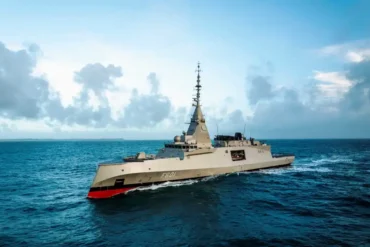
The Arrowhead 140 sits at the heart of this cooperation. Developed by Babcock and derived from the Danish Iver Huitfeldt-class hull, the design has been selected by multiple navies as the basis for new-generation frigates. The Royal Navy’s Type 31 programme and Poland’s future Miecznik-class frigates are built on the same underlying architecture, demonstrating the platform’s adaptability across operational doctrines and industrial ecosystems.
Measuring approximately 138 to 140 metres in length with a beam of around 20 metres, the design displaces roughly 6,000 to 7,000 tonnes, depending on configuration. A combined diesel-and-diesel propulsion system delivers speeds in excess of 28 knots, paired with long-range endurance suitable for sustained blue-water deployments. The emphasis is on a robust hull, generous margins for growth, and an open architecture that allows customer navies to integrate national sensors, weapons, and combat management systems.
This flexibility is central to the Arrowhead 140’s export appeal. Rather than locking operators into a fixed combat system, the design provides a proven seakeeping and machinery foundation while leaving ample room for sovereign customisation. For Indonesia, this means the ability to tailor the frigate to its specific operational geography and threat environment without sacrificing industrial efficiency.
Building Indonesian Capability Through Local Construction
Indonesia’s implementation of the Arrowhead 140 concept underscores a deliberate focus on domestic shipbuilding and technology transfer. Construction of the Balaputradewa-class is being undertaken by state-owned shipbuilder PT PAL in Surabaya, a choice that reflects Jakarta’s determination to anchor complex naval programmes at home.
The locally built frigates retain the Arrowhead 140 hullform while incorporating adaptations intended to support Indonesian operational needs across a sprawling maritime domain. With an overall length approaching 140 metres, the ships are designed for a balance of endurance, speed, and versatility, enabling long patrols, escort missions, and sustained presence operations in both open ocean and littoral environments.
While full combat system details have not been officially disclosed, available information points to a heavily armed configuration. Multifunction and surveillance radars, a hull-mounted sonar, electronic warfare systems, and decoy launchers are expected to provide layered situational awareness and survivability. A substantial midships section is reserved for a universal vertical launch system, reportedly intended to accommodate Turkish surface-to-air missiles, complemented by anti-ship missiles and twin triple torpedo launchers. Once fully fitted, the class is set to rank among the most capable surface combatants in the Indonesian Navy.
Responding to Grey-Zone Pressures in Indonesian Waters
The expansion of the Balaputradewa-class comes at a moment of sustained maritime pressure for Indonesia. In the North Natuna Sea and along key sea lines of communication linking the Malacca Strait to the Pacific, Jakarta faces persistent grey-zone challenges. Recurrent incursions by foreign coast guard and fishing vessels into Indonesia’s exclusive economic zone have blurred the line between law enforcement and military responsibilities.
In this context, the Arrowhead 140–derived frigates are intended to provide flexibility. They are capable of high-end missions such as task group escort and area air defence, while also supporting routine presence operations that signal sovereignty without unnecessary escalation. The combination of endurance, sensor coverage, and credible firepower allows the Indonesian Navy to respond proportionately across a wide spectrum of scenarios.
By situating the frigate programme within the broader Maritime Partnership Programme, Indonesia is effectively linking naval capability to economic and societal resilience. Protecting fisheries, securing offshore infrastructure, and ensuring the safety of maritime trade routes all become part of a single strategic narrative, supported by modern surface combatants built at home.
From Minimum to Optimum Essential Force
Strategically, the deal aligns with Indonesia’s ongoing transition from the long-standing Minimum Essential Force concept toward the more ambitious Optimum Essential Force objective. While the earlier framework focused on restoring baseline readiness after decades of underinvestment, the newer approach aims to build an integrated, technologically advanced force by the end of the decade.
Within this shift, the Maritime Partnership Programme functions as a catalyst. It channels investment into domestic industry, supports skills transfer in complex warship construction and systems integration, and reinforces Indonesia’s policy of diversifying defence relationships across Europe, Türkiye, and the wider Indo-Pacific. The Arrowhead 140 licences are therefore not an isolated procurement, but part of a wider effort to reshape how Indonesia acquires and sustains military capability.
Strategic Gains for the United Kingdom
For the United Kingdom, the agreement reinforces the Arrowhead 140 as more than a national programme. Each additional export strengthens the case for a common frigate family that can be adapted to different national needs while sustaining industrial capacity at home. The partnership supports skilled employment, particularly at Rosyth, and underlines the UK’s ambition to remain a credible and engaged defence partner in the Indo-Pacific.
Beyond economics, the deal carries strategic weight. Long-term cooperation on warship design and construction creates enduring ties that outlast individual contracts. It embeds British standards, processes, and expertise within partner navies, fostering interoperability and shared operational understanding over decades rather than years.
A Four-Ship Core for Indonesia’s Future Surface Fleet
As the first tangible outcome of the £4 billion Maritime Partnership Programme, the additional Arrowhead 140 licences mark a clear inflection point. The Balaputradewa-class is on track to form a four-ship core of Indonesia’s future surface fleet, combining a proven European design, locally generated industrial value, and nationally tailored combat systems.
For Indonesia, the programme offers a pathway toward a more credible blue-water presence and stronger control over its maritime domain. For the United Kingdom, it demonstrates how export-oriented shipbuilding and sustained defence partnerships can advance both industrial vitality and strategic influence. In a region where maritime power increasingly shapes security and prosperity, the Arrowhead 140 partnership stands as a concrete example of alignment turned into action.