Boeing’s reputation as one of the world’s foremost aerospace manufacturers rests not only on its engineering innovations but also on its robust security infrastructure. In an era marked by rising geopolitical tensions, increased cyber vulnerabilities, and heightened scrutiny of aircraft safety, Boeing has fortified its operations through a multi-dimensional security strategy. From its factory floors to global supplier networks, Boeing’s security apparatus represents an evolving ecosystem of proactive measures, systemic reforms, and collaborative intelligence protocols that aim to future-proof its global aerospace operations.
Enhanced Safety in Manufacturing: Boeing’s Renewed Quality Mandate
Following a series of high-profile incidents involving the 737 series, Boeing unveiled its Safety & Quality Plan in January 2025 — a blueprint aimed at reengineering the culture and mechanics of safety within its production lines. This initiative goes beyond technical corrections, emphasizing human competency, streamlined operations, and preventive accountability.
More than 2,500 employees are now undergoing intensive training programs, which include modules on Safety Management Systems (SMS) and defect prevention strategies. These sessions, run through newly-established foundational training centers, aim to embed safety as a core manufacturing principle.
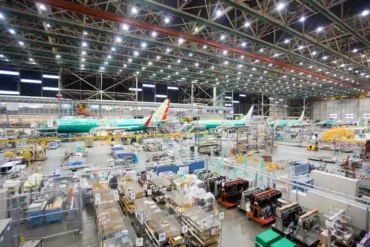
The production floor itself has undergone systematic redesign. Installation plans for the 737 have been simplified, reducing the margin for error. A revised “stamping” system now tracks task completions in real-time, improving both accountability and traceability. Furthermore, random audits on part removal and returns ensure that any deviations are swiftly corrected.
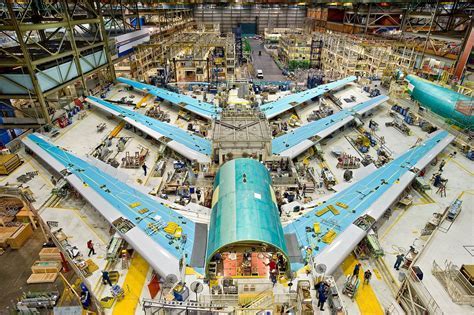
One of the more significant steps involves defect mitigation. Boeing introduced additional inspection points within manufacturing units and implemented a customer quality approval process for fuselage assemblies, particularly those sourced from Spirit AeroSystems. This tiered inspection structure bolsters early detection of faults before components are integrated into full assemblies.
Securing the Supply Chain: Tackling FOD and Oversight Gaps
Foreign object debris (FOD) has long been a risk factor in aerospace production, often resulting from tool misplacement or component loss during assembly. Boeing has responded by centralizing tool management in critical assembly areas for the 737 and 787 programs. This shift has significantly reduced tool misplacement incidents and boosted procedural compliance.
In addition, Boeing has installed Work-in-Progress (WIP) tracking systems that log and monitor components through every phase of assembly. These digital logs help detect anomalies in real-time, preventing parts from going unaccounted for.
Supplier security is a focal point, particularly with major partners such as Spirit AeroSystems. Boeing now conducts collaborative audits with suppliers to root out persistent issues, especially those tied to recurring fuselage assembly flaws. These audits emphasize both compliance and quality control, allowing for timely resolution before downstream integration.
Geopolitical Risk Mitigation: Responding to Global Volatility
The 2025 attack on an aerospace facility near Ankara served as a wake-up call for the broader aerospace sector. In response, Boeing has overhauled its geopolitical risk protocols, embedding new safeguards into its global infrastructure planning.
Facilities located in high-risk regions now undergo enhanced physical and cyber threat assessments. These assessments are driven by regional intelligence indicators and involve dynamic threat modeling. Boeing has also deepened its ties with NATO and allied defense entities, fostering a culture of shared vigilance. Through collaborative intelligence sharing, the company remains updated on emerging risks, enabling quicker response and greater resilience.
Moreover, contingency strategies have been instituted for supply routes and production backups to maintain continuity in the event of regional disruptions. These measures are supported by scenario-based simulations and predictive logistics models to safeguard Boeing’s complex global supply architecture.
Engineering Precision: Fastener Standards and Aircraft Integrity
Aircraft safety is a function not only of large systems but also of minute details — none more critical than the fasteners that hold components together. Boeing has established some of the most rigorous fastener protocols in the aerospace industry.
Each fastener is coded based on material type (titanium, aluminum), head design (convex or concave), and installation orientation (N/F marking system). These detailed specifications are encoded into unique part numbers like BACB30US5K18X, which indicate diameter, corrosion resistance, and length.
All specifications are archived in the Boeing Standard Manual (D-590), which serves as a centralized reference to ensure fastener traceability throughout the aircraft lifecycle. These standards are not merely bureaucratic — they ensure structural integrity during flight and reduce risk factors related to airframe fatigue or material incompatibility.
Cultural Transformation: Empowering a Proactive Workforce
Security, at its most effective, is as much about systems as it is about people. Boeing has recognized the indispensable role of its workforce by nurturing a proactive safety culture. Central to this shift is the modernized “Speak Up” system, an anonymous, digital platform that allows employees to report concerns without fear of retaliation.
What sets this system apart is its resolution tracking mechanism, allowing employees to follow the progress of their concerns. This transparency fosters trust and encourages continuous dialogue on safety practices.
The appointment of a Human Factors Engineering Executive marks another milestone in Boeing’s cultural reset. This role focuses on analyzing workplace ergonomics, decision-making behavior, and the environmental factors that contribute to human error. Insights from this role directly inform process redesign and workforce training.
Boeing’s cultural transformation is more than an HR initiative. It is a strategic alignment of operational goals with employee empowerment, bridging the gap between policy and practice.
Looking Ahead: AI Surveillance and the Future of Boeing Security
Despite these sweeping reforms, Boeing remains vulnerable to global risks, particularly in cybersecurity and supply chain fragility. To preempt these vulnerabilities, Boeing is actively investing in AI-driven surveillance systems, capable of real-time threat detection across its digital infrastructure. These systems, powered by machine learning, are designed to autonomously identify network anomalies and alert security teams to possible intrusions or data exfiltration attempts.
In parallel, Boeing is exploring blockchain-based supply tracking to add another layer of visibility and integrity to component sourcing and distribution. The goal is to establish tamper-proof logs that document the origin, transit, and inspection status of every aircraft part — thereby closing critical gaps in the security chain.
A New Era of Aerospace Security
Boeing’s renewed focus on security reflects a recognition that aerospace manufacturing no longer operates in isolation. It is a node in a vast, interconnected network of geopolitical, digital, and human systems. Through strategic investment in safety, process rigor, supply oversight, and cultural resilience, Boeing is not only restoring stakeholder trust but also redefining the standards of security in the aerospace sector.
As emerging threats continue to evolve, Boeing’s future security posture will depend on its ability to integrate AI technologies, global intelligence, and employee engagement into a cohesive and adaptive security architecture. This is not merely a defensive strategy — it is a blueprint for enduring leadership in a turbulent world.