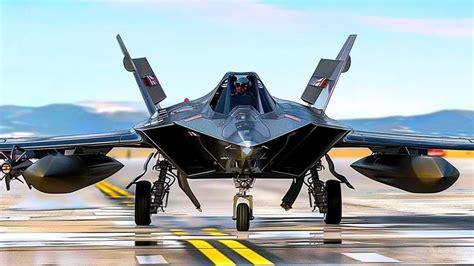
The decision to build America’s most advanced fighter jet, the F-35 Lightning II, in Italy is not a symbolic gesture of alliance—it is a deliberate, high-stakes move that reflects a profound shift in how modern military power is designed, produced, and sustained. At the center of this transformation is a simple but powerful idea: shared threats demand shared infrastructure.
The F-35 program, also known as the Joint Strike Fighter (JSF), is not just another defense project. It is a sprawling multinational ecosystem involving the United States and a network of allied nations, each contributing critical expertise, manufacturing capacity, and technological innovation. Unlike traditional defense programs where one nation builds and others buy, the F-35 represents a deeply integrated industrial alliance.
This is precisely why Italy—specifically the Cameri Air Base facility—has become one of the most important production hubs for the aircraft. It’s not merely assembling jets; it is shaping the future of NATO airpower.
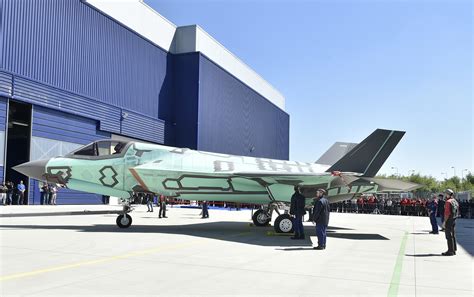
The F-35: A Fighter Built for Alliances, Not Just Air Superiority
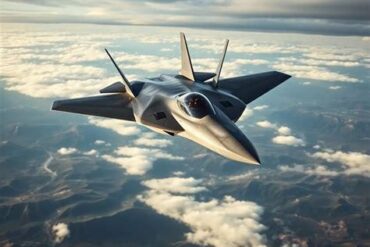
The Lockheed Martin F-35 Lightning II was designed from the outset to be different. While its stealth, sensor fusion, and network-centric warfare capabilities make it one of the most advanced fighter jets ever built, its real innovation lies in its collaborative DNA.
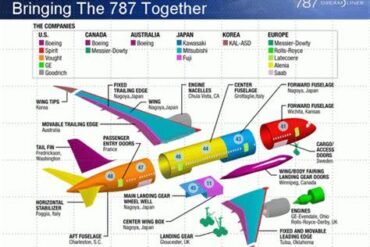
Roughly 25% to 30% of every F-35 is manufactured by European companies. Giants like Leonardo (Italy), BAE Systems (UK), and Rheinmetall (Germany) are not peripheral suppliers—they are foundational pillars of the program. This distributed production model ensures that the aircraft is not just American hardware exported abroad, but rather a shared technological asset.
At the heart of this network is the principle of economies of scale. By producing thousands of aircraft across multiple nations, the program reduces per-unit costs while simultaneously strengthening allied industrial bases. This is not just cost efficiency—it is strategic resilience.
Cameri Air Base: Europe’s F-35 Powerhouse
The Final Assembly and Check-Out (FACO) facility in Cameri, Italy, stands as a cornerstone of this multinational strategy. Built on a sprawling 100-acre campus with over 20 specialized buildings, Cameri is one of only three locations in the world capable of assembling F-35s—and the only one outside the United States with full-spectrum capabilities.
What makes Cameri exceptional is not just its size, but its dual-role functionality. It serves both as a production line and as a maintenance, repair, overhaul, and upgrade (MRO&U) hub for Europe and the Mediterranean. This means aircraft don’t just get built here—they return here throughout their operational lives.
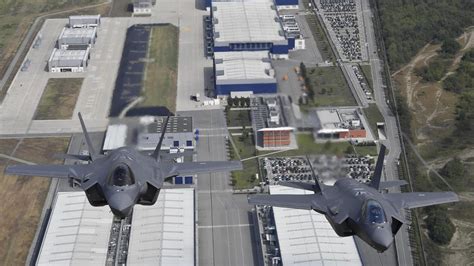
The facility also houses Europe’s only Acceptance Test Facility, a highly classified environment where each aircraft’s stealth characteristics are rigorously validated. This involves testing radar cross-sections and ensuring that every jet meets the exacting standards required for fifth-generation warfare.
Even more striking is the level of trust involved. The United States has effectively shared some of its most sensitive stealth technologies with Italy—an extraordinary signal of confidence in both Italian industrial security and NATO cohesion.
Leonardo’s Wings: Italy’s Massive Contribution to Every F-35
Italy’s role goes far beyond assembly. The Italian aerospace giant Leonardo manufactures complete wing sets for the F-35, accounting for approximately 38% of the aircraft’s airframe structure. These wings are not just used in jets assembled in Italy—they are shipped globally, including to production lines in the United States.
This level of integration transforms Italy from a customer into a core architect of the platform. It also ensures that European industry remains deeply embedded in cutting-edge aerospace manufacturing, preserving critical skills in stealth materials, precision engineering, and advanced composites.
The result is a supply chain that is not only geographically distributed but also strategically redundant—a crucial advantage in times of conflict or geopolitical tension.
Shared Logistics, Shared Power: Reinventing Military Sustainment
One of the most revolutionary aspects of the F-35 program is its global sustainment model. Traditionally, each country maintained its own запас of spare parts and maintenance systems. The F-35 replaces this fragmented approach with a single, shared logistics ecosystem.
This means that allied nations can draw from a common pool of parts, software updates, and maintenance facilities. A Dutch F-35 can be serviced in Italy. A Norwegian jet can receive parts sourced from the UK. The system is designed to be interoperable, flexible, and resilient.
The implications are enormous. In a high-intensity conflict, there is no need to ship critical components across the Atlantic—a process that would be slow, vulnerable, and potentially catastrophic. Instead, Europe has its own in-theater production and repair capabilities, anchored by Cameri and expanding into countries like Poland and Finland.
Why Building the F-35 in Italy Strengthens NATO’s Deterrence
This distributed manufacturing model does more than streamline logistics—it fundamentally strengthens NATO’s collective deterrence. By embedding production and maintenance capabilities across allied nations, the alliance ensures that its airpower remains operational even under extreme conditions.
The growing fleet of F-35s across Europe—expected to exceed 450 aircraft by 2030—creates a unified, fifth-generation force capable of sharing real-time battlefield data. This is where the F-35 truly shines: its ability to act as a “quarterback” of the battlespace, integrating information from air, sea, and land assets into a single, coherent picture.
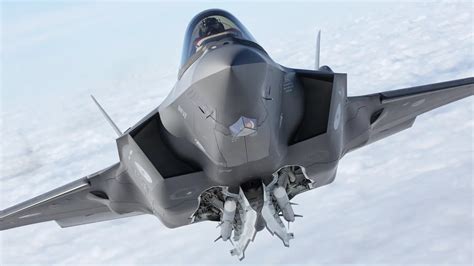
An adversary facing NATO does not encounter isolated national forces. Instead, they face a seamless, interconnected system where every F-35 is a node in a larger intelligence and strike network. This dramatically complicates any attempt to exploit weaknesses or gaps.
Accelerating Fleet Growth and Replacing Legacy Aircraft
The Cameri facility is also accelerating the transition from older fourth-generation fighters like the F-16 to the F-35. Countries such as Belgium and the Netherlands are phasing out legacy aircraft, many of which are being redirected to support partners like Ukraine.
This creates a dual-layered strategic benefit: NATO modernizes its own forces while simultaneously strengthening the الدفاع capabilities of allied nations outside the alliance. It is a rare example of efficiency aligning perfectly with geopolitical strategy.
Cameri’s production capacity continues to expand, with plans to significantly increase maintenance bays and output. The facility is not just keeping pace with demand—it is actively shaping the tempo of NATO’s modernization.
Training the Next Generation at Cameri
Beyond production and maintenance, Cameri is evolving into a training epicenter. The newly established F-35 Lightning Training Center will host advanced simulators capable of replicating the aircraft’s cockpit, sensor systems, and classified combat environments.
These Full Mission Simulators allow pilots to train for complex scenarios without ever leaving the ground, dramatically reducing costs while increasing readiness. Engineers and maintainers also benefit from access to real-time data and digital models, ensuring that the entire ecosystem remains synchronized.
This integration of training, production, and sustainment in one location is unprecedented—and it further cements Cameri’s role as a cornerstone of NATO airpower.
One Platform, One Network: The Strategic Advantage of Uniformity
The F-35’s widespread adoption across more than 19 countries creates a level of uniformity rarely seen in military aviation. Instead of managing a patchwork of different aircraft types, NATO is converging on a single, highly advanced platform.
This simplifies everything—from pilot training to maintenance procedures to operational planning. More importantly, it ensures that all participating nations operate with identical capabilities and compatible systems.
In practical terms, this means a Finnish F-35 can seamlessly coordinate with a British aircraft carrier or an American destroyer. Data flows instantly. Decisions are faster. Outcomes are more decisive.
Industrial Momentum Toward Sixth-Generation Fighters
Participation in the F-35 program is also preparing Europe for the future. The experience gained in stealth technology, digital manufacturing, and AI-driven systems is directly feeding into next-generation projects like the Global Combat Air Programme (GCAP) and the Future Combat Air System (FCAS).
Companies like Leonardo and BAE Systems are leveraging their F-35 expertise to build the foundations of sixth-generation air combat systems, which will include autonomous drones, advanced networking, and even more sophisticated stealth capabilities.
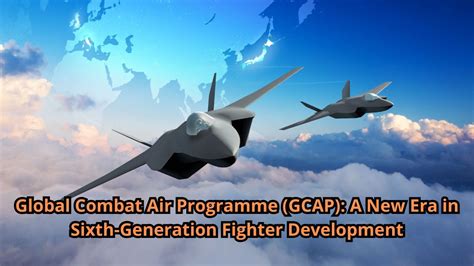
In this sense, the F-35 is not the endgame—it is a bridge to the future. And Italy, through Cameri, is standing firmly at that crossroads.
Conclusion: Why Italy Matters More Than Ever in NATO’s Airpower Strategy
The presence of F-35 production in Italy is not a logistical convenience—it is a strategic necessity. It ensures that NATO’s most advanced fighter jet is not confined to a single nation, but is instead embedded across an alliance that depends on speed, coordination, and resilience.
Cameri represents more than a factory. It is a symbol of trust, integration, and shared responsibility. It demonstrates that modern defense is no longer about isolated strength, but about collective capability built on shared infrastructure.
As the F-35 fleet continues to grow and evolve, Italy’s role will only become more central. In a world where the speed of response can determine the outcome of conflict, having production, maintenance, and training capabilities already positioned in Europe is not just an advantage—it is decisive.