The quiet acquisition of two Lufthansa Boeing 747-8 aircraft by the United States Air Force in 2026 is not a flashy expansion of presidential aviation power. It is something far more revealing: a calculated response to delays, logistical pressure, and the harsh reality of maintaining one of the most specialized aircraft fleets in the world. Beneath the surface, this move exposes the fragile intersection between aging infrastructure and an uncertain modernization timeline—one that has forced the Air Force to rethink how it prepares for the future of Air Force One.
A Presidential Fleet Frozen in Time Since 1990
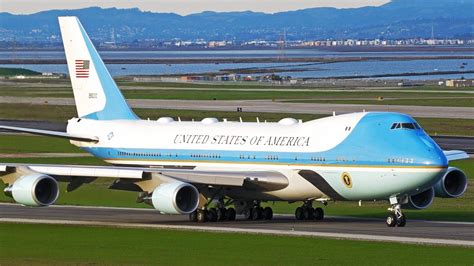
The backbone of presidential air travel in the United States still rests on a pair of Boeing VC-25A aircraft—modified Boeing 747-200B jets that entered service in 1990. These aircraft, instantly recognizable as Air Force One when the president is onboard, were designed for a different era. They replaced the earlier Boeing 707-based VC-137 fleet, bringing a leap in size, endurance, and onboard capability.
For more than three decades, these aircraft have served as more than just transport. They are airborne command centers, capable of operating through crises, equipped with secure communications and defensive systems. Yet time has not been kind. While meticulously maintained, the underlying platform reflects 1980s engineering, making every additional year of service a growing challenge in terms of reliability, maintenance costs, and technological relevance.
The problem is not simply age—it is mismatch. The current fleet is based on a generation of aircraft that differs fundamentally from its intended successor. That gap has now become impossible to ignore.
The VC-25B Delay Crisis Reshaping Air Force Planning
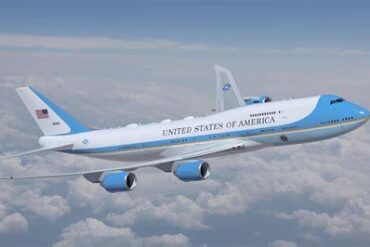
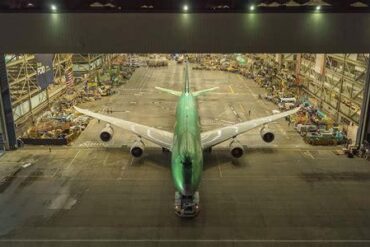
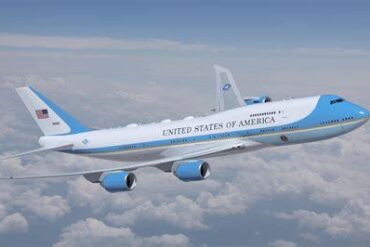
The Air Force One replacement program, centered on the Boeing VC-25B, was supposed to mark a seamless transition into a new era of presidential aviation. Based on the Boeing 747-8i, the VC-25B promised improved efficiency, modern systems, and enhanced capabilities tailored to 21st-century demands.
Instead, the program has become a case study in delay. Originally scheduled for delivery in 2024, the timeline has slipped dramatically, with projections now pointing to 2028—or potentially even later. This is not a minor scheduling hiccup. It is a multi-year disruption that has forced the Air Force into a reactive posture.
The implications ripple outward. Training pipelines cannot wait. Maintenance crews must prepare for entirely new systems. Operational planning must bridge the gap between two vastly different aircraft generations. The delay has effectively created a vacuum—one the Air Force cannot afford to leave unfilled.
Why Lufthansa’s Boeing 747-8 Aircraft Are the Perfect Solution
The decision to acquire aircraft specifically from Lufthansa is not coincidental. It is a precise and strategic move shaped by scarcity and compatibility.
The Boeing 747-8i is no longer in production. When Boeing ended 747 manufacturing in 2023, it closed the door on future airframe availability. That instantly transformed existing aircraft into finite, highly valuable assets—especially for operators like the U.S. Air Force, which plans to rely on a tiny fleet of these jets for decades.
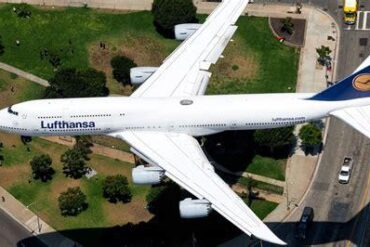
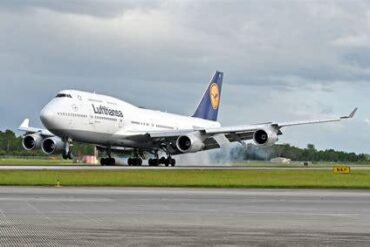
Lufthansa stands out as one of the last major airlines still operating passenger-configured 747-8 aircraft. Its fleet represents a rare opportunity: relatively modern airframes with operational histories, maintained to high standards, and closely aligned with the configuration baseline of the VC-25B.
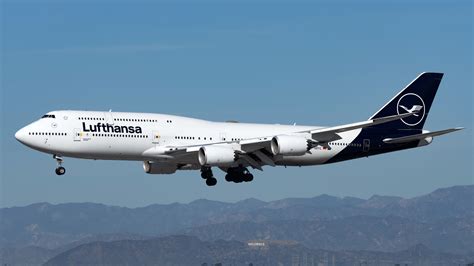
This is not about convenience—it is about necessity. The Air Force requires aircraft that mirror the systems, performance, and structure of its future presidential fleet. Older 747 variants simply do not meet that requirement. The Lufthansa jets do.
Training Today for an Aircraft That Hasn’t Arrived Yet
One of the acquired aircraft will serve a crucial role: it will fly. Not in presidential service, but as a dedicated training platform.
Transitioning from the 747-200-based VC-25A to the 747-8-based VC-25B is not a simple upgrade. It is a generational leap. Cockpit layouts differ significantly. Flight systems are more advanced. Maintenance procedures are more complex. Even handling characteristics require adjustment.
By introducing a 747-8 into its inventory now, the Air Force gains something invaluable—time. Pilots can begin familiarization training years before the VC-25B enters service. Engineers can develop maintenance protocols. Support crews can learn the nuances of the aircraft in a controlled environment.
Without this step, the Air Force would face a compressed and risky transition period once the new aircraft finally arrive. With it, the groundwork is already being laid.
A Second Aircraft With a Completely Different Purpose
The second Lufthansa 747-8 will likely never carry passengers again. Its value lies not in flight, but in disassembly.
As harsh as it sounds, this aircraft represents a strategic запас—a controlled reservoir of spare parts. For an out-of-production aircraft like the 747-8, this is not just practical. It is essential.
Maintaining a small fleet over decades requires access to parts that will only become rarer with time. Engines, avionics, structural components—each piece becomes harder to source as the global fleet shrinks.
By acquiring an entire aircraft for parts, the Air Force secures a long-term supply chain under its own control. It eliminates dependence on uncertain aftermarket availability and protects against future shortages that could ground critical assets.
The Hidden Economics of a $400 Million Decision
The reported $400 million cost for both aircraft might seem steep at first glance. But viewed through the lens of long-term operational strategy, it begins to look like a calculated investment.
The price does not simply buy two airplanes. It buys:
- A fully operational training platform
- A comprehensive запас of spare parts
- A hedge against future supply chain disruptions
- A bridge across a multi-year program delay
In essence, the Air Force is purchasing stability. It is ensuring that the eventual transition to the VC-25B is not defined by chaos, but by preparation.
The End of the 747 Era Makes Every Aircraft Priceless
The Boeing 747 has long been known as the “Queen of the Skies,” but its reign has officially ended in production terms. With no new aircraft being built, the existing fleet has entered a new phase—one defined by attrition.
Airlines are retiring their 747-8 passenger aircraft, often replacing them with more fuel-efficient twin-engine jets. As this trend continues, the pool of available airframes shrinks further.
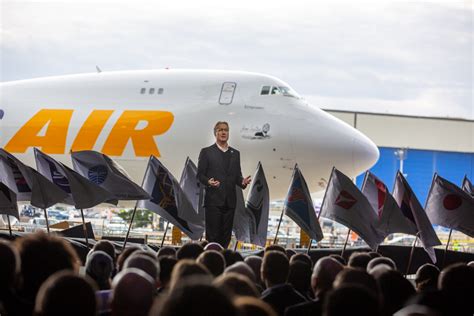
For the Air Force, this creates urgency. Waiting too long could mean losing access to suitable aircraft entirely. The Lufthansa deal reflects a recognition of this narrowing window.
It is a race not just against time, but against global fleet dynamics.
A Program Under Pressure: What This Move Really Signals
Beyond logistics and training, this acquisition sends a clear signal about the state of the VC-25B program. It underscores just how far the project has drifted from its original expectations.
When a military organization begins investing heavily in interim solutions, it reveals a lack of confidence in near-term timelines. The Lufthansa purchase is not a contingency—it is an adaptation to a new reality.
The Air Force is no longer planning around when the VC-25B should arrive. It is planning around the possibility that delays could extend even further.
The Future of Air Force One Hinges on Preparation, Not Delivery
In the end, the acquisition of Lufthansa’s Boeing 747-8 aircraft is less about airplanes and more about foresight. It is a recognition that the success of the next Air Force One will depend not just on when it arrives, but on how ready the system is to support it.
This quiet purchase reflects a broader truth in military aviation: the aircraft itself is only part of the equation. Training, maintenance, logistics, and supply chains are equally critical—and far less visible.
By acting now, the Air Force is shaping a smoother transition, insulating itself from uncertainty, and ensuring that when the next generation of presidential aircraft finally takes to the skies, it does so backed by a foundation already years in the making.
And in a program defined by delays, that kind of preparation may be the most important asset of all.