Commercial airliners do not simply disappear once airlines retire them. Military aircraft do not quietly fade away after decades of service. Instead, many of them end up parked wingtip-to-wingtip in enormous desert storage facilities known as aircraft boneyards. These sprawling aviation graveyards are among the most fascinating industrial landscapes on Earth, combining engineering, recycling, logistics, and aviation history in one place.
Far from being simple dumping grounds, modern aircraft boneyards are highly organized operations where aircraft are preserved, dismantled, refurbished, sold for parts, or even returned to active service years later. Dry climates, massive open spaces, and specialized maintenance expertise make these facilities critical to the global aviation ecosystem.
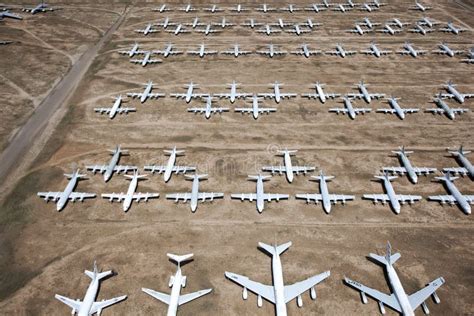
Some of these sites hold hundreds of commercial jets from airlines that no longer exist. Others preserve military bombers, transport aircraft, helicopters, and fighters that may one day fly again if geopolitical events suddenly demand it. During the COVID-19 pandemic, aircraft storage facilities became more important than ever as airlines scrambled to park thousands of grounded jets.
The following facilities represent the world’s largest and most influential aircraft boneyards, ranked by storage capacity and operational scale.
10. Twente Airport – The Netherlands’ Aircraft Recycling Hub
Twente Airport may only accommodate around 80 aircraft, but it has become one of Europe’s most respected aviation recycling centers. Located in the eastern Netherlands, the airport transformed itself after its military and civil operations declined, eventually evolving into a specialized center for aircraft disassembly and component recovery.
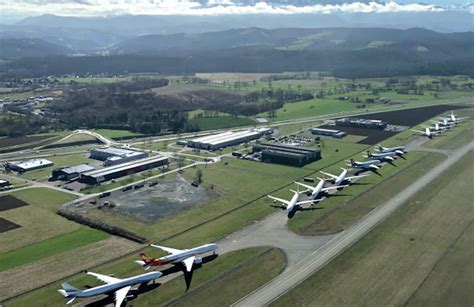
The facility gained international attention during the pandemic when Lufthansa temporarily stored several Boeing 747 aircraft there. Seeing jumbo jets lined up on the tarmac of a relatively quiet Dutch airport created a surreal image of the aviation crisis gripping the world.
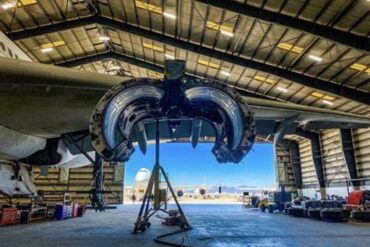
The heart of Twente’s operation is Aircraft End-of-Life Solutions, commonly known as AELS. The company specializes in carefully dismantling retired aircraft and recovering usable components. Engines, avionics, landing gear systems, and cockpit instruments are inspected, certified, and sold back into the global aviation supply chain.
This process is remarkably efficient. Modern aircraft contain thousands of reusable components, and recycling them dramatically reduces costs for airlines and maintenance operators. Instead of manufacturing brand-new replacement parts, carriers can source certified used components from dismantled aircraft.
Twente’s story also reflects a broader shift in aviation sustainability. Aircraft recycling has become a multi-billion-dollar business, with some modern airframes capable of having up to 90% of their materials reused or repurposed.
9. Tarbes–Lourdes–Pyrénées Airport – France’s Aviation Recycling Powerhouse
Located near the Pyrenees mountains in southern France, Tarbes–Lourdes–Pyrénées Airport combines commercial aviation with one of Europe’s most advanced aircraft recycling operations. The site can store more than 100 aircraft, but its real importance lies in its industrial expertise.
TARMAC Aerosave operates the facility as part of a partnership involving Airbus, Safran, and Suez. That combination effectively brings together aerospace manufacturing, engine technology, and industrial recycling expertise under one roof.
Unlike many aircraft graveyards that primarily store planes, Tarbes actively processes them. Aircraft arriving at the facility undergo preservation, maintenance, teardown, or recycling depending on their future value. Some aircraft are temporarily parked before returning to airline service, while others are stripped for components and materials.
The airport itself remains active with commercial passenger traffic, hosting flights from cities including London, Dublin, Paris, and Rome. This creates an unusual contrast where vacation travelers board Ryanair flights while retired aircraft sit nearby awaiting dismantling.
One of the most significant developments in modern aviation recycling has occurred at facilities like Tarbes. Older aircraft once ended their lives as scrap metal with limited reuse value. Today, sophisticated recovery systems extract titanium, aluminum, carbon composites, wiring, electronics, and highly valuable engine components with extraordinary precision.
8. Alice Springs Airport – Australia’s Desert Storage Giant
Australia’s remote interior might seem like an unlikely place for a global aviation hub, yet Alice Springs Airport has become the largest aircraft storage facility in the Asia-Pacific region. With room for approximately 200 aircraft, the site benefits from one of aviation’s most valuable natural resources: dry desert air.
Humidity is the enemy of parked aircraft. Moisture accelerates corrosion, damages wiring, and deteriorates structural components. Alice Springs receives very little rainfall, making it ideal for long-term storage.
During the pandemic, airlines across Asia rushed to secure parking space for grounded fleets. Cathay Pacific, Singapore Airlines, and several international carriers sent aircraft to Alice Springs, including giant Airbus A380 superjumbos.
The sight of multiple A380s parked in the Australian outback highlighted how dramatically global aviation had changed. Aircraft designed to transport hundreds of passengers across oceans suddenly became temporary residents of the desert.
The facility’s importance extends beyond storage. Aircraft preserved in desert conditions maintain higher residual value because they suffer less environmental deterioration. That matters enormously when airlines eventually decide whether to reactivate, sell, or dismantle their fleets.
Alice Springs also demonstrates how aviation infrastructure can evolve. Although passenger traffic at the airport has declined compared to its peak decades ago, its role in aircraft storage has transformed it into a strategically important global asset.
7. Kingman Airport – Arizona’s Forgotten Military Giant
Kingman Airport occupies roughly 4,000 acres in Arizona and traces its origins to the aftermath of World War II. At the time, the United States possessed enormous numbers of surplus military aircraft, creating an urgent need for storage and disposal facilities.
Known then as Depot No. 41, Kingman became one of the primary processing centers for retired wartime aircraft. Thousands of bombers, fighters, and transport planes once filled the desert landscape.
Today, the airport stores around 250 aircraft and focuses heavily on maintenance, recycling, and component recovery. Former regional jets, cargo aircraft, and aging commercial airliners are common sights there.
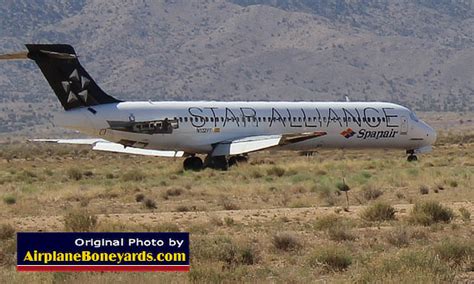
Arizona’s desert climate continues to make the state one of the world’s premier aircraft storage regions. The combination of low humidity, stable weather, and hard desert soil creates ideal conditions for parking heavy aircraft without extensive pavement infrastructure.
Kingman also plays an important role in aviation economics. Aircraft nearing retirement often still contain engines worth millions of dollars. Avionics systems, landing gear assemblies, and auxiliary power units can remain commercially valuable long after the airframe itself becomes obsolete.
6. Teruel Airport – Europe’s Largest Aircraft Boneyard
Teruel Airport in Spain has rapidly grown into Europe’s largest aircraft storage facility, with room for approximately 250 aircraft. Unlike traditional airports, Teruel handles no scheduled passenger flights. Its entire identity revolves around storage, maintenance, and recycling.
The airport became globally visible during the COVID crisis when more than 100 aircraft filled its parking areas. Rows of grounded airliners turned the Spanish facility into one of aviation’s defining images of the pandemic era.
TARMAC Aerosave also operates here, and Teruel has become particularly important for handling Airbus A380 aircraft. As airlines retired portions of their superjumbo fleets earlier than expected, the facility developed specialized infrastructure to dismantle the enormous double-decker jets.
Scrapping an A380 is a massive engineering operation. The aircraft contains advanced composites, enormous landing gear systems, and highly sophisticated electronics. Teruel’s dedicated A380 hangars allow technicians to safely process these giant aircraft while maximizing material recovery.
The airport’s expansion reflects a growing reality in commercial aviation: modern fleet management increasingly depends on sophisticated storage and recycling networks capable of handling next-generation aircraft.
5. Pinal County Airpark – The Commercial Aircraft Mega Facility
Pinal County Airpark in Arizona can store more than 400 aircraft across 1,500 acres, making it one of the largest commercial aircraft storage facilities on Earth.
Originally established as a World War II military base, the airpark evolved into a major center for maintenance, repair, overhaul, and storage operations. Marana Aerospace Solutions now manages the facility and markets it as the world’s largest commercial aircraft MRO and storage complex.
Unlike smaller boneyards that focus mainly on retired aircraft, Pinal County frequently hosts aircraft transitioning between active service and temporary storage. Airlines use the site to park excess capacity during downturns while preserving the option to return aircraft to operation later.
That flexibility became critically important during the pandemic. Many aircraft stored there eventually reentered airline fleets as travel demand recovered faster than expected.
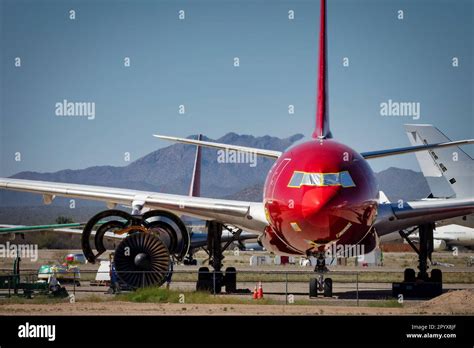
Aircraft storage is surprisingly technical. Engines require protective coverings, fuel systems must be stabilized, and critical components need regular inspections. Even parked aircraft continue receiving maintenance attention to prevent deterioration.
4. Southern California Logistics Airport – Victorville’s Endless Aircraft Rows
Southern California Logistics Airport, commonly called Victorville Airport, is among the most recognizable aircraft storage sites in the world. Located in California’s Mojave Desert, the facility can accommodate approximately 500 aircraft.
The airport previously operated as George Air Force Base before transitioning into a commercial aerospace and logistics center. Today, its vast parking aprons regularly host Boeing 747s, Airbus A380s, narrowbody airliners, and retired cargo aircraft.
Victorville became internationally famous during the pandemic when satellite images revealed hundreds of parked airliners stretching across the desert landscape. The facility essentially became a temporary holding area for global aviation.
What separates Victorville from many traditional boneyards is its industrial diversity. Boeing, General Electric, and aerospace testing firms operate there alongside storage companies. This creates an ecosystem where aircraft maintenance, modification, engineering, and storage all occur simultaneously.
The airport also handles aircraft conversions, transforming retired passenger jets into cargo freighters. As e-commerce demand surged globally, aging airliners found second lives carrying packages rather than passengers.
3. Mojave Air & Space Port – Where Aviation Meets Spaceflight
Mojave Air & Space Port occupies a unique position in aerospace history. While widely known for experimental aviation and private spaceflight development, it is also one of the world’s largest aircraft storage facilities, capable of accommodating over 1,000 aircraft.
More than 60 aerospace companies operate at Mojave, creating an atmosphere unlike any conventional airport. Experimental aircraft, retired airliners, rocket technology, and advanced aerospace testing all coexist in the desert environment.
The airport gained additional visibility during the pandemic as several Airbus A380 fleets from Qantas and China Southern Airlines were temporarily stored there. Seeing massive superjumbos parked beside experimental aerospace projects perfectly captured Mojave’s unusual character.
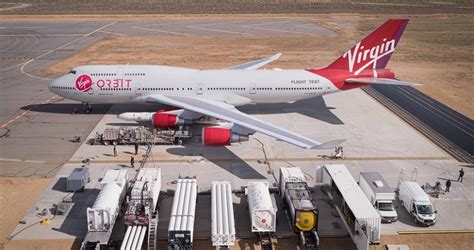
Mojave’s role extends beyond storage. Aircraft undergo testing, refurbishment, repainting, engine runs, and engineering modifications before returning to service or moving into retirement.
The facility represents the increasingly blurred line between aviation and space industries. Companies working on next-generation aerospace systems often operate directly beside aircraft maintenance firms and storage operations.
2. Roswell International Air Center – New Mexico’s Aviation Desert Empire
Roswell International Air Center covers roughly 5,000 acres in New Mexico and can accommodate more than 1,000 aircraft. Although many people recognize Roswell because of UFO mythology, the airport’s real-world aviation importance is enormous.
The facility became one of the busiest aircraft storage sites during the pandemic, reportedly handling around 400 commercial aircraft at its peak. Airlines including American Airlines, United, Air Canada, UPS, Hawaiian Airlines, and Polar Air Cargo have all utilized the site.
Roswell’s dry climate makes it highly attractive for long-term aircraft preservation. The facility also possesses extensive maintenance capabilities, allowing aircraft to undergo inspections, repairs, and reactivation work while in storage.
Unlike isolated desert facilities, Roswell still supports commercial passenger operations through American Eagle flights to Dallas/Fort Worth. That combination of active airline service and massive aircraft storage creates a fascinating operational mix.
1. Davis-Monthan Air Force Base – The Largest Aircraft Boneyard on Earth
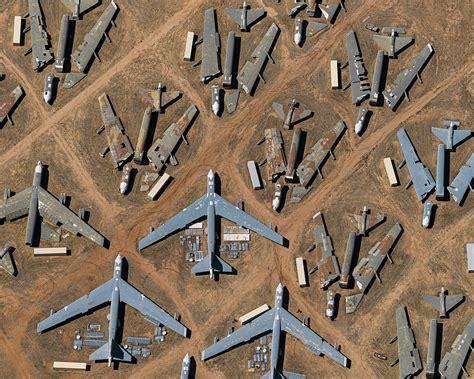
Davis-Monthan Air Force Base in Tucson, Arizona, stands alone as the undisputed king of aircraft boneyards. Spanning around 10,000 acres and housing more than 3,000 aircraft plus 6,000 engines, it is the largest aviation storage facility in the world.
The site serves as headquarters for the 309th Aerospace Maintenance and Regeneration Group, commonly known as AMARG. This enormous military operation manages retired, surplus, and reserve aircraft from across the United States armed forces.
Rows of bombers, fighters, cargo planes, reconnaissance aircraft, helicopters, and transport jets stretch across the Arizona desert in astonishing numbers. Satellite imagery of Davis-Monthan reveals one of the most surreal industrial landscapes on the planet.
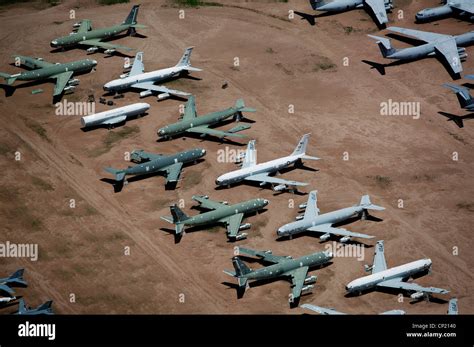
The facility exists because Arizona’s desert environment is exceptionally well suited for aircraft preservation. Low rainfall, minimal humidity, and hard caliche soil dramatically reduce corrosion while supporting the tremendous weight of military aircraft.
But Davis-Monthan is not merely a graveyard. Many aircraft stored there remain strategically valuable. Some are maintained in reactivation condition, allowing them to return to service if necessary.
That capability proved critical when AMARG rapidly prepared stored Mi-17 helicopters for transfer to Ukraine. Technicians reportedly completed the task within only three days, demonstrating the strategic flexibility of the facility.
Davis-Monthan also functions as one of the largest aircraft parts recovery operations in the world. Thousands of reusable components are extracted annually and redistributed throughout the US military aviation network.
In many ways, the world’s largest aircraft boneyard is not a cemetery at all. It is a giant aerospace reserve system, preserving decades of aviation history while quietly supporting the future of military and commercial flight.