Earning a Private Pilot License (PPL) is a significant milestone in any aviator’s journey, but it often raises the question: Should we pursue an Instrument Rating (IR) immediately afterward? For university students or time-strapped professionals, this decision carries implications for cost-efficiency, skill development, and long-term aviation goals. This article dissects the benefits, challenges, and strategic considerations of enrolling in instrument flight training right after earning a private license.
Understanding the Instrument Rating’s Role
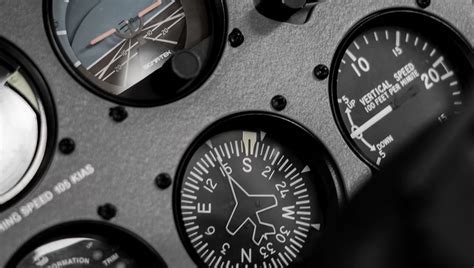
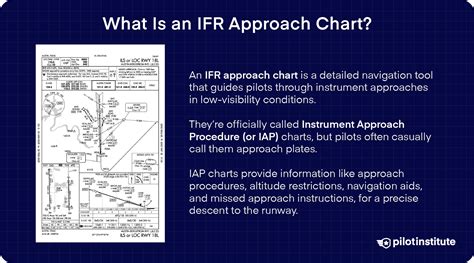
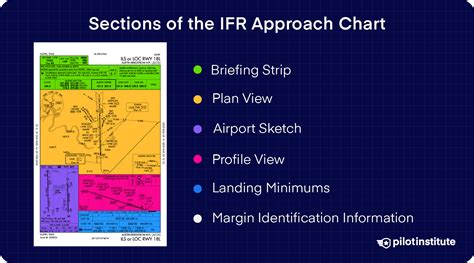
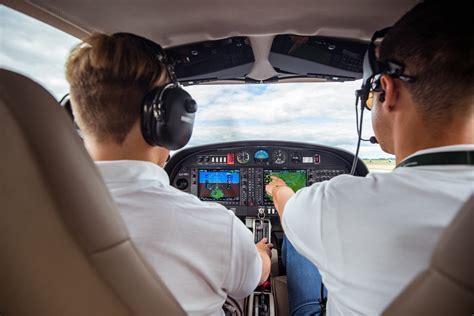
The Instrument Rating (IR) is a crucial certification that enables pilots to operate aircraft under Instrument Flight Rules (IFR)—that is, flying solely by reference to instruments in low visibility or through clouds. This rating is not just a box to check; it transforms a recreational pilot into a proficient, weather-resilient aviator capable of cross-country travel under diverse meteorological conditions.
While the PPL permits flying in visual meteorological conditions (VMC), an instrument-rated pilot can legally and safely penetrate cloud layers, fly in rain, and operate under lower visibility thresholds. It’s a leap in both capability and responsibility.
The Strategic Value of Immediate Transition
Many aviation professionals advocate for pursuing the Instrument Rating immediately after the PPL for one dominant reason: skill continuity. After completing the intense regimen of flight training, checkride preparation, and solo hours, the muscle memory, procedural familiarity, and airspace awareness are at their peak. Delaying the next stage may result in skill decay that demands expensive re-familiarization.
Moreover, students who transition seamlessly into IR training benefit from the momentum of structured learning, maintaining their cognitive adaptability to ATC communication, aeronautical decision-making, and flight planning. Flying under VFR alone often lacks the structured challenge needed to advance a pilot’s proficiency.
Financial and Academic Considerations
For university students, such as the individual who posted this query on r/flying, the concern over balancing academics and flight training is valid. However, flight schools increasingly offer modular IR programs that can be paced to fit around semester schedules. This adaptability means a student can pursue an instrument rating during summer breaks or lighten academic loads while training intensively.
Additionally, pursuing the IR early can often yield cost savings. A pilot who continues flying regularly into their IR training reduces the need for currency flights or re-training. Conversely, a pilot who takes a break after the PPL may require several additional hours—at an average cost of $200–$300 per hour—in order to regain their former proficiency.
IFR Time: A Gateway to Professional Aviation
For those with aspirations toward a Commercial Pilot License (CPL) or Airline Transport Pilot (ATP) certification, the Instrument Rating is not optional—it’s essential. In fact, most Part 141 and Part 61 professional pilot tracks require early acquisition of the IR.
More importantly, time logged under IFR is often weighted more heavily by regional airlines and charter operators during hiring decisions. It reflects a pilot’s exposure to real-world navigation challenges, air traffic integration, and risk mitigation—all of which build the foundations of airline competency.
Delaying the IR could mean postponing professional progress. For students targeting internships, flight instruction roles, or time-building partnerships, having the IR unlocks significantly more opportunity.
Skill Decay and Repetition: The Hidden Costs of Waiting
Flying under VFR-only conditions often limits a pilot’s exposure to ATC structure, enroute charts, and procedural checklists. Within weeks of earning a PPL, unused skills begin to atrophy. Pilots who do not pursue an instrument rating immediately may find themselves needing to relearn airspace protocols, communication formats, and navigational techniques.
This decay results in more simulator time, additional flight hours, and—frequently—a longer path to competency once IR training begins. For this reason, many Certified Flight Instructors (CFIs) recommend no more than a two-month break between the PPL checkride and the start of IR ground school or dual instruction.
Emotional and Mental Preparedness
Another advantage of jumping directly into IR training is the psychological resilience built during PPL training. Students still in “training mode” are generally more comfortable with regular performance evaluations, cockpit critique, and fast-paced syllabus schedules. This mindset is difficult to re-enter after a long pause.
Additionally, the complexity of instrument procedures, charts, and weather analysis may feel overwhelming to pilots who are not mentally engaged with current aviation theory. Starting while still fresh from PPL training ensures that pilots are mentally conditioned to handle the IR’s intensity.
The Academic Juggle: Planning Around University
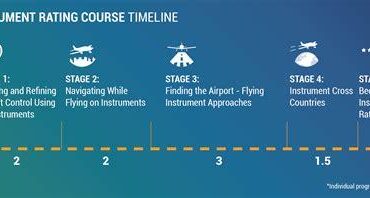
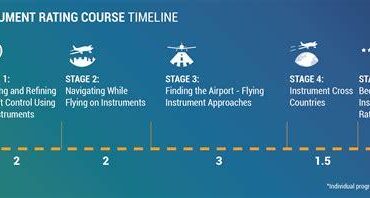
For students balancing academics with aviation goals, timing is critical. The optimal solution is often a hybrid training model, which breaks the instrument syllabus into:
-
Ground school during the semester (online or in-person)
-
Flight training intensives over breaks (summer/winter)
Such arrangements allow students to retain the benefits of continuity while avoiding burnout. It’s vital to communicate scheduling needs with flight schools that understand student obligations and can tailor training blocks accordingly.
Universities with aviation programs (like Embry-Riddle, Purdue, or UND) often integrate IR coursework with academic calendars, enabling streamlined completion. Even if not enrolled in such a program, Part 61 flight schools can often mirror this flexible structure.
Risk Management and Safety Confidence
Instrument-rated pilots are statistically less likely to experience controlled flight into terrain (CFIT), spatial disorientation, or loss of control during inadvertent IMC encounters. For private pilots in diverse climate regions—where VMC can vanish in minutes—the IR is not just a rating, it’s a safeguard.
By gaining comfort with aircraft control without external reference, pilots elevate their decision-making skills, situational awareness, and confidence during adverse weather. Immediate transition into IFR training allows these habits to develop before risky scenarios occur.
Career-Building Momentum
For those considering flight instruction (CFI) or future employment as a regional First Officer, earlier completion of the IR accelerates the time-building journey. Many positions require instrument current, IFR-proficient pilots who can operate in both training and commercial environments.
Students who obtain the IR early can begin logging IFR cross-country flights, working with instrument instructors, and—if pursuing a CFII later—develop the foundations for effective instrument instruction techniques.

Conclusion: Timing Is a Strategic Advantage
In short, the answer to the question “Instrument rating immediately after private pilot?” is a calculated yes for most aspiring aviators—especially those with professional goals or constrained timelines. The decision should be informed by personal goals, financial readiness, academic workload, and long-term vision, but in nearly all cases, beginning IR training shortly after the PPL ensures:
-
Skill continuity
-
Improved safety
-
Reduced costs from skill decay
-
Earlier access to advanced flight privileges
Pilots who build upon the PPL foundation without delay enter their aviation careers with not only stronger skills but also faster access to high-value flight experiences.
Frequently Asked Questions
Should I wait until I get more VFR experience before starting instrument training?
While VFR experience has value, delaying IFR training can actually increase the cost and time of certification. Skills are sharpest immediately after earning the PPL. Structured IFR training will still provide plenty of supervised VFR flight exposure during its syllabus.
How much does instrument training cost after the PPL?
Costs vary based on location and training environment, but most pilots can expect to spend $8,000–$12,000 USD for the full IR. Going straight into the rating can reduce redundant flight hours and keep total costs closer to the lower end.
Can I train for the instrument rating part-time during university?
Yes. Many flight schools offer customized training schedules. You can complete the ground school component during the semester and fly during breaks. Flexibility is key, and starting sooner allows for a modular pace.