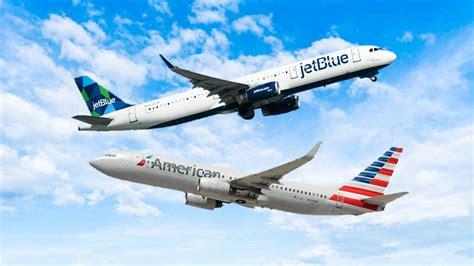
The question of which U.S. airline benefits most from buying JetBlue in 2026 is no longer hypothetical speculation—it is a strategic puzzle unfolding in real time. As JetBlue grapples with sustained losses and mounting structural disadvantages, the airline has quietly transformed from a customer favorite into one of the most intriguing acquisition targets in the global aviation industry. The stakes are enormous: the right buyer doesn’t just gain aircraft and routes—it acquires access to constrained airports, premium transcontinental products, and a foothold in some of the wealthiest travel markets in the world.
JetBlue’s struggles are not the result of poor branding or weak demand. Quite the opposite. The airline has built a loyal following with its extra-legroom economy seating, competitive pricing, and standout Mint premium cabin. Yet the economics simply don’t add up. A network heavily concentrated in the congested Northeast, combined with limited pricing power and an underdeveloped premium segmentation strategy, has left the carrier exposed in a market increasingly dominated by scale and global reach.
In this environment, consolidation becomes less of a possibility and more of an inevitability. The real question is not whether JetBlue will be acquired—but which airline stands to gain the most strategic advantage from doing so.
JetBlue’s Structural Weaknesses Create a Rare Acquisition Opportunity
JetBlue’s current position reflects a broader “K-shaped recovery” in the U.S. airline industry. While giants like Delta, United, and American generate record profits, smaller and mid-sized carriers are increasingly squeezed by rising costs and shifting consumer preferences.
At the core of JetBlue’s vulnerability is its geographic concentration. Its strongest hubs—New York JFK and Boston Logan—are among the most capacity-constrained airports in the world. While these locations provide access to high-yield passengers, they also introduce operational fragility. Weather disruptions, air traffic congestion, and slot restrictions routinely ripple across JetBlue’s network, damaging reliability and increasing costs.
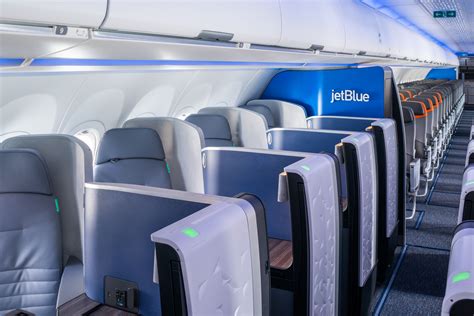
Compounding the issue is JetBlue’s limited revenue diversification. The airline has historically relied on a single-class-heavy configuration, with minimal upsell opportunities. Although Mint has been a success on transcontinental and transatlantic routes, it remains a niche offering rather than a network-wide solution.
The result is a paradox: JetBlue is highly valuable in specific markets, yet structurally disadvantaged as a standalone airline. For an acquirer, however, those same weaknesses can become strategic strengths—if integrated correctly.
United Airlines: The Power Player With the Most to Gain
Among all potential buyers, United Airlines emerges as the most strategically advantaged candidate—even if the path to acquisition is the most complex.
United’s interest in JetBlue is neither new nor subtle. The “Blue Sky” partnership established in 2025 serves as a clear signal of intent, allowing both airlines to test commercial cooperation while laying the groundwork for deeper integration. For United, the prize is unmistakable: instant access to JFK Airport, one of the most coveted aviation assets in the world.
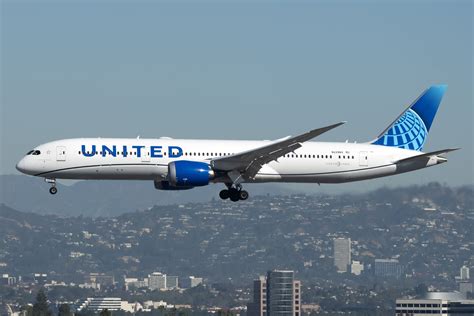
United’s absence from JFK since 2015 has long been viewed as a strategic gap. While its Newark hub dominates the New York metropolitan area, it lacks the prestige and premium demand associated with JFK, particularly for international business travelers. Acquiring JetBlue would not just solve this problem—it would redefine United’s position in the Northeast.
Beyond New York, JetBlue delivers something equally valuable: Boston Logan as a full-scale hub. Boston is one of the wealthiest and fastest-growing business markets in the U.S., yet United’s presence there is relatively modest. With JetBlue, United would instantly gain critical mass, enabling it to compete more aggressively with Delta and American.
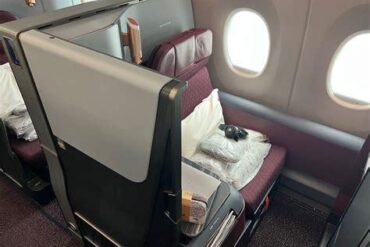
There’s also a compelling fleet and product synergy. Both airlines operate Airbus A320-family aircraft with overlapping engine types, reducing integration complexity. More importantly, JetBlue’s Mint product fills a gap in United’s premium transcontinental strategy, offering a ready-made solution that can be scaled across key routes.
The only real obstacle is regulatory. United is already the largest airline in the country, and absorbing JetBlue would trigger intense antitrust scrutiny, particularly in the New York market. Concessions—such as slot divestitures—would likely be required, potentially diluting some of the strategic upside.
Yet even with these challenges, United stands out. It is the only airline for which a JetBlue acquisition would be transformational rather than incremental.
Alaska Airlines: The Strategic Fit That Arrives at the Wrong Time
On paper, Alaska Airlines presents one of the cleanest strategic fits for JetBlue. The two carriers operate largely complementary networks: Alaska dominates the West Coast and transpacific leisure markets, while JetBlue controls key corridors in the Northeast and Caribbean.
A merger between the two would create a coast-to-coast challenger capable of rivaling the “Big Three” in both reach and customer experience. The combination would also unlock new opportunities in transcontinental travel, where Alaska has historically struggled to compete due to its lack of a premium product.
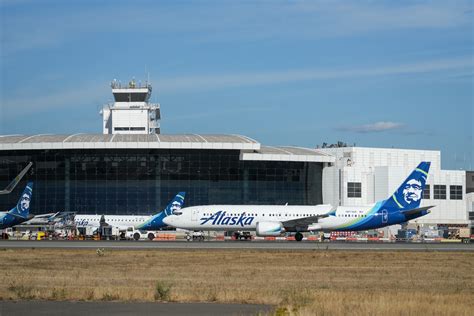
JetBlue’s Mint-equipped A321 fleet would immediately elevate Alaska’s offering on long-haul domestic routes, while its transatlantic services would give Alaska an instant foothold in Europe—something it has long explored but never fully executed.
Fleet compatibility, while not perfect, is manageable. Alaska has already demonstrated flexibility by integrating Airbus aircraft through its Hawaiian Airlines acquisition, including A321neos and A330s. Adding JetBlue’s Airbus-heavy fleet would expand this diversification rather than introduce it from scratch.
So why isn’t Alaska the obvious winner?
Timing.
The airline is still deeply engaged in the complex integration of Hawaiian Airlines, a process that demands operational focus, financial discipline, and management bandwidth. Taking on JetBlue—an airline significantly larger than Hawaiian—would stretch resources to the breaking point.
Financially and operationally, Alaska is simply not positioned to execute another major acquisition in 2026. The strategic logic is sound, but the window is closed—for now.
Southwest Airlines: A Cultural Clash Disguised as an Opportunity
At first glance, Southwest Airlines appears to be an unlikely suitor. Its business model—built on fleet simplicity, low costs, and operational efficiency—stands in stark contrast to JetBlue’s more hybrid approach.
Yet the potential benefits are not insignificant.
JetBlue would give Southwest something it has historically lacked: a strong presence in the Northeast, along with access to slot-constrained airports like JFK and LaGuardia. It would also provide an entry point into transatlantic markets, an area Southwest has cautiously explored but never fully committed to.
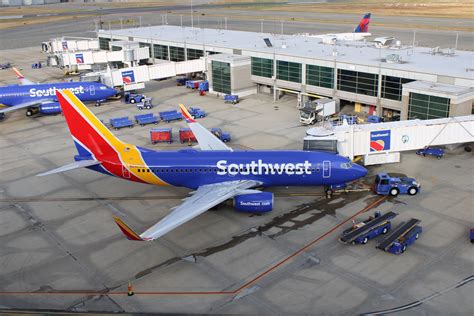
However, the deeper one looks, the more the challenges outweigh the benefits.
Southwest’s entire operational philosophy is built around the Boeing 737. Integrating JetBlue’s diverse Airbus fleet—including A220s and multiple A321 variants—would introduce complexity that runs counter to decades of strategy. Training, maintenance, scheduling, and supply chains would all be affected.
Even more problematic is the mismatch in product philosophy. JetBlue’s Mint cabin and premium offerings require a level of segmentation and service differentiation that Southwest has historically avoided. Adopting these features would fundamentally alter Southwest’s identity, while removing them would erase much of JetBlue’s value.
In short, Southwest could acquire JetBlue—but it would struggle to extract meaningful synergy without undermining its own model.
The Verdict: United Airlines Holds the Strategic Edge
When evaluating which airline benefits most from buying JetBlue in 2026, the answer becomes increasingly clear: United Airlines.
Unlike Alaska, United has the financial strength and operational scale to absorb JetBlue without overextension. Unlike Southwest, it has a business model that can accommodate—and even amplify—JetBlue’s premium offerings. Most importantly, United has the most to gain in areas where JetBlue is strongest: New York, Boston, and premium transcontinental travel.
The acquisition would not be without challenges. Regulatory hurdles could reshape the deal, forcing United to make concessions that reduce its immediate gains. Integration risks, while manageable, would still require careful execution.
But even with these caveats, the strategic upside is unmatched.
JetBlue offers United something rare in modern aviation: a shortcut to market leadership in regions where organic growth is nearly impossible. In a world defined by slot constraints and infrastructure limits, that kind of opportunity doesn’t come twice.
A Defining Moment for U.S. Airline Consolidation
The potential sale of JetBlue is more than a corporate transaction—it is a reflection of a broader shift in the airline industry. Scale, network breadth, and premium revenue streams are no longer advantages; they are necessities.
For JetBlue, the path forward as an independent carrier is narrowing. For its potential buyers, the decision is not just about expansion—it is about strategic survival in an increasingly polarized market.
And for United Airlines, the equation is simple: acquire JetBlue, and reshape the competitive landscape of American aviation for the next decade.