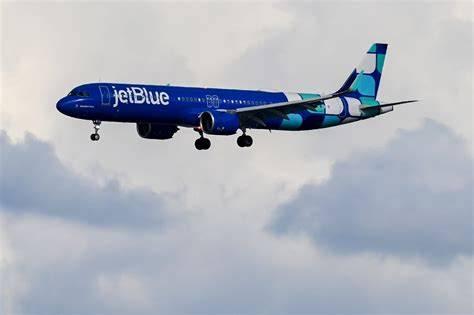
JetBlue’s most important bondholders have brought in outside restructuring counsel, a signal that the lenders holding roughly $2.7 billion of the carrier’s debt want an independent view of its finances at the precise moment its stock has fallen to the weakest level in its 23 years as a public company. According to The Wall Street Journal, the creditor group — investors in JetBlue’s $2 billion of notes due in 2031 and a $742 million first-lien loan — retained financial adviser PJT Partners and law firm Akin Gump Strauss Hauer & Feld, moves that give lenders their own negotiating bench should the airline’s turnaround stall. The appointments stop well short of a bankruptcy filing or an operational overhaul, and JetBlue has not signaled either is near, but they confirm that the people who own its paper are no longer content to wait on quarterly updates.
The market’s verdict was blunt. JetBlue shares fell nearly 10% on Thursday to close at $2.65, the lowest price since the New York-based airline listed in 2002, and the stock has now lost 42% of its value this year. The decline tracks a surge in jet fuel costs that has hit carriers worldwide and landed hardest on airlines that leave themselves exposed to spot prices. JetBlue does not hedge a meaningful share of its fuel needs, a posture that keeps costs low in calm markets and turns punishing when prices spike. US jet fuel prices have nearly doubled since late February, and JetBlue’s average fuel price jumped 76% to $4.23 per gallon in the second quarter. The airline raised its third-quarter fuel estimate again in September, a revision that told investors the pressure had not peaked.
Those numbers explain why the creditor group moved now. As of June 30, JetBlue carried $8.5 billion in debt and finance lease obligations, and S&P Global Ratings recently downgraded the airline, citing the strain from higher fuel prices. A downgrade raises the cost of refinancing and tightens the covenants lenders can demand, which makes the 2031 notes and the first-lien loan the natural pressure points. Hiring PJT and Akin Gump does not mean the group expects default; it means the group intends to be informed, organized, and represented if JetBlue comes asking for relief, whether through amended terms, fresh collateral, or a broader exchange of debt. Restructuring advisers are routinely retained in situations that never reach Chapter 11, and their presence is best read as leverage rather than prophecy.
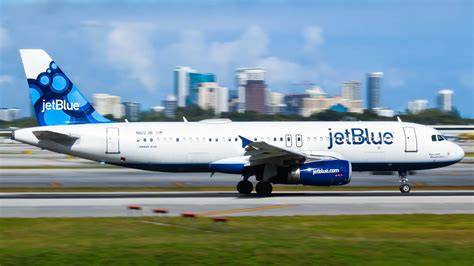
Joanna Geraghty’s JetForward Plan Faces Its Most Expensive Test
JetBlue has spent two years arguing that its problems are fixable from the inside, and the centerpiece of that argument is JetForward, the plan launched in July 2024 under CEO Joanna Geraghty. The strategy concentrates on controlling costs and extracting more revenue from the airline’s existing network and fleet, prioritizing the routes and aircraft that earn their keep over expansion for its own sake. JetBlue says the work is producing results. In a statement to Reuters, the carrier said it “remains confident in its JetForward strategy” and pointed to progress toward sustained profitability. The tension is that improvement measured in unit costs can be erased by a fuel bill rising faster than any efficiency program can offset.
The second quarter illustrated both sides of that equation. Revenue climbed 14.5% year-on-year to $2.7 billion, evidence that demand for JetBlue’s product remains solid, yet the airline still posted a $247 million net loss. Higher operating costs, led by fuel, have made a sustained recovery harder to reach even as the top line grows, and that gap between revenue momentum and bottom-line losses is precisely the pattern that unsettles secured lenders. JetBlue’s third-quarter results, due October 27, now carry unusual weight: they will show whether the turnaround is advancing quickly enough to reassure both the bondholders who just hired advisers and the equity investors who have pushed the stock to a record low.
Speculation about a sale has added another layer of uncertainty. Reports earlier this year said JetBlue explored a possible transaction with rival carriers, with United Airlines, Alaska Airlines, and Southwest Airlines named as potential buyers. United CEO Scott Kirby, asked about JetBlue on a recent earnings call, offered only that he had “nothing new to add on that.” A sale would resolve the debt question for creditors in one stroke, but any combination of this size would draw close antitrust scrutiny, and JetBlue’s failed attempt to acquire Spirit Airlines remains a cautionary precedent for dealmaking in this sector.
BlueFirst Cabin and Fort Lauderdale Expansion Aim to Lift Revenue Per Flight
Even under financial duress, JetBlue is investing in the product it sells. Its most consequential launch is BlueFirst, a domestic first-class cabin for flights that do not offer the airline’s Mint business-class service. Earlier this month JetBlue opened bookings for BlueFirst on more than 30 routes, with the first flight scheduled between Boston Logan (BOS) and Fort Lauderdale (FLL) on December 8. The cabin offers wider recliner seats, complimentary meals, premium snacks and drinks, and priority service at the airport, a bundle designed to capture travelers willing to pay more on the short-haul routes where JetBlue’s margin has historically been thinnest.

The network tells a similar story of concentrated bets. JetBlue has expanded capacity at Fort Lauderdale by nearly 40% following the collapse of Spirit Airlines, a rare opportunity to take share in a market where a competitor vanished overnight, and it continues to reinforce its bases in New York and Boston. Against those commitments, the carrier has deferred 44 Airbus A321neo deliveries to 2030 and beyond, a cash-preservation move that trades future growth for present liquidity. That balance — spending on premium cabins and stronghold airports while pushing aircraft orders years into the future — is the financial tightrope JetBlue must walk while its creditors watch.
For passengers, nothing changes yet. There is no indication that JetBlue’s current schedule or onboard offerings will be altered by the creditor appointments, and the airline continues to operate the network it has built. The real audience for the coming weeks is the lenders and the rating agencies. How JetBlue frames its fuel exposure, its cash position, and the pace of JetForward on October 27 will determine whether PJT Partners and Akin Gump remain precautionary hires or become the opening act of a far more difficult negotiation.