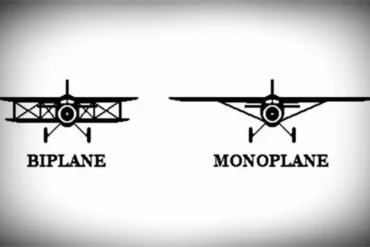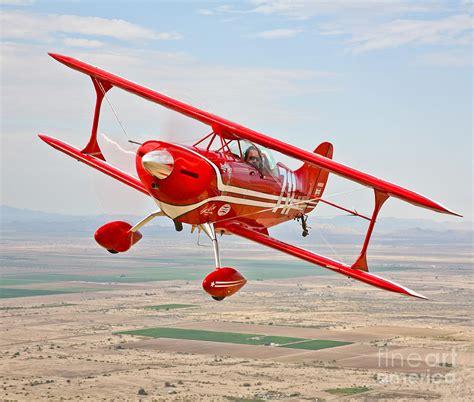
The Pitts Special stands as an icon of American aerobatic aviation, celebrated for its tight turns, thrilling climbs, and unmatched precision. Originally conceived by Curtis Pitts in the early 1940s, this aircraft has endured as a favorite among competition pilots and airshow legends. With its light frame, exceptional roll rate, and timeless biplane design, the Pitts Special carved its name into the skies of aviation history and continues to soar in modern aerobatic circles.
A Vision Born in War-Time: The Design Origins of the Pitts Special
The blueprint for the Pitts Special was sketched in the heart of World War II. While the world was focused on combat aircraft, Curtis Pitts envisioned something different—an agile, acrobatic sport aircraft. The single-seat design, known as the S-1, took to the skies for the first time in September 1944. Despite the global backdrop of war, this humble yet revolutionary plane laid the groundwork for what would become one of the most influential aerobatic aircraft of all time.
What set the Pitts design apart was its focus on pure aerobatic performance. Short wings, light weight, and a responsive control system made the aircraft perfectly suited for extreme maneuvers. Early prototypes included the famous “Little Stinker”, flown by aerobatic champion Betty Skelton, as well as the “Big Stinker”, a two-seat prototype that would later evolve into the S-2 series.
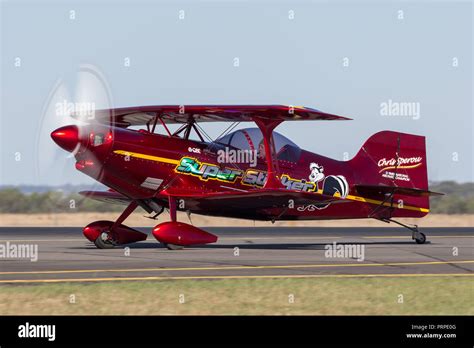
The aircraft’s distinctive names—like “Super Stinker” and “Macho Stinker”—reflected not only Pitts’ humor but also the increasingly powerful and specialized versions that followed.
From Homebuilders to Professionals: Evolution Through the Decades
In 1962, Pitts Enterprises took a bold step by releasing plans of the S-1C to homebuilders. This democratization of aircraft construction allowed aviation enthusiasts to build their own high-performance biplanes from scratch. As homebuilding took off in the 1960s and 1970s, so did the popularity of the Pitts Special.
Even with evolving airframe materials and avionics, the Pitts design remained loyal to its core principle: maximum maneuverability with minimal weight. The S-2, a two-seat version powered by a 260 hp Lycoming engine, debuted in 1967 and became certified in 1971. It preserved the soul of the original design while adding the ability to train the next generation of aerobatic pilots.
Ownership of the Pitts design changed hands over the years—Curtis Pitts sold it to Doyle Child in 1977, then to Frank Christensen’s Christen Industries in 1981. By the 1990s, production rights were with Aviat Aircraft in Wyoming, and homebuilt rights were acquired by Steen Aero Lab. Yet, the integrity of Curtis Pitts’ original blueprint never wavered.
Modern Variants and Capabilities
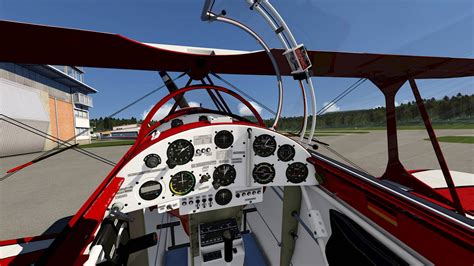
Today, Aviat Aircraft continues to produce certified versions of the Pitts S-1 and S-2. These models boast refined engines, advanced avionics, and reinforced structures, but their DNA remains unmistakably Pitts.
- S-1S: A single-seat variant equipped with a 180–200 hp Lycoming IO-360 engine, 17′4″ wingspan, and blistering 2,600 ft/min climb rate.
- S-2B: The two-seat aerobatic workhorse with a 260 hp Lycoming AEIO-540-D4A5 engine, 20′ wingspan, and 2,700 ft/min climb rate.
Some builders and performers have equipped their Pitts Specials with engines pushing 450 horsepower, creating truly ferocious airshow machines. Plans for the S-1S and kits for both the S-1C and S-1SS remain available, supporting a dedicated global community of homebuilders.
Airshow Stardom and Competitive Dominance
The Pitts Special is not merely a relic of engineering history—it is a proven champion. Its rise to prominence was cemented by legendary airshow performers such as Betty Skelton and Caro Bayley, who showcased the aircraft’s unparalleled aerobatic capabilities.
The Pitts’ competitive record is equally formidable. In 1972, the U.S. Aerobatic Team won the World Aerobatic Championships flying Pitts biplanes, an achievement that underscored the aircraft’s technical superiority and pilot compatibility.
Though later surpassed at the top international levels by composite monoplanes like the Extra 300, the Pitts remains a strong contender in intermediate and advanced categories and continues to inspire thousands of pilots.
World Records and Legendary Feats
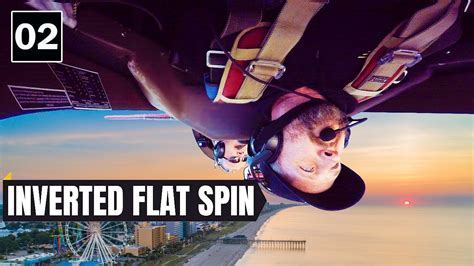
Few aerobatic planes have inspired such extreme displays of flying prowess. The Pitts was central to one of the most daring aerobatic records in aviation history: On March 20, 2016, pilot Spencer Suderman completed an astonishing 98-turn inverted flat spin in a Sunbird S-1x variant, descending from 24,500 feet to just 2,000 feet above ground.
This feat shattered the previous record of 81 turns—also held by Suderman in a Pitts S-2B in 2014—and highlighted the aircraft’s unique ability to remain controllable in the most disorienting conditions.
Variants: A Family of Precision Machines
From the original two-seat prototypes to the radical custom builds of today, the Pitts Special family includes a wide range of configurations:
Single-Seat Variants
- S-1: The original, featuring minimal weight and raw responsiveness.
- S-1C: Homebuilt version with flat wings, symmetrical airfoil.
- S-1S: Factory-built with symmetrical wings and four ailerons.
- S-1SS: Kit-built variant with performance upgrades.
- Model 11 / S-1-11B “Super Stinker”: A high-performance modern evolution.
Two-Seat Variants
- S-2A/S-2B: Tandem-cockpit trainers with 200–260 hp engines.
- S-2C: Improved handling, faster roll rate, and better fuel systems.
- S-2SE: Special edition with composite tweaks.
All certified Pitts variants are rated for +6/-5 g, attesting to their aerobatic robustness and structural integrity.
Military and Civilian Operators Worldwide
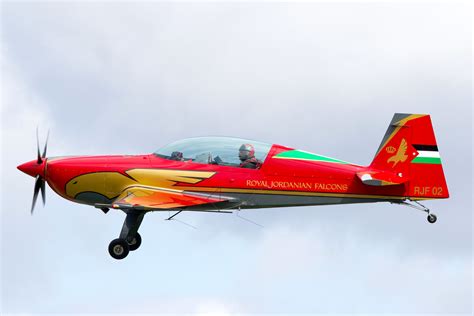
Though designed for sport and competition, the Pitts Special has seen limited military service. Notably, Chile operated Pitts aircraft between 1980–1989, and Jordan’s Royal Jordanian Falcons used them for aerobatic team displays.
In the civilian realm, the Goodyear Eagles Aerobatic Team and other formation groups helped amplify public exposure, often thrilling audiences across the globe with synchronous loops and rolls.
Preserved for Posterity: Museum Examples
Recognizing its cultural and historical significance, aviation museums across the world proudly display Pitts Specials:
- Canada: S-1C in Halifax, S-2A at the Canada Aviation and Space Museum in Ottawa.
- Italy: S-1T on display in Somma Lombardo.
- United States: A range of S-1 and S-2 models in states including Ohio, California, Arizona, Virginia, Oregon, Wisconsin, Texas, and Colorado.
These aircraft stand as static tributes to the relentless pursuit of airborne excellence.
Conclusion: The Enduring Legend of the Pitts Special
The Pitts Special is more than a biplane—it is a testament to precision engineering, pilot skill, and unrelenting innovation. Its impact on both amateur and professional aerobatics is monumental, with a legacy spanning eight decades. Curtis Pitts created not merely an aircraft, but an aerobatic philosophy, one that continues to resonate in the hearts of aviators today.
Whether roaring through a competition box or gliding into a museum hangar, the Pitts Special commands respect. It is the embodiment of American ingenuity in the sky—simple, elegant, and fiercely effective.
For any pilot who has ever pushed the envelope or dreamed of dancing on the wind, the Pitts Special remains the gold standard.