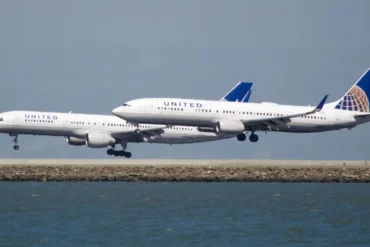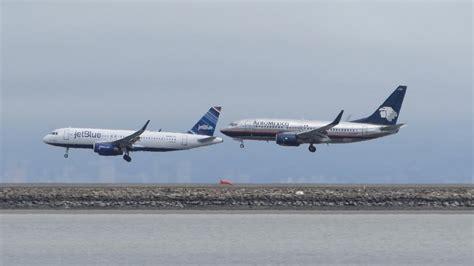
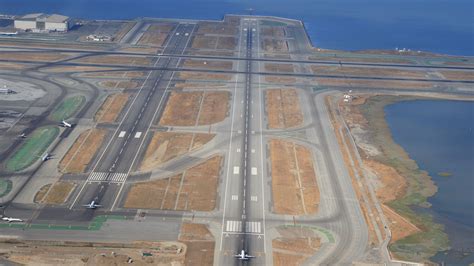
San Francisco International Airport has long been a stage for one of aviation’s most mesmerizing spectacles: two aircraft descending side by side, perfectly aligned, touching down in near synchrony. That choreography—iconic, efficient, and uniquely tied to SFO’s identity—has now been brought to an abrupt halt. The Federal Aviation Administration’s decision to ban parallel landings at the airport marks a defining moment not just for California aviation, but for national air traffic policy.
The move reflects a sharp pivot in regulatory philosophy. Where once visual separation procedures allowed pilots to rely on “see and avoid” techniques, today’s safety environment demands stricter, technology-driven oversight. In a system increasingly strained by congestion and complexity, the margin for human error has narrowed to near zero. At SFO, where the runways sit just 750 feet apart, that margin has effectively disappeared.
For decades, pilots approaching runways 28L and 28R executed simultaneous approaches under clear weather conditions, maintaining visual contact with each other to ensure safe spacing. It was a system that worked—until it didn’t align with modern risk tolerance. The FAA’s intervention signals that even time-tested procedures must evolve when systemic vulnerabilities are exposed.
Why SFO’s Runway Design No Longer Meets Safety Standards
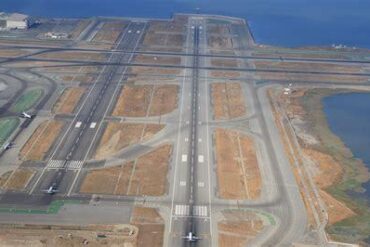
SFO’s runway configuration has always been both its strength and its Achilles’ heel. The airport’s closely spaced parallel runways allowed for high arrival rates, enabling it to rank among the busiest hubs in the United States. But that same proximity has now become a liability under updated federal safety frameworks.
The FAA’s latest analysis determined that the 750-foot separation distance falls short of requirements for independent parallel approaches using radar-based separation. Under older rules, visual confirmation between pilots compensated for the narrow gap. Today, however, the agency insists on greater physical and procedural buffers, particularly in congested airspace.
This shift is not theoretical. It is rooted in a growing body of near-miss incidents across the country. In recent weeks alone, aircraft have come dangerously close during approach phases at major airports, highlighting how quickly situations can escalate when multiple variables—pilot perception, controller workload, and equipment limitations—intersect.
At SFO, the implications are immediate and measurable. Arrival rates are being cut from 54 aircraft per hour to just 36, a staggering reduction that translates into fewer flights, longer holding patterns, and a fundamentally altered operational rhythm.
The Catalyst: A Tragedy That Redefined Risk
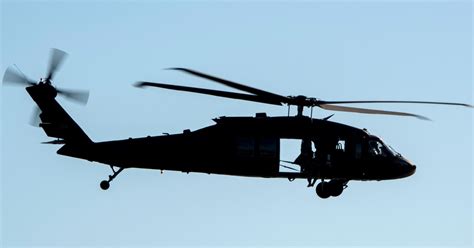
Behind the policy change lies a sobering catalyst: the January 2025 mid-air collision involving American Airlines Flight 5342. The crash, which claimed 67 lives, exposed critical flaws in reliance on visual separation during complex approach scenarios.
Investigators found that a Bombardier CRJ700 and a U.S. Army Black Hawk helicopter were operating under visual separation rules when the collision occurred. The helicopter crew had reported the jet in sight—but tracked the wrong aircraft. Compounding the situation, the helicopter’s ADS-B system was not broadcasting, and the jet’s TCAS collision avoidance system was inactive due to low altitude.
The result was catastrophic, but the lessons were clear. Visual systems, while effective under ideal conditions, can fail when layered with human misjudgment and technological gaps. The FAA’s response has been decisive: mandating radar-based separation at major airports and eliminating procedures that rely heavily on pilot discretion in high-density environments.
From Efficiency to Caution: A New Operational Reality
The end of parallel landings at SFO is not just a procedural change—it is a transformation of how the airport functions. With staggered approaches now required, aircraft must line up in sequence rather than descend in tandem. This introduces delays that ripple through the entire network.
Travelers will feel the impact first. SFO has already warned of delay increases between 15% and 25%, with many flights expected to endure holding patterns of at least 30 minutes before landing. For an airport that serves as a critical transpacific gateway, these delays can cascade into missed connections and disrupted itineraries.
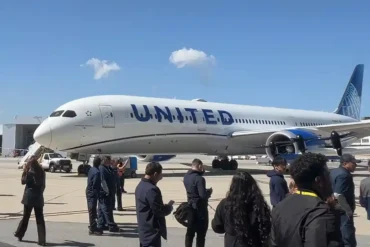
Airlines, particularly United Airlines, which controls roughly half of SFO’s capacity, are recalibrating schedules. Fewer flights during peak periods, increased buffer times, and potential fare adjustments are all part of the emerging landscape. Alaska Airlines, the second-largest operator, faces similar constraints.
Operationally, the shift also means higher fuel consumption. Aircraft forced into extended holding patterns burn more fuel, increasing costs and environmental impact. Ironically, a measure designed to enhance safety introduces new economic and ecological challenges.
A Nationwide Shift in Air Traffic Control Philosophy
SFO is not an isolated case—it is the most visible example of a broader transformation. The FAA’s updated guidance effectively suspends visual approaches in congested airspace across the United States, signaling a nationwide move toward standardized, technology-driven separation methods.
This policy reflects a deeper recognition: the aviation system of today is more complex than ever. Increased traffic volumes, mixed-use airspace with helicopters and drones, and evolving aircraft technologies demand predictability over improvisation. Visual separation, once a symbol of pilot skill and efficiency, is now seen as an unnecessary risk in high-density corridors.
The consequences extend beyond airport operations. Air traffic controllers must adapt to more structured sequencing, airlines must redesign route networks, and passengers must recalibrate expectations around punctuality. The system is becoming slower—but also more resilient.
The End of an Icon—and the Beginning of a Safer Era
There is no denying the emotional weight of this decision. SFO’s parallel landings were more than an operational technique; they were a visual signature, a moment of precision that captivated aviation enthusiasts and casual travelers alike. Their disappearance marks the end of a distinctive chapter in airport operations.
Yet aviation has always been defined by its willingness to evolve in response to risk. The FAA’s ban underscores a fundamental truth: safety margins must expand as systems grow more complex. What was once acceptable is no longer sufficient in an era where even minor lapses can have catastrophic consequences.
SFO’s skies will look different now—less dramatic, more measured. Aircraft will arrive one by one, spaced with deliberate precision rather than synchronized elegance. It may lack the spectacle of the past, but it reflects a system recalibrated for the future.
In that sense, the end of parallel landings is not merely a loss. It is a recalibration of priorities, where safety decisively takes precedence over efficiency, and where the lessons of tragedy are translated into lasting change.