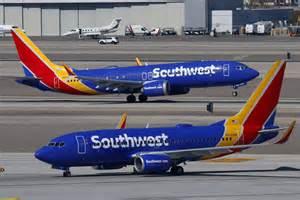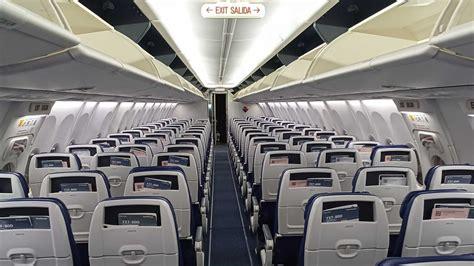
Passengers aboard a Southwest Airlines flight from St. Louis to Fort Lauderdale were confronted with an unpleasant scene after a large dog reportedly had a severe accident in the aisle shortly before landing. The incident occurred on Southwest Flight 4981 (WN4981) on September 15, 2026, leaving crew members with limited time to contain the mess before the Boeing 737 MAX 8 reached the gate.
The flight was traveling from Lambert-St. Louis International Airport (STL) to Fort Lauderdale-Hollywood International Airport (FLL) when the incident unfolded during the final portion of the journey. According to a passenger account posted on Reddit, the first two hours of the flight had been uneventful, but a Belgian Malinois traveling near the front of the cabin became increasingly restless as the aircraft approached Fort Lauderdale.
The dog was reportedly seated at 1C, in the bulkhead area, and was not traveling inside a carrier. The passenger said the animal began scratching at the carpet after watching another traveler walk toward the lavatory. Moments later, the large dog reportedly defecated in the aisle, creating an unusually difficult cleanup problem because of both the volume and the location of the accident.
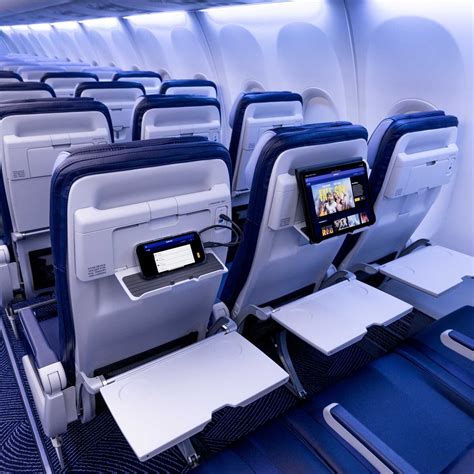
The passenger described the incident as an “absolutely enormous” and highly unpleasant mess, with a particularly strong odor spreading through the forward section of the aircraft. Because the accident occurred close to the front exit, it could not simply be avoided by closing off a remote portion of the cabin. Instead, passengers leaving the aircraft would eventually have to pass the affected area.
The timing made the situation even more challenging. The accident reportedly happened with approximately 25 minutes remaining before landing, meaning the flight attendants had to deal with the immediate problem while the aircraft was still approaching its destination. One crew member was reportedly standing near the exit struggling with the smell, while another attempted to clean the affected area with paper towels.
With so little time available, the crew apparently focused on containing the mess rather than attempting a complete restoration of the carpet while the aircraft was still airborne. Paper towels were placed over the affected area, creating a makeshift barrier until the aircraft could reach the ground. Once the flight landed, passengers were reportedly warned over the public-address system to exercise caution while leaving the aircraft.
Southwest Flight 4981 Landed Normally After the Cabin Incident
Despite the disruption, Flight 4981 landed normally in Fort Lauderdale at approximately 1:40 p.m. local time. There was no indication in the supplied account that the incident affected the aircraft’s ability to operate safely or that the flight itself was diverted.
The main issue for passengers was therefore the condition of the cabin during deplaning. Since the mess was located in the forward aisle, passengers could not simply walk around another row or use a distant part of the cabin to avoid it. The unusual cleanup situation became especially noticeable as a full cabin of passengers began moving toward the exits.
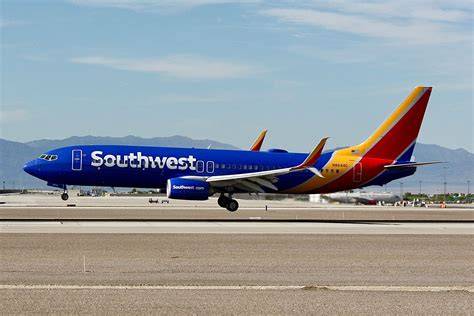
The aircraft involved was identified as Boeing 737 MAX 8 registration N8975K, according to flight-tracking information cited in the reference material. The aircraft reportedly departed Fort Lauderdale again at approximately 2:59 p.m., operating its next segment to Baltimore/Washington International Airport (BWI).
That schedule suggests that ground personnel had less than an hour between the aircraft’s arrival and its next departure to address the cabin problem, although the precise amount of time available for cleaning and inspection is not publicly established in the supplied account. A rapid aircraft turnaround can involve many separate tasks, and a biological contamination incident requires additional attention beyond the routine servicing performed between flights.
How Airlines Handle an In-Flight Biological Mess
Airlines generally carry supplies intended to help cabin crews contain biological contamination during a flight. These can include gloves, absorbent materials, waste bags and disinfecting products. Such equipment is primarily intended to make an immediate situation manageable until the aircraft reaches an airport where appropriate ground-support resources are available.
A cabin crew working in flight has obvious limitations. Flight attendants cannot normally conduct the kind of extensive carpet cleaning or sanitation that can be performed by a specialized airport cleaning team. Their priority is to isolate the affected area, protect themselves and passengers from unnecessary exposure, and keep the cabin operational for the remainder of the flight.
Once an aircraft reaches the gate, ground crews can use more substantial cleaning equipment and stronger disinfecting procedures. Depending on the severity and location of contamination, cleaning may involve removing soiled materials or, in particularly difficult cases, replacing a section of carpet rather than attempting to restore it in place.
The speed of the reported turnaround involving N8975K therefore raises an important distinction between initial containment and full cleaning. The fact that an aircraft returns to service relatively quickly does not by itself establish that the affected area received inadequate treatment. Airlines and their contractors have established procedures for cleaning cabins, while the precise work performed on this aircraft has not been detailed in the supplied material.
Was the Belgian Malinois Officially a Service Dog?
Another important question concerns the dog’s status. The passenger described the animal as a service dog, but the supplied account does not establish independently that it met the federal definition of a service animal.
Southwest’s ordinary in-cabin pet policy applies to small cats and dogs traveling in approved carriers beneath the seat. A large Belgian Malinois would not qualify under those ordinary pet provisions. Trained service dogs are treated differently, however, because federal rules provide specific protections for service animals traveling with passengers with disabilities.
Under U.S. Department of Transportation rules, a service animal is a dog individually trained to perform work or tasks for a person with a disability. Emotional support animals no longer receive the separate airline-travel status they once had under federal rules and are generally handled under applicable pet policies.
The passenger reportedly said the Belgian Malinois wore a collar marked “Do Not Pet,” but did not describe a conventional service-animal vest or other obvious identification. That detail alone cannot establish whether the dog was or was not a legitimate service animal, because service dogs are not universally required to wear a particular type of vest or harness.
Previous Airline Incidents Involving Service Dogs
The Southwest incident also comes against a broader backdrop of unusual service-dog incidents aboard commercial aircraft. In April 2024, a United Airlines flight reportedly had to divert after a service dog defecated in the first-class cabin, with extensive cleaning subsequently required.
Southwest itself has previously faced controversy involving a passenger and a dog after the airline reportedly denied boarding following an alleged defecation incident at an airport service desk. The passenger disputed the airline’s account, illustrating why individual reports of animal-related incidents can contain competing versions of events.
For passengers, the latest Flight 4981 incident was primarily an uncomfortable operational problem rather than a disruption to the flight’s normal landing. Yet it highlights the practical difficulties that can arise when a large animal becomes distressed or has an accident inside a confined aircraft cabin, particularly during the final minutes of a flight when crew members have little opportunity to carry out extensive cleanup.
The aircraft ultimately continued its scheduled operation, while the passengers who had spent the final part of the flight dealing with the odor and the cleanup area were left with an unusually memorable experience at the end of an otherwise routine journey.