Understanding Spoiler Aircraft in Aeronautical Engineering
In modern aviation, spoilers are indispensable components engineered to manage airflow, alter lift, and enhance safety during critical phases of flight. Found on nearly all jet airliners and many smaller aircraft, spoiler systems represent a fundamental technological advancement in aerodynamic control. These devices are integrated into the upper surfaces of wings, where they serve to disrupt the laminar airflow, deliberately reducing lift and increasing drag in a highly controlled manner.
Unlike airbrakes, which are designed solely to augment drag while preserving lift symmetry, spoilers actively disrupt the lift distribution across the wing. This aerodynamic manipulation allows pilots to control descent rate, roll stability, and braking efficiency during and after landing. From gliders to wide-body jets, spoilers have become a standard element in achieving aerodynamic precision.
Types of Spoilers: Flight vs. Ground Deployment
Spoilers are generally divided into two primary categories—flight spoilers and ground spoilers—each tailored to specific phases of the flight envelope.
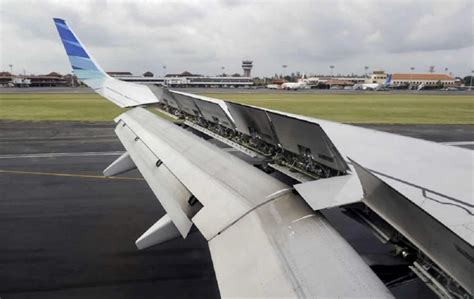
Flight spoilers, also called spoilerons when used asymmetrically, are deployed during flight to enhance descent control or to assist with roll input. In contrast, ground spoilers—commonly known as lift dumpers—are fully deployed immediately upon landing. These maximize aerodynamic drag while neutralizing lift, allowing the aircraft’s full weight to act on the landing gear for optimal braking performance.
The dual-function design seen in multifunction spoilers allows a single surface to operate in both capacities. This approach is widely adopted in modern fly-by-wire aircraft systems such as the Airbus family, where spoilers seamlessly integrate with roll, descent, and landing control logic.
Aerodynamic Mechanics of Spoilers
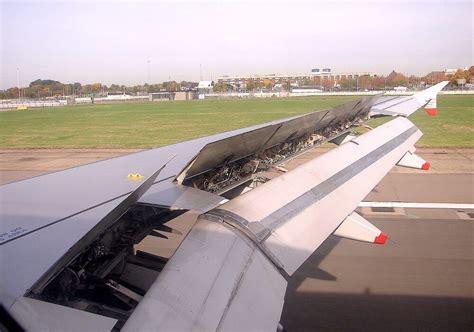
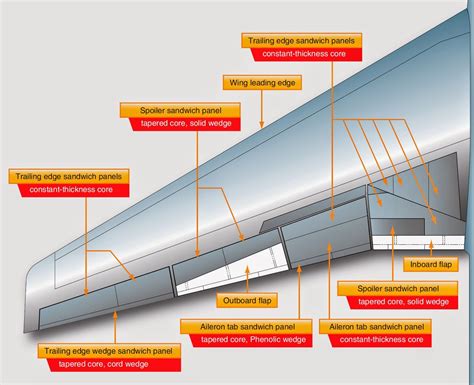
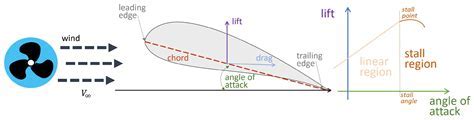
Spoilers are essentially hinged panels located on the wing’s upper surface. When activated, they rise into the airstream, deliberately disrupting the smooth airflow across the wing. This disruption causes a localized stall, resulting in a sharp decrease in lift on that section of the wing and a corresponding increase in drag.
When deployed asymmetrically—only on one wing—they act as spoilerons, facilitating roll control by reducing lift and increasing drag on the affected wing. This approach is particularly beneficial at high speeds where traditional ailerons may induce adverse yaw. By eliminating dedicated ailerons in some aircraft configurations, designers can allocate more trailing edge space to high-lift flaps.
Spoilers in Glider and Turboprop Aircraft
In gliders, spoilers once played a central role in descent control. These devices allowed pilots to steepen the glide angle without altering airspeed—a critical function during approach. Although gliders now largely employ Schempp-Hirth-type airbrakes, the legacy of spoilers remains influential in sailplane design.
In piston-engine aircraft, particularly turbocharged models, spoilers also help prevent shock cooling during rapid descent. By enabling a controlled descent rate without drastically reducing engine power, spoilers maintain engine temperature within safe limits. This is crucial for preventing mechanical failures such as stuck valves or cracked cylinders.
Integration into Jet Airliners
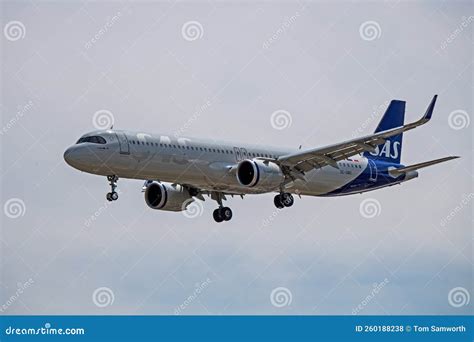
Almost all modern jet airliners—including the Airbus A320, Boeing 737, and Embraer E-Jet families—feature a suite of inboard and outboard spoilers. These are employed during descent, approach, and post-landing rollout.
For example, Airbus aircraft utilize wide-span spoilers for multiple roles:
-
Descent rate control
-
Roll augmentation
-
Gust load alleviation
-
Lift dumping during landing
Some older aircraft, such as the Douglas DC-8, lacked flight spoilers but utilized reverse thrust in flight to manage descent speed. The Lockheed L-1011 Tristar introduced Direct Lift Control (DLC) using spoilers to adjust vertical flight path during approach without altering pitch.
Deployment Safety and Automation
The automation of spoiler deployment is vital to modern aircraft safety. Ground spoilers are generally programmed to activate upon touchdown when weight-on-wheels sensors confirm landing. This automatic deployment ensures that drag is immediately increased, and lift is drastically reduced, improving braking and reducing the risk of rebounding or bounce.
However, when improperly armed or accidentally activated, spoilers have contributed to several aviation accidents. Among these are:
-
Air Canada Flight 621 (1970): Premature spoiler deployment led to structural failure during approach.
-
American Airlines Flight 965 (1995): Failure to deactivate spoilers during climb-out contributed to crash.
-
TAM Flight 3054 (2007): Misconfiguration of the throttles and improper spoiler use caused overrun and fatal crash.
-
2023 Elmina Beechcraft 390 crash: Spoiler activation before touchdown led to a catastrophic loss of lift.
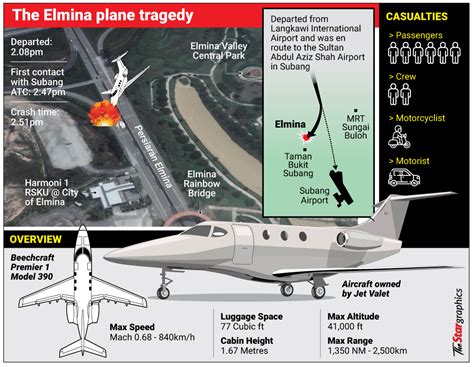
These cases emphasize the necessity for pilot discipline, automated safety interlocks, and rigorous system checks to prevent unintended consequences.
Technological Evolution and the Future of Spoilers
Spoiler design has evolved significantly since their widespread adoption in the mid-20th century. Today’s spoilers are:
-
Electro-hydraulically actuated
-
Integrated with fly-by-wire systems
-
Constructed from advanced composites to minimize weight
In the future, adaptive spoilers may incorporate smart sensors to automatically adjust based on flight conditions, load factors, or turbulence. These systems could further refine how lift and drag are balanced dynamically in real time.
Aircraft manufacturers are also exploring morphing wings with variable geometry to replace or augment spoilers. Such technologies promise to enhance aerodynamic efficiency, reduce fuel burn, and minimize mechanical complexity.
Conclusion: Why Spoilers Matter
Spoilers are far more than simple drag-inducing flaps—they are critical control surfaces that enhance an aircraft’s safety, descent precision, and braking effectiveness. By mastering airflow manipulation, spoilers allow modern aircraft to operate with greater aerodynamic finesse, making landings safer and more efficient, while simultaneously preventing engine cooling issues in piston-driven aircraft.
As aviation continues to evolve, spoilers will remain central to flight control architecture, bridging the gap between mechanical systems and aerodynamic performance.
Frequently Asked Questions (FAQ)
What is the difference between a spoiler and an airbrake?
A spoiler disrupts airflow over the wing, reducing both lift and increasing drag. An airbrake, on the other hand, is designed specifically to increase drag without affecting lift. Spoilers can affect the aircraft’s pitch and roll, while airbrakes are neutral in aerodynamic balance.
Why do spoilers deploy automatically on landing?
Automatic spoiler deployment ensures immediate drag and lift reduction the moment the aircraft touches down. This allows the landing gear brakes to function effectively by maximizing the weight pressing down on them, reducing the chance of runway overrun.
Can spoilers be used during flight?
Yes. Flight spoilers can be deployed mid-air to increase descent rate, manage airspeed, or assist with roll control. When used asymmetrically, they act as spoilerons and provide roll stability—especially effective at higher speeds where ailerons may produce undesirable yaw.