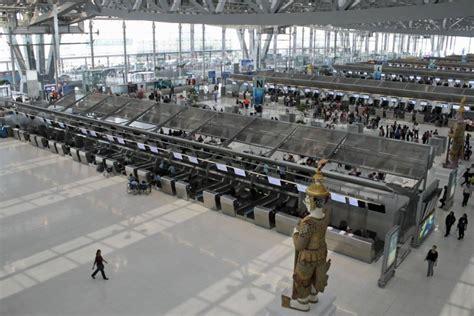
Spanning 3,240 hectares of reclaimed land in Racha Thewa, Samut Prakan, Suvarnabhumi Airport (BKK/VTBS) stands not only as Thailand’s principal air gateway but also as a monument to national ambition and regional prominence. Since its grand inauguration on 28 September 2006, the airport has grown into a crucial aviation hub, handling 62.2 million passengers, 1.39 million tonnes of freight, and over 357,000 aircraft movements in 2024 alone. Strategically linked via Motorway 7 to Thailand’s Eastern Economic Corridor, Suvarnabhumi is also a major cargo epicenter, featuring an Airport Free Zone to boost trade flow.
The Name Behind the Gateway
The name “Suvarnabhumi,” meaning “Golden Land,” was bestowed by King Bhumibol Adulyadej to evoke a mythical Southeast Asian kingdom rich in culture, spirituality, and prosperity. The etymology roots the airport’s identity in Thailand’s broader civilizational narrative, transforming the air hub from a mere infrastructure into a national symbol.
Origins in Turmoil: The Long Road to Completion
The land for the airport, then infamously dubbed “Cobra Swamp,” was purchased in 1973, but political unrest repeatedly stalled construction efforts. Only in 1996 did the Japanese Official Development Assistance (ODA) help revive the ambitious project. The architectural plan—masterminded by the legendary Helmut Jahn and constructed by the ITO Joint Venture—culminated in a structure of astonishing scale and complexity.
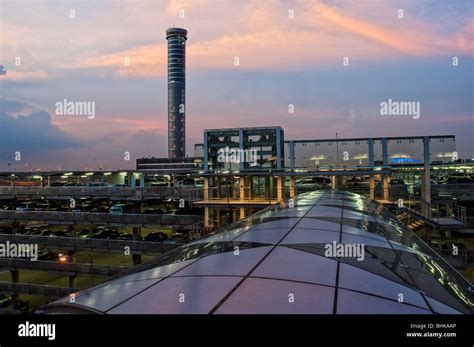
The facility boasts the world’s tallest freestanding air traffic control tower at 132.2 meters, alongside one of the globe’s largest single-terminal buildings, encompassing 563,000 square meters.
First Flights and Operational Trials
Suvarnabhumi underwent rigorous testing, including domestic test flights on 3 and 29 July 2006, involving six Thai carriers. On 1 September, two aircraft—a Boeing 747-400 and an Airbus A300-600—took off simultaneously, showcasing the airport’s dual-runway coordination. Partial commercial operations began on 15 September, leading to a full operational rollout on 28 September 2006 at 03:05. The inaugural movements included Lufthansa Cargo LH8442 (first full operation), Aerosvit VV171 from Kyiv (first passenger arrival), and Saudi Arabian Airlines SV-984 to Riyadh (first outbound cargo flight).
Teething Troubles: A Rocky First Year
Despite its grand opening, Suvarnabhumi faced immediate challenges. Baggage delays stretched up to four hours, while IT and signage issues, coupled with unexpected soil subsidence, marred passenger experiences. By 16 February 2007, the Thai government responded by reopening Don Mueang Airport for domestic traffic.
Structural flaws soon emerged. By January 2007, rutting on runways caused the Department of Civil Aviation (DCA) to withhold the safety certificate, although operations continued. Airlines, led by Thai Airways, began shifting back domestic operations to Don Mueang by March 2009; low-cost carriers followed suit by 2012.
Adaptive Engineering and Resilience
In response, Airports of Thailand (AOT) launched urgent remediation. Of 60 identified faults, 20 were fixed by February 2007, representing less than 1% of the airport’s total construction cost. Despite earlier criticism from IATA in 2016 for “soft-spot repairs,” the airport reinforced its position through persistent upgrades and modifications.
Structural Brilliance: Engineering and Sustainability
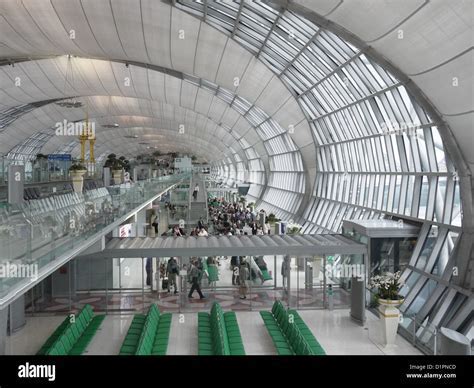
The terminal’s hallmark feature is its wavelike, cantilevered roof comprising eight 2,710-ton steel trusses, spanned by a three-layer translucent fabric membrane that admits natural light while minimizing solar gain. Combined with an innovative cooling strategy, this design reduces energy loads by 50%, aligning with global sustainability standards.
Reputation and Global Rankings
Suvarnabhumi’s performance in international rankings has seen fluctuation. It peaked at 36th globally in 2016, before slipping to 48th in 2020, and fell to 58th in Skytrax’s April 2024 ranking due to increasing immigration processing delays and aging passenger facilities. Despite these setbacks, its operational resilience and infrastructure have kept it central in ASEAN aviation.
Events That Shaped Its Narrative
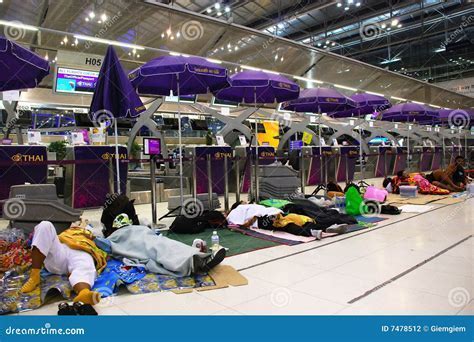
The airport has experienced pivotal events that highlighted both its vulnerabilities and strategic importance. In 2007, runway cracks led to operational delays. The 2008 PAD protests caused a terminal occupation that stranded 350,000 travelers. A global spotlight turned toward Suvarnabhumi during the 2019 asylum standoff involving Rahaf Mohammed, and again in 2021 when a meth-intoxicated motorist drove onto the tarmac, raising alarms about ground security protocols.
Security Challenges: A Persistent Concern
Security at Suvarnabhumi has been an ongoing challenge. Reports have highlighted arrival-hall scams, particularly involving influential taxi cartels with alleged political protection. In 2010, an armed group seized part of the parking infrastructure, further underlining the necessity for systemic reform and transparency in ground operations.
Expansion Programs and Future Capacity
Originally designed to accommodate 45 million passengers, the airport’s Phase II expansion boosted its capacity to 65 million by 2023. The third runway, inaugurated on 1 November 2024, raised the throughput capacity to 94 flights per hour, significantly alleviating congestion.
The Midfield Satellite Concourse 1 (SAT-1)—partially opened in September 2023 and fully integrated by 2024—added 28 new gates, including eight capable of handling A380s and Boeing 747-8s. This facility connects to the main terminal via a Siemens NeoVAL APM (automated people mover), promising seamless passenger mobility.
Airlines, Routes, and Network Dynamics
Suvarnabhumi Airport services 95 passenger airlines and 60 cargo operators, connecting key economic regions across Asia, Europe, Oceania, and Africa.
In the pre-pandemic year of 2019, its top routes by passenger volume included:
- Hong Kong (3.76 million)
- Phuket (3.36 million)
- Singapore (3.26 million)
By 2023, the hierarchy shifted slightly:
- Phuket (2.92 million)
- Seoul–Incheon (2.89 million)
- Singapore (2.84 million)
On the cargo side, 2019 saw heavy tonnage through:
- Hong Kong (172,977 tonnes)
- Singapore (99,397 tonnes)
- Taipei (92,475 tonnes)
Passenger Growth and Pandemic Recovery
Passenger numbers soared from 41.2 million in 2007 to a pre-COVID peak of 65.4 million in 2019. The pandemic decimated traffic to 5.7 million in 2021, but a robust rebound brought the number up to 51.7 million in 2023, and ultimately 62.2 million by 2024—a powerful testament to its resilience.
Noteworthy Incidents and Aviation Safety
The airport has faced several critical safety incidents over the years:
- 8 September 2013: Thai Airways A330 nose gear collapse
- 1 August 2016: Piper PA-31 crash near BKK (1 fatality)
- 8 October 2018: Thai Airways Boeing 747 runway excursion
- 1 July 2020: Air Zimbabwe B767 emergency landing
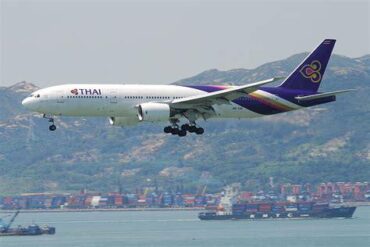
- 21 May 2024: Singapore Airlines B777 diverted after severe turbulence, with one fatality and over 100 injuries
These cases have prompted continual enhancements in airside safety protocols.
Seamless Access: Ground Transport Integration
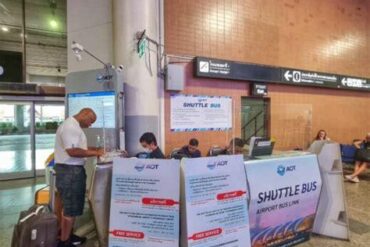
Access to Suvarnabhumi is facilitated by the Airport Rail Link City Line, connecting directly from the underground Suvarnabhumi station to central Bangkok, with key stops like Lat Krabang. This route provides a reliable, congestion-free commute and supports sustainable urban connectivity.
Conclusion: An Evolving Giant
Suvarnabhumi Airport remains a crucial nerve center in Southeast Asia’s aviation network. While its journey has been fraught with engineering, political, and operational challenges, its continual evolution in infrastructure, route development, and sustainability affirms its role as a vital international gateway. With the successful rollout of SAT-1, expanded runways, and resilient post-pandemic recovery, Suvarnabhumi is well-positioned to become a premier hub not just for Thailand, but for the entire Asia-Pacific region.