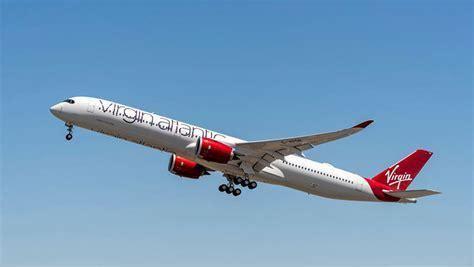
The economics of long-haul aviation have always revolved around a single, relentless variable: fuel. In 2026, that reality has not changed—but the technology shaping it certainly has. Today’s most advanced widebody aircraft are not just marginally better than their predecessors; they represent a generational leap in efficiency, blending cutting-edge materials, revolutionary aerodynamics, and ultra-modern engines into machines that quietly transform airline balance sheets and environmental footprints alike.
Fuel efficiency in aviation is best understood through a deceptively simple metric: liters of fuel burned per passenger per 100 kilometers. It’s the airborne equivalent of miles per gallon, but with far more complexity lurking beneath the surface. Seating configurations, route lengths, payloads, and even weather patterns can nudge these figures up or down. Still, when evaluated across typical long-haul, multi-class layouts, a clear hierarchy emerges—and it’s dominated by a handful of engineering masterpieces.
What follows is a deep dive into the five most fuel-efficient widebody aircraft in commercial service in 2026, each one representing a different philosophy in how to move hundreds of people across continents using as little fuel as possible.
Airbus A330-900neo: Reinventing a Proven Platform with Modern Efficiency
The Airbus A330-900neo occupies an interesting position in the widebody ecosystem. Rather than starting from a clean sheet, Airbus chose to evolve a platform that airlines already trusted. The result is an aircraft that blends familiarity with meaningful efficiency gains, making it a pragmatic—if sometimes overlooked—choice.
At the heart of the A330neo’s transformation are the Rolls-Royce Trent 7000 engines, boasting an impressive 10:1 bypass ratio, the highest in the Trent family. This alone delivers a substantial leap in fuel burn reduction, complemented by aerodynamic refinements such as a larger wingspan and sleek composite sharklets. Together, these upgrades enable approximately 14% lower fuel consumption per seat compared to earlier A330 variants.
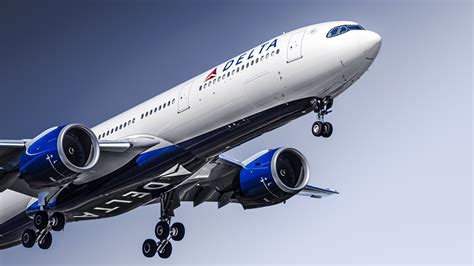
In ideal high-density configurations, the A330-900neo can achieve fuel consumption as low as 2.1 liters per passenger per 100 kilometers. However, in more typical three-class layouts, that figure rises closer to 2.48 liters, highlighting a crucial nuance: this aircraft thrives when packed efficiently. Airlines deploying it on high-demand routes benefit most, particularly where flexibility and moderate range are more valuable than absolute cutting-edge performance.
Despite its efficiency, the A330-900neo faces stiff competition from newer, clean-sheet designs like the A350 and 787. Its economics are highly route-dependent, which explains why its order book, while respectable, trails behind its more modern rivals. Still, it remains a highly capable workhorse—one that proves evolution can sometimes rival revolution.
Airbus A350-1000: Power, Range, and Efficiency in Perfect Balance
The Airbus A350-1000 represents Airbus’ most ambitious vision for long-haul travel: a large, powerful aircraft that refuses to compromise on efficiency. Built almost entirely from advanced composite materials, it is lighter, stronger, and more aerodynamically refined than previous-generation widebodies.
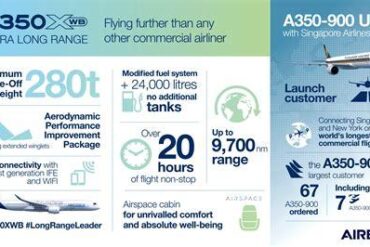
Powering this aircraft are the formidable Rolls-Royce Trent XWB-97 engines, each delivering around 97,000 pounds of thrust. Despite their immense power, these engines are engineered for exceptional efficiency, enabling the A350-1000 to achieve fuel burn figures of approximately 2.39 liters per passenger per 100 kilometers.
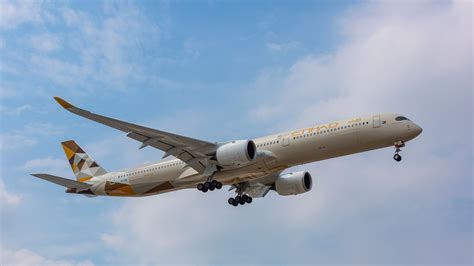
What truly sets the A350-1000 apart is its ability to maintain this efficiency across extreme distances. With a range approaching 9,000 nautical miles, it connects city pairs that were once considered impractical, all while operating at high cruising speeds. This combination of range and efficiency allows airlines to optimize both network reach and operating costs—a rare and valuable pairing.
Its larger fuselage, accommodating up to 410 passengers in a typical configuration, further enhances per-passenger efficiency. In aviation, scale often translates directly into better economics, and the A350-1000 leverages this principle masterfully. It is not merely efficient; it is efficient at scale, which is precisely what modern global airlines demand.
Airbus A350-900: The Versatile Benchmark of Modern Efficiency
If the A350-1000 is about scale, the Airbus A350-900 is about balance. Slightly smaller but equally advanced, it has become one of the most widely adopted long-haul aircraft in the world—and for good reason.
Equipped with the Rolls-Royce Trent XWB-84 engines, the A350-900 delivers slightly less thrust than its larger sibling but maintains nearly identical efficiency levels, also hovering around 2.39 liters per passenger per 100 kilometers. This consistency underscores the strength of the A350 platform: efficiency is not sacrificed for flexibility.
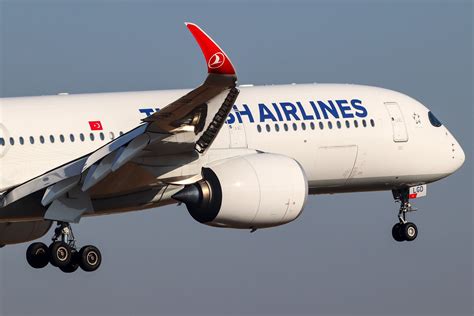
Typically seating between 300 and 350 passengers, the A350-900 hits a sweet spot for airlines. It is large enough to benefit from economies of scale, yet small enough to operate profitably on a wider range of routes. Its impressive range—up to 8,500 nautical miles—makes it a true long-haul specialist, capable of linking distant cities without the burden of excess capacity.
The aircraft’s widespread adoption is no accident. Airlines value its adaptability, whether deployed on ultra-long-haul flagship routes or high-frequency intercontinental services. In many ways, the A350-900 has become the benchmark against which all other widebody efficiency is measured—a standard bearer for modern aviation.
Boeing 787-9 Dreamliner: Precision Efficiency Meets Operational Flexibility
The Boeing 787-9 Dreamliner is where engineering elegance meets operational practicality. Slightly more fuel-efficient than the A350 family on a per-passenger basis, it achieves consumption figures as low as 2.31 liters per passenger per 100 kilometers, placing it firmly among the industry’s elite.
Central to this performance is the aircraft’s extensive use of lightweight composite materials, which reduce overall weight while enhancing structural integrity. Its aerodynamically optimized wings, with their distinctive raked tips, further minimize drag and maximize lift efficiency.
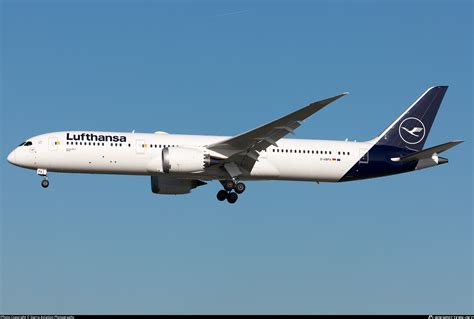
The 787-9 is powered by either the General Electric GEnx or Rolls-Royce Trent 1000 engines, both designed for high efficiency and lower emissions. These engines, combined with the aircraft’s design, deliver a 20–25% improvement in fuel efficiency compared to the aircraft it replaces, such as the Boeing 767.
What makes the 787-9 particularly compelling is its versatility. Seating around 280 to 300 passengers, it is ideally suited for “long and thin” routes—city pairs that cannot support larger aircraft but still demand nonstop service. Its range of approximately 7,900 nautical miles enables airlines to open new routes with lower risk, a capability that has reshaped global air travel networks.
In essence, the 787-9 is not just efficient; it is strategically efficient, enabling airlines to deploy capacity with surgical precision.
Boeing 787-10 Dreamliner: Maximum Efficiency at Higher Capacity
At the top of the efficiency hierarchy sits the Boeing 787-10 Dreamliner, a stretched variant that extracts even greater value from the Dreamliner platform. Sharing the same engines, wings, and fundamental design as the 787-9, it achieves similarly impressive fuel burn figures—around 2.31 liters per passenger per 100 kilometers—but spreads that consumption across more passengers.
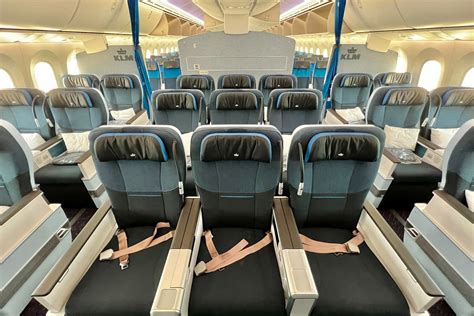
With seating for up to 340 passengers in a typical three-class configuration, the 787-10 leverages its size to maximize efficiency. More passengers mean lower fuel burn per seat, provided the aircraft operates on routes where its slightly reduced range—approximately 6,700 nautical miles—is sufficient.
This trade-off defines the 787-10’s role. It is not designed for the longest routes, but rather for high-demand, medium-to-long-haul corridors where capacity and efficiency must align perfectly. On such routes, it becomes one of the most cost-effective aircraft in the sky.
Recent enhancements, including increased maximum takeoff weight variants, further expand its operational flexibility. Airlines can now push the aircraft harder—carrying more payload or flying slightly longer distances—without sacrificing its core efficiency advantage.
The Future of Fuel Efficiency: Beyond Incremental Gains
The aircraft on this list are not just incremental improvements; they represent a paradigm shift in how efficiency is achieved. Composite airframes, high-bypass turbofan engines, and advanced aerodynamic designs have collectively redefined what is possible in commercial aviation.
Yet, even these achievements may soon look modest. Emerging technologies—ranging from hybrid-electric propulsion to hydrogen-powered engines—promise to push efficiency even further, potentially rewriting the rules of long-haul travel once again.
For now, the Airbus A350 and Boeing 787 families stand as the pinnacle of fuel-efficient design. They are the result of decades of innovation, competition, and relentless engineering refinement. And while passengers may notice quieter cabins and larger windows, the real revolution is happening behind the scenes—measured not in comfort, but in liters saved, costs reduced, and emissions avoided.
In an industry where margins are thin and environmental pressures are mounting, these aircraft are not just technological achievements. They are essential tools shaping the future of global connectivity.