The Evolution of the U.S. Navy’s Carrier Fighter Fleet
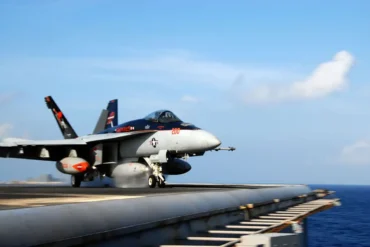
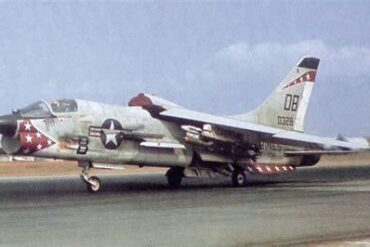
The F/A-18 Super Hornet has been the backbone of the U.S. Navy’s carrier-based fighter fleet for decades. However, advancements in stealth technology, electronic warfare, and unmanned systems have necessitated a shift towards next-generation air dominance platforms. The replacement of the F/A-18 is not a singular event but a phased transition, incorporating multiple aircraft and technological innovations.
The F-35C Lightning II: The Official Successor
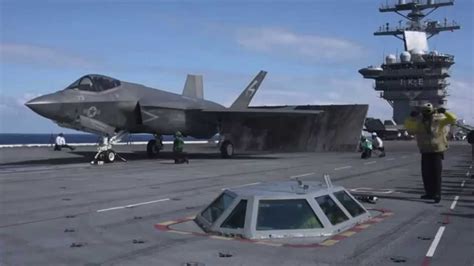
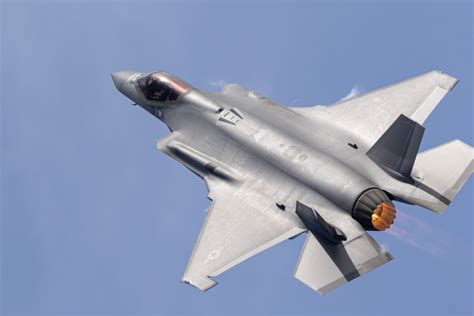
The F-35C Lightning II, a fifth-generation stealth fighter, has been designated as the primary successor to the F/A-18E/F. Designed specifically for carrier operations, the F-35C brings several game-changing capabilities:
- Stealth Design: Reduces radar cross-section, allowing it to penetrate heavily defended airspace undetected.
- Sensor Fusion: Integrates data from multiple sensors, including Distributed Aperture Systems (DAS) and Active Electronically Scanned Array (AESA) radar, offering unparalleled situational awareness.
- Advanced Weapons Loadout: In a low-observability configuration, it carries internal weapons to maintain stealth, but in “beast mode,” it can be armed with up to 14 air-to-air missiles or a mix of air-to-ground munitions.
Despite these advancements, challenges remain. High procurement and sustainment costs, maintenance complexity, and operational limitations in non-stealth roles have prompted the Navy to retain and upgrade existing F/A-18 Super Hornets alongside the F-35C.
F/A-18 Block III Super Hornet: A Bridge to the Future
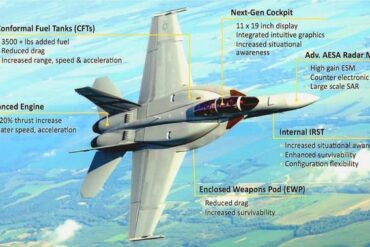
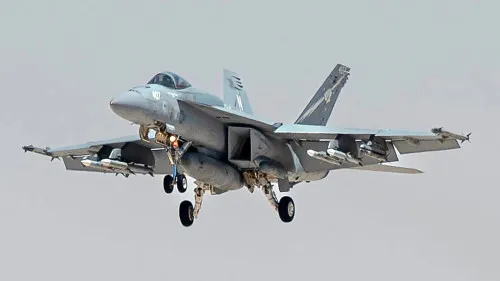
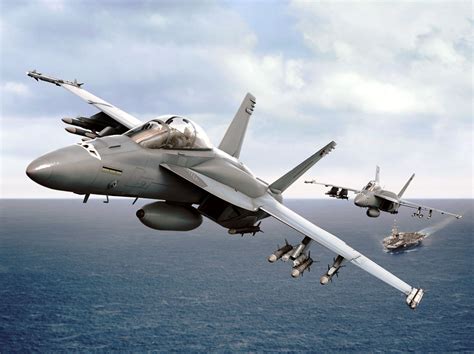
To extend the service life of the F/A-18 until at least the 2040s, the U.S. Navy is heavily investing in the Block III Super Hornet upgrade. This modernization program focuses on enhancing survivability, networking capabilities, and weapons integration:
- Conformal Fuel Tanks (CFTs): Increases range and reduces aerodynamic drag.
- Reduced Radar Signature: Incorporation of radar-absorbent materials for partial stealth enhancement.
- Distributed Targeting Processor-Networked (DTP-N): A cutting-edge avionics suite enabling real-time networked warfare and data sharing with other platforms.
- Upgraded Cockpit: Large Area Display (LAD) for improved pilot interface and mission management.
- Expanded Weapons Payload: The “Murder Hornet” configuration allows for 9 air-to-air missiles, including AIM-120 AMRAAMs, AIM-9X Sidewinders, and the AIM-174 long-range missile.
This upgrade ensures that the Super Hornet remains a viable and lethal platform, particularly in high-intensity conflicts against peer adversaries.
Complementary Roles of the F-35C and F/A-18
The transition from the F/A-18 to the F-35C is not a one-to-one replacement but a strategic shift in mission distribution:
- F-35C Lightning II: Stealth penetration, electronic warfare, and advanced sensor integration for high-threat environments.
- F/A-18E/F Super Hornet: High-payload operations, anti-ship strikes, and fleet defense in less-contested airspace.
This hybrid fleet approach allows the Navy to maximize operational flexibility while managing the high costs associated with an all-stealth force.
The EA-18G Growler: Electronic Warfare Dominance
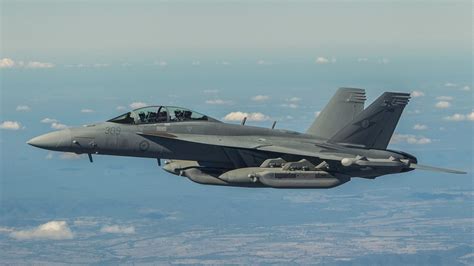
A key component of the F/A-18 family, the EA-18G Growler, has effectively replaced the aging EA-6B Prowler as the Navy’s premier electronic warfare platform. Based on the F/A-18F Super Hornet airframe, the EA-18G specializes in:
- Electronic Attack: Using ALQ-99 jamming pods to disrupt enemy radar and communication systems.
- Suppression of Enemy Air Defenses (SEAD): Neutralizing hostile surface-to-air missile (SAM) sites.
- Standoff Jamming: Providing cover for strike packages and carrier battle groups against advanced anti-access/area denial (A2/AD) threats.
With the increasing sophistication of enemy integrated air defense systems (IADS), the EA-18G will remain a critical asset in modern naval aviation.
The Future: F/A-XX and Next-Generation Air Dominance (NGAD)
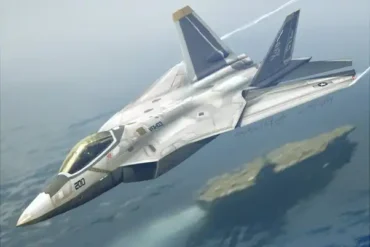
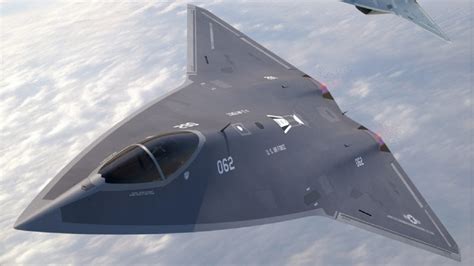
While the F-35C and F/A-18 Block III will dominate carrier aviation for the next two decades, the long-term vision involves the development of sixth-generation fighter platforms. Under the Next Generation Air Dominance (NGAD) program, the Navy is working on the F/A-XX, a successor to both the Super Hornet and potentially the F-35C. Expected features include:
- Adaptive Cycle Engines: Dramatic improvements in fuel efficiency and thrust.
- Loyal Wingman Drones: AI-driven unmanned combat air vehicles (UCAVs) to support manned fighters in combat.
- Advanced Stealth & Hypersonic Capabilities: Designed to dominate the battlespace in 2040 and beyond.
Key Takeaways: The Future of Carrier Aviation
- F-35C is the official successor to the F/A-18, providing stealth, sensor fusion, and next-generation strike capabilities.
- F/A-18 Block III upgrades extend the Super Hornet’s service life, enhancing its role in payload-heavy and cost-effective missions.
- The EA-18G Growler ensures continued electronic warfare dominance.
- The Navy’s hybrid fleet strategy balances operational effectiveness with affordability.
- The F/A-XX and NGAD programs represent the future, with AI integration, hypersonic weapons, and advanced stealth technologies redefining air superiority.
FAQ: Common Questions About the F/A-18 Replacement
Will the F-35C completely replace the F/A-18 Super Hornet?
No, the Navy will continue operating F/A-18 Block III Super Hornets alongside the F-35C for the foreseeable future. The Super Hornet’s high-payload capacity and cost-effectiveness make it an essential part of the carrier air wing.
What are the main advantages of the F-35C over the F/A-18?
The F-35C offers stealth, sensor fusion, and advanced electronic warfare capabilities, making it ideal for high-threat environments. However, the F/A-18 Block III remains more affordable and effective in missions that do not require stealth.
When will the F/A-XX enter service?
The F/A-XX, part of the NGAD program, is expected to replace both the F/A-18 and possibly the F-35C post-2030s. Details remain classified, but it will feature AI integration, advanced propulsion, and manned-unmanned teaming.