The landscape of air combat is evolving at an unprecedented pace, with the United States military at the forefront of this transformation. As sixth-generation fighter programs accelerate, the defense community faces a pivotal question: how long will American air power still depend on human pilots? The answer is far from unanimous, sparking heated debates across military, political, and technological circles.
The Pentagon is investing billions of dollars into developing cutting-edge aircraft designed to push the limits of stealth, speed, and combat capability. Yet the rise of autonomous drones and artificial intelligence (AI) has introduced a disruptive possibility — a future where pilots might no longer be necessary.
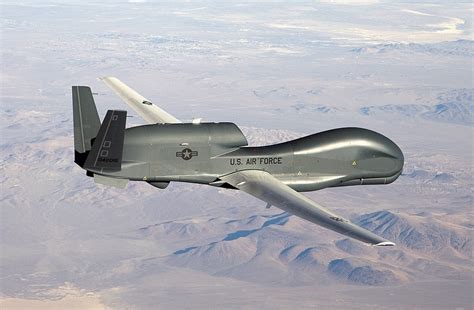
Among the most advanced autonomous systems in operation today is the RQ-4 Global Hawk, the US military’s largest unmanned aerial vehicle (UAV) used primarily for surveillance and reconnaissance. Its presence on US airbases, including Yokota Air Base in Japan, underscores the growing reliance on unmanned platforms. However, while drones like the Global Hawk perform crucial intelligence-gathering roles, the prospect of removing human pilots from high-risk combat missions remains contentious.
A Deep Division Over Manned Fighters
“It’s highly controversial,” acknowledged a former senior defense official in a recent statement. “There’s a whole cohort of people who believe we should stop investing in manned fighters for the latter half of this century.”
Indeed, the US Air Force’s recent operations with B-2 Spirit stealth bombers, flown by human pilots on a daring 36-hour round trip to strike Iranian nuclear facilities, reignited the debate. Former President Trump lauded the mission’s success, declaring the Iranian sites “obliterated like nobody’s ever seen before” and praised the “brave” aircrews involved.
But critics question why humans were placed in harm’s way at all, given current advancements in unmanned technology. “Why wouldn’t we fly those same missions in 2050 with entirely unmanned platforms?” posed the former defense official. It’s a valid concern, especially considering the rapid progress of AI and drone autonomy.
The Rise of Autonomous Warfare — But Are We Ready?
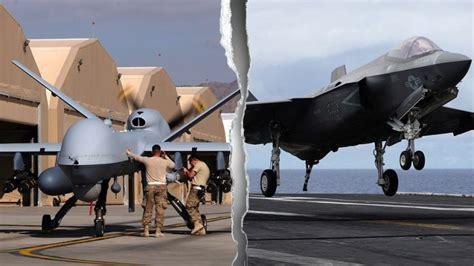
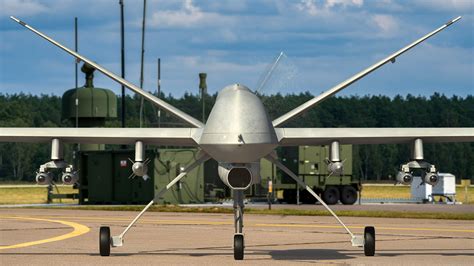
AI-powered drones like the MQ-9 Reaper already play a significant role in US military strategy, capable of conducting both reconnaissance and precision strikes. The potential for fully autonomous combat aircraft is undeniably real. Yet, technological, operational, and ethical barriers remain substantial.
Former Representative Mike Garcia, a veteran F/A-18 naval aviator, argues the defense infrastructure simply isn’t prepared for an unmanned-only future. “The networks just aren’t there yet,” Garcia emphasized. “You need low latency, high-bandwidth, distributed networks with resilient critical nodes — and we don’t have that.”
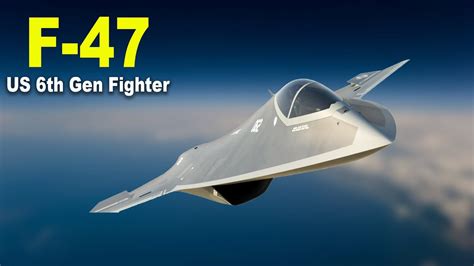
For Garcia, reliance on manned platforms like the newly unveiled F-47 sixth-generation fighter remains essential. Introduced by the Trump administration earlier this year, the F-47 symbolizes America’s commitment to maintaining air dominance with human pilots in the cockpit — at least for now.
“Boeing needs to execute,” Garcia warned. “They can’t afford to let the F-47 program turn into another prolonged acquisition nightmare. This platform is critical for national defense.”
The Technology Gap: Reality vs. Science Fiction
Despite headlines touting the capabilities of AI and drones, many defense experts caution against assuming that unmanned platforms will soon replace human pilots. Lt. Gen. David Deptula (Ret.), dean of the Mitchell Institute for Aerospace Studies, dismissed such notions as “science fiction.”
“The only real debate about the F-47 is the financial one,” Deptula stated, criticizing arbitrary budget limitations that neglect national defense strategy priorities. “We’re nowhere near ready for drones to assume the full responsibilities of a human pilot.”
Deptula’s comments also highlight a broader issue — the aging state of the US Air Force fleet. “The Air Force today is the oldest, smallest, and least ready it’s been in its entire history,” he warned, underscoring the urgent need to modernize both manned and unmanned systems.
Strategic Differences Between the Services
The Air Force and Navy appear to be taking divergent approaches to integrating unmanned technology into future air combat. While the Air Force pushes aggressively to fast-track the F-47 program and establish initial operational capability (IOC), some suggest this is partly to preempt advocates for an entirely unmanned tactical air force.
“The Air Force wants to rush F-47 to IOC to beat unmanned advocates to the trough,” a former defense official revealed. In contrast, the US Navy seems to be adopting a more measured approach regarding its own F/A-XX program, signaling a desire to evaluate how unmanned technologies mature before making long-term commitments.
The Human Factor: Pilots as Combat Orchestrators
While technological developments fuel speculation about unmanned dominance, many argue that human pilots remain indispensable — not merely as operators, but as strategic decision-makers. Garcia likens pilots to “quarterbacks,” managing complex combat environments and coordinating unmanned assets within the broader advanced battle management system (ABMS).
“You still need a quarterback in the air,” Garcia asserted. “A person capable of real-time decision-making, who can adapt to unforeseen scenarios and orchestrate autonomous platforms effectively.”
Moreover, autonomous systems are only as reliable as the communication and control networks underpinning them. In high-threat environments where jamming, cyberattacks, or infrastructure degradation is possible, human pilots provide a vital layer of resilience and adaptability.
Looking Ahead: Balancing Risk, Technology, and Strategy
The future of American air combat hinges on striking the right balance between human expertise and machine capabilities. As AI evolves, drones will undoubtedly assume larger roles in surveillance, reconnaissance, and even limited strike missions. But the timeline for a fully unmanned fighter fleet remains uncertain.
At stake is not only operational effectiveness but also broader questions of ethics, accountability, and strategic deterrence. Human pilots symbolize national resolve and carry moral responsibility for life-or-death decisions — attributes machines currently lack.
Yet, the clock is ticking. Pentagon acquisition cycles are notoriously slow, often spanning decades. Some fear that by the time next-generation manned fighters like the F-47 reach full production, autonomous technology may have advanced enough to render them obsolete.
Still, many experts urge caution. “To date, the services are just scratching the surface on what manned versus unmanned tactical air of the future might look like,” one defense insider explained. “We’re in the infancy of this decision-making process.”
The reality is that the US military faces a complex, multi-decade transition period where manned, unmanned, and optionally piloted systems will coexist. The precise shape of future air power remains fluid — defined by evolving threats, technological breakthroughs, budget realities, and the ever-present need to protect American lives while maintaining global air superiority.
As the sixth-generation fighter race accelerates, and AI-driven drones grow more sophisticated, the answer to how long the US military will still need pilots remains open-ended — but for the foreseeable future, the human element remains firmly in the cockpit.