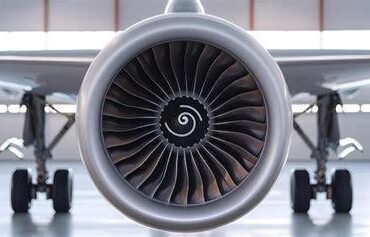
The jet engine stands apart as the aviation engineering breakthrough that most dramatically changed how humanity moves across the planet. Before its arrival, piston engines and propellers defined practical powered flight, but their limitations became increasingly difficult to overcome as aircraft grew heavier, faster, and more ambitious. Jet propulsion introduced a fundamentally different way to generate thrust, allowing aircraft to fly at higher speeds and altitudes while carrying passengers and cargo over distances that once seemed extraordinary.
What makes the jet engine so important is not simply its speed. Its greatest achievement was creating a platform for continuous development. Engineers could improve compressors, turbines, combustion systems, materials, cooling techniques, and aerodynamics without abandoning the fundamental principle of converting fuel energy into a powerful stream of accelerating air. From the earliest operational turbojets to today’s enormous high-bypass turbofans, the technology has evolved enormously while retaining the same essential architecture.
The Birth of the Jet Engine and the Dawn of High-Speed Flight
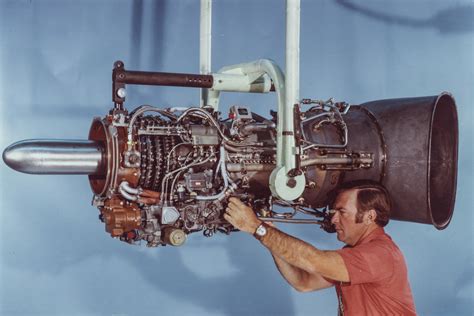
The modern jet era emerged from decades of experimentation, but the decisive breakthrough came when engineers learned how to continuously compress air, mix it with fuel, burn the mixture, and extract useful thrust from the resulting high-speed exhaust. Sir Frank Whittle patented a turbojet concept in Britain, while German engineers pursued their own parallel work. The Heinkel He 178 made its first flight in 1939, powered by an operational jet engine, demonstrating that turbine propulsion could move an aircraft through the sky.
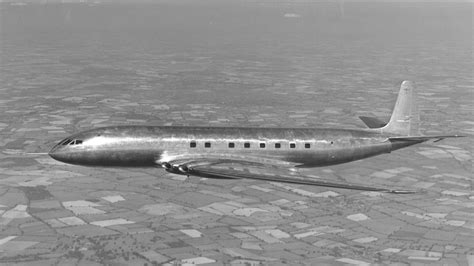
The commercial aviation era soon became the proving ground for a more refined version of the technology. The de Havilland Comet entered service in 1952 as the first jet-powered airliner to carry passengers. Its introduction represented a dramatic change in passenger travel, although structural lessons from the Comet’s early accidents demonstrated that jet-age aircraft required new approaches to pressurization, fatigue, and airframe design. Those lessons became part of the broader engineering foundation on which later jetliners were built.
How the Boeing 707 Defined the Modern Jet Airliner
The next major step came with the Boeing 707, which first flew in 1957 and entered airline service in 1958. Unlike the Comet, the 707 became a widely successful commercial template, helping establish the configuration that would dominate passenger aviation for generations. Its swept wings, podded engines, pressurized fuselage, and long-range capability represented a practical synthesis of lessons learned from the first generation of jet aircraft.
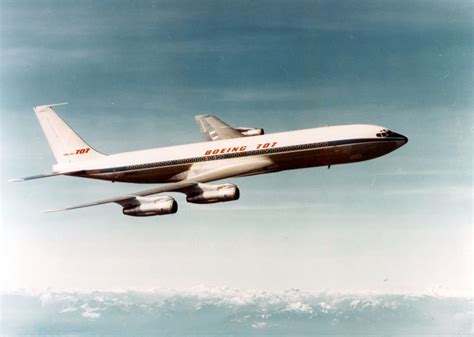
The 707 did more than make jet travel fashionable. It demonstrated that airlines could operate large, fast aircraft on intercontinental routes with schedules that dramatically reduced travel times. Its four-engine arrangement provided the range and redundancy needed for early long-distance operations, while its basic airframe philosophy established ideas that would be refined across subsequent generations.
The cylindrical, pressurized fuselage became a defining feature of large commercial aircraft. Engines mounted beneath the wings on pylons became nearly universal, while swept wings allowed aircraft to operate efficiently at the high subsonic speeds made practical by turbine propulsion. Cockpit arrangements and instrument philosophies also evolved from the jet age’s foundational designs into today’s highly automated glass cockpits. The 707 therefore mattered not only as an aircraft but as an integrated engineering concept.
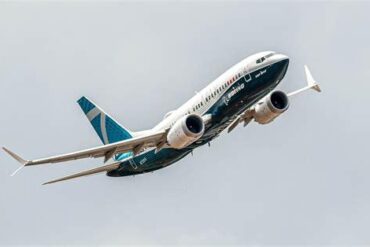
Its longevity reinforced that achievement. The final commercial 707 remained in service until 2013, while military derivatives and aircraft based on the same basic platform continued performing specialized missions. The type’s descendants, including the 737 and 747, expanded the concept into different markets and missions, helping establish Boeing as one of the defining manufacturers of the jet age.
High-Bypass Turbofans Made Mass Air Travel Possible
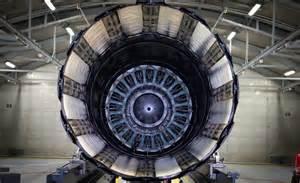
The original turbojet was revolutionary, but it was not the final answer for commercial aviation. Pure turbojets produced impressive speed, yet they consumed substantial fuel and generated considerable noise. The development of high-bypass turbofan engines provided a crucial second revolution by allowing a large volume of air to bypass the engine core while still receiving acceleration from the fan.
This arrangement improved propulsive efficiency at the subsonic speeds used by most airliners. Instead of relying primarily on a small, extremely fast exhaust stream, turbofans could move much more air with a smaller increase in velocity. That made them substantially more economical for long-distance passenger operations while reducing the intense noise associated with early turbojets.
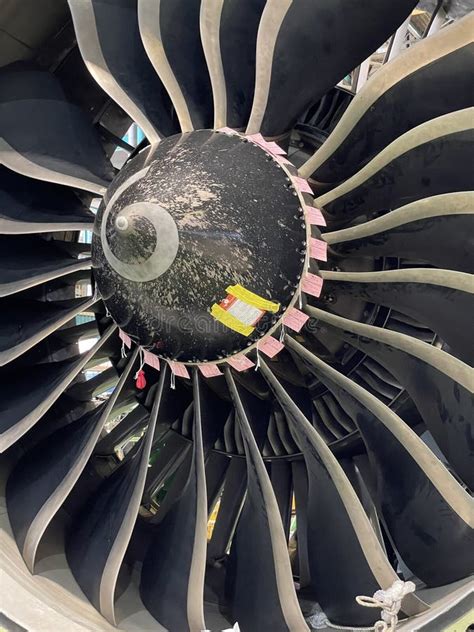
The engineering challenge became a continuous contest between efficiency, reliability, weight, and power. Manufacturers developed stronger alloys, better turbine cooling, advanced compressor stages, improved combustion systems, and increasingly sophisticated digital controls. Modern turbofans can deliver enormous thrust while operating with efficiency and reliability that early jet pioneers could scarcely have imagined.
Jet Engines Changed the Meaning of Distance
The impact of jet propulsion cannot be measured only in miles per hour. It changed the economic and social geography of the planet. Journeys that had once required days or weeks by sea could be completed in hours, allowing businesses to operate across continents and families to maintain relationships across oceans.
International tourism expanded rapidly because the jet aircraft combined speed with increasingly competitive fares. Major cities became connected by regular long-haul services, while previously remote destinations entered global tourism markets. The modern concept of the world as an interconnected network owes much to the practical compression of distance created by jet aviation.
Air cargo underwent an equally important transformation. Perishable foods, pharmaceuticals, high-value components, electronics, and other time-sensitive goods could move between continents rapidly. Modern supply chains rely heavily on this capability, and the value of goods transported through aviation has made air freight an essential part of global commerce.
Jet Power Became a Critical Military and Humanitarian Tool
The jet engine’s influence is equally visible in military aviation. High-speed transports and heavy cargo aircraft made it possible to move large numbers of people, vehicles, supplies, and humanitarian equipment over enormous distances. During major crises, the ability to reposition aircraft quickly could become a decisive logistical advantage.
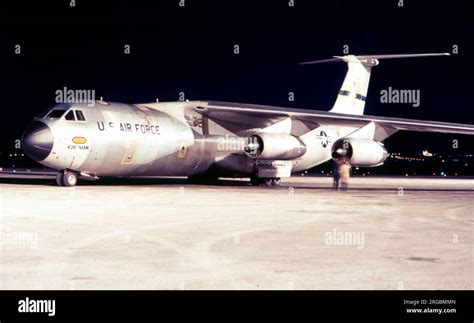
The final weeks of the Vietnam War provided a powerful example. Large fixed-wing transports operated from Tan Son Nhut Air Base during the evacuation, while aircraft such as the Lockheed C-141 Starlifter played a major role in Operation Babylift. The C-5 Galaxy, then among the world’s largest military transports, also contributed to the enormous airlift effort. Commercial Boeing 747 and 727 aircraft were involved in evacuation flights from Saigon as well.
Another extraordinary example occurred in 1991 during Operation Solomon, when Israel and El Al used military transports and Boeing 707 and 747 aircraft to evacuate more than 14,000 Ethiopian Jews from Addis Ababa to Israel in roughly 36 hours. Such operations illustrated an important characteristic of jet aircraft: speed and capacity could be combined with the flexibility required for urgent missions.
The same engineering principles continue to support disaster relief, strategic mobility, medical evacuation, and global military logistics. The jet engine’s contribution is therefore not confined to commercial profitability. Its ability to move enormous loads quickly has repeatedly become a practical humanitarian capability.
Concorde Pushed Jet Technology Beyond Conventional Limits
The Concorde demonstrated another dimension of jet propulsion by taking commercial aviation beyond the speed of sound. Operated through an ambitious British-French partnership, the supersonic airliner showed that scheduled passenger service could reach speeds far beyond conventional subsonic transport.
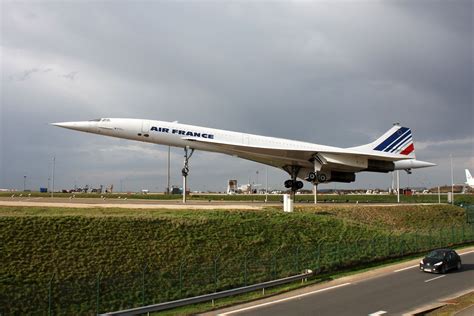
Concorde was never a mass-market replacement for conventional jetliners. Its economics, fuel consumption, limited capacity, and sonic-boom restrictions constrained its commercial usefulness. Nevertheless, its engineering legacy was considerable. Designers advanced knowledge of aerodynamics, high-temperature structures, navigation, flight control, and aircraft systems while solving problems that ordinary subsonic airliners did not encounter.
The program also demonstrated the value of international aerospace collaboration. Its development brought together major industrial capabilities from Britain and France and helped build experience that would contribute to the broader European aerospace industry. Modern supersonic research, including NASA’s work on the X-59, continues to address one of Concorde’s most stubborn problems: how to achieve high speed without producing an unacceptable sonic boom.
Why the Jet Engine Remains Aviation’s Greatest Breakthrough
Many aviation technologies deserve recognition, including composite structures, digital avionics, fly-by-wire controls, satellite navigation, and advanced flight computers. Yet the jet engine stands apart because it created the performance foundation that allowed many of these later innovations to become commercially meaningful.
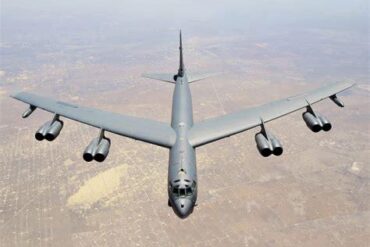
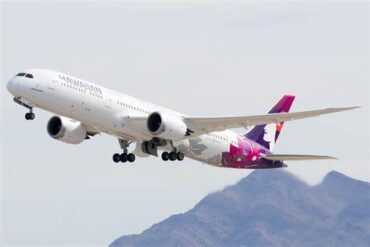
Its influence reaches from the smallest regional jet to the largest widebody aircraft. The breakthrough was especially powerful because it solved several aviation problems at once. Turbine engines provided a path to greater thrust without simply making piston engines larger and heavier, and their architecture offered engineers a scalable platform for aircraft of very different sizes. That scalability mattered enormously: the same broad propulsion principles could be adapted to passenger aircraft, strategic transports, tankers, patrol aircraft, and specialized platforms. As manufacturing precision improved, turbine components became more durable and efficient, turning what began as an experimental technology into a dependable foundation for everyday aviation.
That versatility also encouraged an enormous ecosystem of suppliers, engineers, manufacturers, maintenance specialists, airports, and airlines. The jet engine became more than a machine; it became the center of an expanding industrial system. that continues to influence aerospace research and manufacturing today.
Modern engines use advanced materials, computational fluid dynamics, precision manufacturing, and digital monitoring, but the underlying concept remains remarkably recognizable.
The result is an extraordinary engineering lineage. A technology developed under the pressure of wartime competition became the propulsion system behind global tourism, intercontinental commerce, military mobility, and much of modern air transportation. It improved speed first, then efficiency, reliability, capacity, and environmental performance through successive generations of engineering.
The Next Aviation Breakthrough May Already Be Emerging
The jet engine is not finished evolving, but aviation is beginning to search for a breakthrough that could eventually rival its historical importance. The strongest candidates involve zero-emission propulsion, hydrogen, sustainable energy systems, advanced batteries, and radically different aircraft architectures.
Hydrogen has attracted major attention because it could potentially eliminate carbon dioxide emissions at the point of use when produced with low-carbon energy. The engineering challenge is enormous because hydrogen has low volumetric energy density and would require new approaches to storage, fuel systems, airframes, and airport infrastructure. Companies including Airbus are investigating concepts aimed at dramatically reducing aviation’s environmental impact.
Artificial intelligence and autonomous flight could create another profound transformation. More capable automation may assist pilots, optimize routes, monitor aircraft health, and eventually change the division of responsibilities between humans and machines. Whether fully autonomous passenger operations become practical remains uncertain, but the trajectory of digital aviation is unmistakable.
For now, however, no emerging technology has matched the jet engine’s combination of speed, range, capacity, reliability, versatility, and global economic impact. It transformed aircraft from relatively limited transportation machines into the backbone of a worldwide mobility system. That is why, among the engineering achievements of the last century, the jet engine remains arguably aviation’s greatest breakthrough.