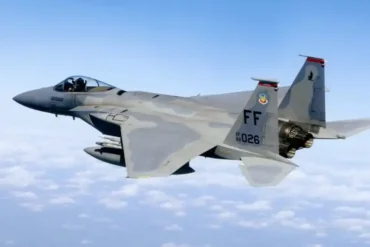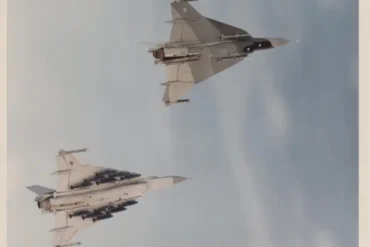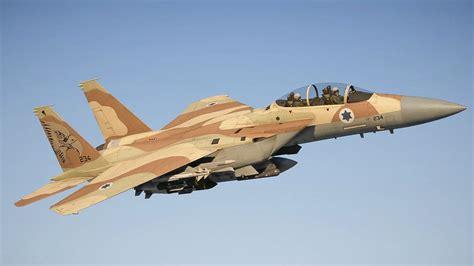
The F-15 Eagle, a hallmark of American air dominance since the 1970s, has undergone a transformative journey in the hands of the Israeli Air Force (IAF). The F-15I Ra’am, a specialized variant of the F-15E Strike Eagle, exemplifies how one airframe can diverge into radically different capabilities based on strategic needs, operational environments, and national defense doctrines. Israel’s adaptation of the Eagle reflects its distinct security realities and technological ingenuity, producing a warplane tailored for deep-strike autonomy in one of the world’s most volatile regions.
From Strike Eagle to Strategic Ra’am: A Tactical Evolution
The F-15I Ra’am (“Thunder” in Hebrew) is not a mere clone of the American F-15E. While both airframes share a two-seat, dual-engine multirole architecture and deep-strike orientation, the Ra’am was fundamentally reimagined to suit Israel’s pressing need for fast, high-payload, precision attacks in hostile, radar-rich territory. Designed with Iran and Syria in mind, the Ra’am incorporates indigenous avionics, customized weapon loadouts, and advanced electronic warfare systems, positioning it as a linchpin in Israel’s strategic doctrine.
At its core, the F-15I maintains the aerodynamic and structural strengths of the F-15E, including an impressive combat radius exceeding 1,100 miles, robust payload capacity of over 23,000 pounds, and the ability to fly at speeds approaching Mach 2.5. However, it is what lies beneath the airframe that sets the Ra’am apart: Israeli mission computers, electronic countermeasures, communication systems, and weapons integration—all tuned for autonomous deep-strike operations without the safety net of allied support.
Israel’s Strategic Requirements Drive Design Divergence
Israel’s airpower philosophy revolves around rapid, preemptive strike capability, built on the assumption that its forces may need to operate without immediate U.S. assistance. Unlike the U.S., which can rely on global logistics chains and vast airbase networks, Israel must prepare to act swiftly, unilaterally, and precisely. The F-15I is thus outfitted to deliver decisive results during the opening stages of a high-intensity conflict.
These strategic imperatives have resulted in deep customization of the F-15 platform. One major shift is in avionics architecture. The Ra’am replaces several American systems with Israeli-developed Elbit mission computers, radar displays, and helmet-mounted targeting systems, all engineered to interface seamlessly with both Israeli and American munitions. These systems also offer more flexible reprogramming for mission adaptability.
A Distinct Arsenal: Israeli Weapons Integration
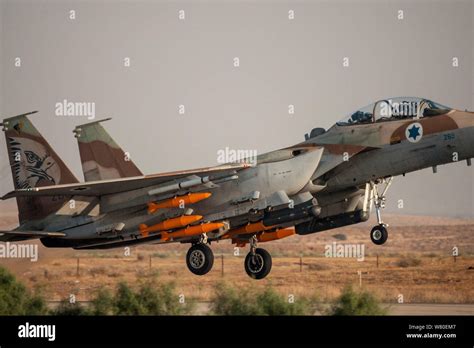
The Ra’am’s lethality is amplified by its unique weapons integration, enabling it to carry not only U.S.-standard munitions like the GBU-28 bunker buster and AIM-120 AMRAAM, but also Israeli-made armaments that significantly expand its mission envelope:
- Python 4 and Python 5: Highly maneuverable, infrared-guided air-to-air missiles with extreme off-boresight capability.
- Spice 2000 and Spice 1000: Electro-optical GPS-guided bombs capable of striking targets with pinpoint accuracy, even in GPS-denied environments.
- Delilah cruise missile: A long-range, loitering precision missile effective against high-value mobile and time-sensitive targets.
These capabilities grant the F-15I unmatched flexibility across air interdiction, suppression of enemy air defenses (SEAD), and strategic bombing missions, far beyond what the typical U.S. F-15E loadout offers.
Electronic Warfare: Israel’s Stealth Alternative
In an era dominated by stealth technology, Israel’s approach with the F-15I reflects a different philosophy: not hiding from enemy radars, but outwitting and overpowering them. The Ra’am’s electronic warfare (EW) suite, entirely developed domestically, is one of the most advanced outside the U.S. Classified Israeli jammers and decoys are known for their real-world battle-hardening, particularly in Syrian and Lebanese airspace, which is saturated with Russian-built surface-to-air missile systems.
By contrast, American F-15 variants—particularly the newer F-15EX—also field sophisticated EW like the EPAWSS (Eagle Passive Active Warning Survivability System). However, the Israeli systems are optimized for specific threats in the Middle East, offering tailored jamming profiles, frequency hopping, and automated countermeasure deployment suited for dense radar environments such as Tehran, Damascus, or Beirut.
Doctrine Matters: Autonomy vs. Global Integration
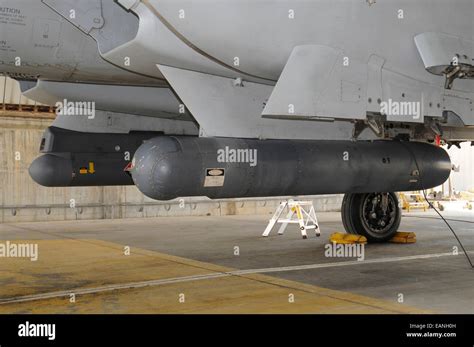
Perhaps the most profound difference lies in how the two nations intend to use their F-15s. The U.S. Air Force treats the Eagle as a component in a global system: it operates within a network of AWACS, tanker support, forward-deployed bases, and joint allied forces. The F-15E and F-15EX are excellent multirole fighters, but not designed to operate alone in denied environments without extensive ISR and refueling support.
The Israeli Air Force, by contrast, builds doctrine on operational independence. The Ra’am must function as a self-contained strike package, able to launch from bases within Israel, strike targets deep in Iran, and return—all without external support. That requirement has forced the development of capabilities that are organic, resilient, and flexible, from secure satellite communications to real-time threat processing onboard.
This doctrine also informs training. Israeli Ra’am crews undergo mission planning scenarios built around long-range solo penetration, EW-heavy sorties, and rapid turnarounds. In many cases, Israeli pilots are expected to respond to evolving battlefield intelligence mid-mission, a task made easier by their modular avionics and helmet-mounted cueing systems.
Operational Legacy: Combat-Proven vs. Theater-Proven
While the American F-15 has proven itself in multiple theaters—most notably Iraq, Afghanistan, and the Balkans—its recent use has been more limited in high-intensity peer-level engagements. The Ra’am, meanwhile, has seen continuous use in real-world combat conditions ranging from airstrikes in Gaza to covert operations against Iranian convoys in Syria.
These missions are not mere demonstrations—they are full-fledged applications of advanced EW, precision-guided munitions, and hostile airspace penetration. Israeli planners have shaped the Ra’am into a force-projection tool capable of simultaneous target engagement, battlefield adaptability, and ultra-fast sortie rates. In this regard, it functions more like a strategic bomber than a tactical strike fighter.
Future Trajectories: F-15EX vs. Enhanced Ra’am
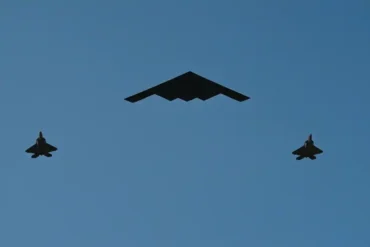
The U.S. Air Force is banking on the F-15EX, which merges the old Eagle’s frame with modern systems: AESA radar, fly-by-wire controls, EPAWSS, and increased hardpoints for up to 22 air-to-air missiles. It is a cost-effective answer to aging fleets but still subservient to the F-35 and F-22 as the centerpiece of U.S. air dominance.
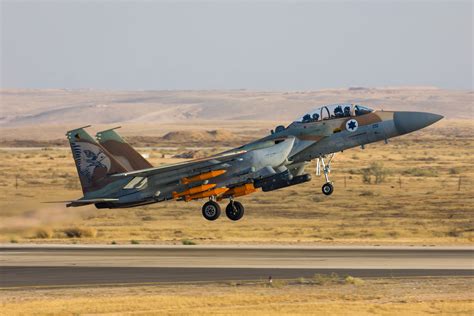
In contrast, Israel’s F-15I fleet is receiving extensive mid-life upgrades, including new glass cockpits, expanded weapons integration, and potentially radar-absorbent coatings. There are also reports of integration with AI-based target recognition and real-time battlefield networking—features that could give the Ra’am next-gen relevance despite its 20th-century skeleton.
Conclusion: Two Eagles, Two Missions
Though they share a common ancestry, the American F-15E and Israeli F-15I have become two very different beasts. The former is a dependable multirole asset within a global airpower matrix; the latter is a razor-sharp tool of national survival.
Israel’s F-15I Ra’am is not just a fighter jet—it’s a symbol of strategic autonomy, technological ingenuity, and operational urgency. It represents how a nation can take a legacy platform and evolve it into something far more precise, lethal, and responsive to regional threats. In the skies over the Middle East, the Ra’am thunders not just with engines, but with intent.