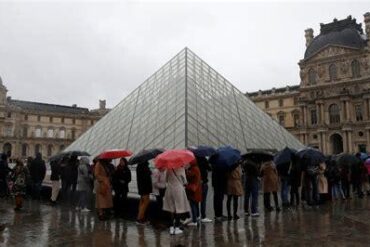
In an unprecedented turn of events, chaos erupted outside the Louvre Museum in Paris as a sudden shutdown left thousands of eager visitors stranded beneath its iconic glass pyramid. This unexpected closure, triggered by an emergency meeting and unfolding amidst ongoing strikes, paralyzed what is traditionally one of the world’s most visited cultural sites. What was meant to be a serene day of art appreciation transformed into a scene of confusion, frustration, and heartbreak for travelers from around the globe.
The Louvre Museum, usually a beacon of elegance and order, suddenly became the epicenter of uncertainty. Visitors gathered early in the morning, tickets in hand, only to be met with locked gates and an unmoving security presence. The absence of museum officials to provide guidance amplified the atmosphere of bewilderment. Families, solo travelers, and tour groups found themselves caught in a web of rising tension, their anticipated experiences overshadowed by a complete lack of information.
Long Lines, No Movement—And No Information
Despite having pre-booked tickets and timed entry slots, tourists were herded into stagnant lines under the glaring Parisian sun. The only communication from the museum came through a vague online note referencing strike disruptions, leaving many to wonder why such a complete shutdown occurred without warning. As time passed, some frustrated ticket-holders chose to abandon their wait, inadvertently sparking hope among others that the queues might finally be moving. Yet, the reality remained grim—the Louvre stood firmly closed, with no explanation provided other than the mention of an “emergency meeting” among museum staff.
The museum’s official website offered limited insight into the situation, merely hinting at ongoing strikes across France while failing to announce the full morning shutdown affecting one of the world’s most-visited cultural landmarks. This lack of communication left many feeling stranded and bewildered, unsure of their next steps.
French Strikes Ripple Across the Tourism Sector
The Louvre’s sudden closure is not an isolated incident; it reflects a broader wave of disruption impacting France’s crucial tourism economy. Ongoing labor disputes have led to transport slowdowns, hotel staffing shortages, and now, a temporary shuttering of prominent attractions. Paris, a city that thrives on its cultural appeal, faces a significant blow from such unannounced closures. The Louvre typically welcomes over nine million visitors annually, with daily footfall playing a vital role in supporting local businesses, tour operators, and the city’s hospitality infrastructure.
With the summer travel season in full swing, unexpected incidents like this cast doubt on the reliability of planning visits to iconic locations throughout France. The Louvre’s shutdown hints at deeper unrest within institutions struggling to maintain operations amid growing labor tensions.
Global Travelers Caught in Cultural Crossfire
The impact of the Louvre’s closure extends beyond local inconveniences; it disrupts the global travel experience. Many visitors meticulously plan their entire Paris itineraries around scheduled entry to the Louvre, often purchasing tickets months in advance. For those traveling from distant locations such as the United States or Asia, this single missed opportunity can mean the loss of a once-in-a-lifetime moment. Families with children, elderly travelers, and passionate art enthusiasts found themselves stuck in limbo, facing the stark reality of being unable to access the treasures they had long dreamed of seeing.
The vacuum created by the lack of clear communication from officials was quickly filled with confusion and disappointment. In today’s digital age, the frustration surrounding the closure spread rapidly on social media platforms, with images of crowds swarming the pyramid entrance going viral within minutes.
Cultural Sector Under Strain as Vision of Reliability Wavers
This incident, although short-lived, exposes vulnerabilities in how iconic cultural institutions manage crises. For the Louvre, which has endured wars, revolutions, and pandemics, a silent closure—even for just a few hours—is unprecedented. Historically, during labor disputes, the museum has provided clear warnings and updates to visitors. However, the decision-making process behind this recent shutdown lacked transparency, raising questions about operational resilience.
A lack of contingency planning for such emergencies casts doubt on the institution’s ability to handle unexpected events effectively. While emergency meetings may be necessary, the failure to inform thousands of visitors waiting outside sends the wrong message during a time when cultural tourism is expected to lead Europe’s economic recovery.
Economic Impact and Industry Fallout
Though a few hours of closure may seem trivial, the ripple effects of the Louvre’s foot traffic directly influence nearby cafés, restaurants, transport services, and boutique retailers. Each disrupted day sends economic shockwaves throughout Paris’s central 1st arrondissement and beyond. Tour operators are left scrambling to manage rebookings and refund requests, while hotel concierges work tirelessly to explain sudden changes to guests. Travelers already grappling with high summer prices feel increasingly shortchanged. According to 2024 tourism data from Atout France, international tourist revenue in the capital surpassed €22 billion, with nearly 20% linked to museum and heritage visits. Consequently, a single day’s disruption at a venue as significant as the Louvre can send reverberations through multiple sectors of the economy.
What Comes Next for the Louvre and Paris Tourism?
As of now, the Louvre has resumed normal operations; however, the emotional and reputational damage may take longer to mend. The museum has yet to provide a comprehensive post-incident briefing, leaving many to speculate about the nature of the internal “emergency meeting.” This uncertainty creates an opening for further scrutiny from both visitors and industry experts.
Travel advisors are now urging potential visitors to incorporate flexibility into their Paris itineraries to accommodate possible disruptions. Meanwhile, tourism authorities may face mounting pressure to establish real-time alert systems that better inform visitors of significant disruptions at public sites. In response to Monday’s events, several tour agencies have already revised their group schedules to account for potential closures at cultural sites affected by ongoing strike actions.
Final Thoughts: The Cost of Silence in a City That Speaks Through Art
Paris is more than a mere destination; it represents an emotional journey for countless travelers. The Louvre Museum stands as its crowning jewel, and for it to close suddenly without clear explanation leaves visitors feeling adrift in a city renowned for inspiration. Tourists arrived with the hopes of beholding timeless masterpieces, only to be confronted by silence, static lines, and unanswered questions.
As the travel industry works to rebound from the uncertainties of the pandemic era, it must strive to ensure that moments like these do not erode the trust of global travelers. Communication, empathy, and preparedness are not mere niceties—they are essentials in today’s tourism ecosystem. When Paris speaks, the world listens; but when it falls silent, it’s not just doors that close—it’s dreams that fade away.