The battle for transatlantic dominance has entered a new phase in 2026, and the biggest winners may ultimately be passengers. Across the Atlantic, the three largest US legacy carriers — American Airlines, Delta Air Lines, and United Airlines — are aggressively reshaping their European networks with new nonstop routes, expanded seasonal frequencies, and increasingly strategic hub deployment. What once looked like a mature market is suddenly evolving again as airlines compete for premium travelers, leisure demand, and connecting traffic between North America and Europe.
The summer 2026 schedule reveals something larger than a routine network adjustment. It signals a calculated shift in how the major US carriers view Europe’s future. Instead of relying solely on traditional powerhouse destinations like London, Paris, and Frankfurt, airlines are targeting secondary European cities, Mediterranean leisure hotspots, and underserved long-haul markets with growing premium demand.
This renewed expansion comes amid strong international travel recovery, record transatlantic yields, and fierce alliance competition between oneworld, SkyTeam, and Star Alliance. The result is one of the most competitive US-Europe summers in recent aviation history.
After years of focusing heavily on domestic rebuilding and operational stability, the Big 3 carriers are now pouring aircraft capacity into Europe with remarkable confidence.
American Airlines Pushes Deeper Into Premium European Markets
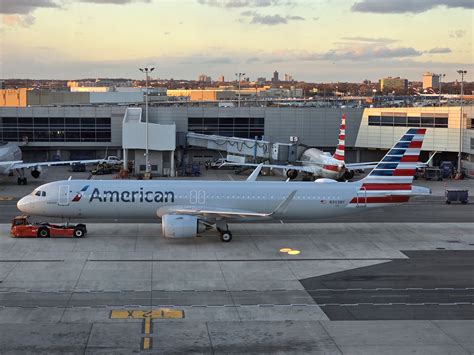
Among the three carriers, American Airlines has arguably taken the most diversified approach to its European expansion strategy. The airline added six new European routes for the summer 2026 season, combining business-heavy destinations with high-demand leisure markets.
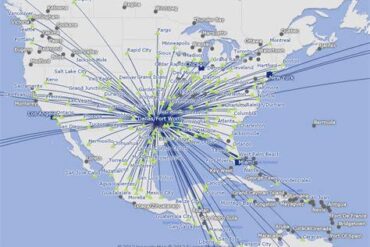
A major focus is clearly visible at Dallas/Fort Worth International Airport, where American continues leveraging its enormous hub strength. New service to Zürich reflects growing premium and corporate demand between Texas and Switzerland, particularly in finance, pharmaceuticals, and technology sectors. Meanwhile, the addition of flights to Athens highlights how Greece continues outperforming many traditional European leisure markets in post-pandemic demand trends.
The Athens route is particularly significant because it demonstrates how US carriers are extending seasonal Mediterranean flying beyond peak tourism assumptions. Greece has transformed from a niche summer market into a near-mainstream transatlantic destination for American travelers.
In Florida, Miami International Airport gains new nonstop access to Milan Malpensa, giving American a stronger foothold in northern Italy while complementing its extensive Latin America operation. Milan remains one of Europe’s most commercially valuable cities, and the route strengthens American’s ability to capture both fashion-industry travel and high-spending leisure traffic.
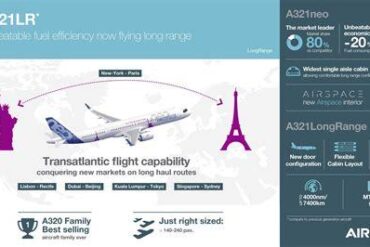
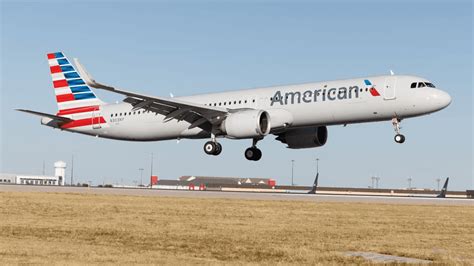
Perhaps the most strategically fascinating addition is the new New York JFK to Edinburgh route operated by the Airbus A321XLR. The aircraft itself represents a transformational tool for airlines because it allows thinner long-haul markets to become economically viable. Instead of deploying widebody aircraft with hundreds of seats, airlines can now profitably serve secondary European cities with lower-risk narrowbody operations.
The Edinburgh launch showcases precisely how the A321XLR is changing transatlantic economics. Smaller capacity, lower operating costs, and premium-heavy cabin configurations make routes like JFK-Edinburgh sustainable even outside peak summer demand.
American also strengthened its position in Philadelphia with new flights to Budapest and Prague, reinforcing the airport’s role as one of the airline’s most important European gateways. These destinations appeal strongly to both tourism and visiting-friends-and-relatives traffic, two segments that have remained resilient despite broader economic uncertainty.
Delta Air Lines Accelerates Its European Offensive
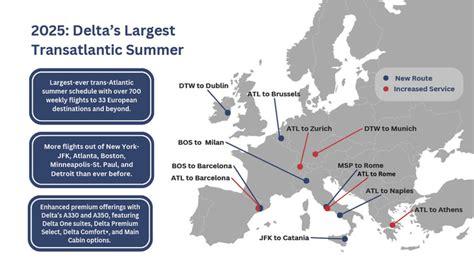
While American expanded selectively, Delta Air Lines launched an even broader transatlantic push with seven new European routes during the summer 2026 season.
Much of Delta’s strategy centers around strengthening competitive pressure at key coastal hubs. In Seattle, Delta continues its long-running rivalry with Alaska Airlines by expanding aggressively into Europe. New routes to Rome and Barcelona significantly elevate Seattle’s importance within Delta’s international network.
Seattle’s geographic advantage makes it particularly attractive for transatlantic flying. The city offers efficient aircraft utilization, strong technology-sector demand, and growing premium traffic tied to companies throughout the Pacific Northwest.
Delta’s Boston growth also deserves attention. Historically overshadowed by New York and Atlanta, Boston Logan International Airport has evolved into a major international gateway for Delta. New flights to Madrid and Nice further cement that role.
The Nice route is especially notable because it reflects airlines’ growing appetite for luxury leisure markets. The French Riviera has become increasingly attractive for premium travelers seeking alternatives to traditional mass-tourism destinations. Airlines now recognize that affluent leisure passengers can generate yields comparable to corporate travelers.
At John F Kennedy International Airport, Delta continues positioning itself as a dominant transatlantic force. New routes to Porto, Olbia, and Malta reveal how deeply the carrier is investing in Mediterranean and Southern European demand.
Porto has rapidly evolved into one of Europe’s trendiest tourism destinations, drawing American visitors with its wine culture, coastal scenery, and lower costs compared to Lisbon or Paris. Meanwhile, Olbia and Malta reflect a broader airline trend toward highly seasonal but high-yield Mediterranean flying.
Delta’s strategy is clear: dominate premium leisure travel while maintaining strength in traditional business markets.
United Airlines Targets Underserved European Cities
Compared to American and Delta, United Airlines introduced fewer new routes, but its strategy may prove the most unique.
United has long differentiated itself through network breadth rather than sheer frequency. Its summer 2026 additions continue that philosophy by targeting secondary European destinations often ignored by competitors.
The airline’s route from Washington Dulles to Reykjavík Keflavík strengthens connectivity between the US capital region and Iceland, a market that continues attracting strong tourism demand despite increasing competition.
More importantly, United’s dominance at Newark Liberty International Airport remains central to its European ambitions. From Newark, the airline added service to Glasgow, Split, Santiago de Compostela, and Bari.
These are not random additions. Each destination reflects highly specific traffic trends.
Glasgow offers a compelling alternative to Edinburgh while tapping into Scotland’s growing tourism economy. Split continues benefiting from Croatia’s explosive popularity among American travelers, particularly luxury vacationers and cruise passengers. Santiago de Compostela attracts religious tourism and cultural travelers, while Bari strengthens access to southern Italy’s increasingly fashionable Puglia region.
Rather than concentrating solely on Europe’s biggest capitals, United is effectively building the broadest nonstop network between the US and secondary European cities.
That approach creates a competitive advantage few rivals can easily replicate.
Why Summer 2026 Marks A Turning Point For Transatlantic Aviation
The transatlantic market in 2026 looks dramatically different from just a few years ago. Airlines are no longer focused only on restoring pre-pandemic capacity. They are actively redesigning long-haul strategy around changing traveler behavior.
Several trends are driving this transformation:
- Premium leisure demand remains exceptionally strong.
- Narrowbody long-haul aircraft are unlocking new city pairs.
- Secondary European destinations are generating higher yields.
- Travelers increasingly prefer nonstop flights over hub connections.
- Alliance competition is intensifying across Europe.
The result is a transatlantic network that is broader, more diversified, and more competitive than ever before.
For passengers, this means more nonstop options, shorter travel times, and easier access to destinations that previously required complicated connections through major European hubs.
For airlines, however, the stakes are enormous. Aircraft allocation, alliance strength, and network flexibility will determine which carrier dominates the next decade of international aviation growth.
Summer 2026 may ultimately be remembered as the season when the transatlantic race truly accelerated again.