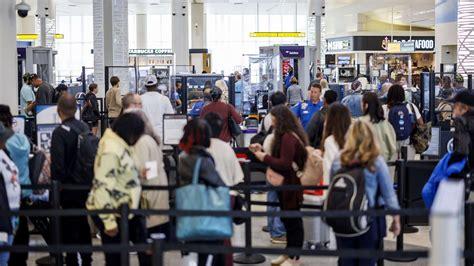
Evita Duffy-Alfonso, the daughter of U.S. Transportation Secretary Sean Duffy, ignited a firestorm of debate online after a frustrating experience at airport security led her to publicly demand the abolishment of the Transportation Security Administration (TSA). The incident, sparked by what she described as an unnecessarily long wait and invasive pat-down, has intensified scrutiny of the TSA’s methods, passenger rights, and the growing concerns around airport security culture.
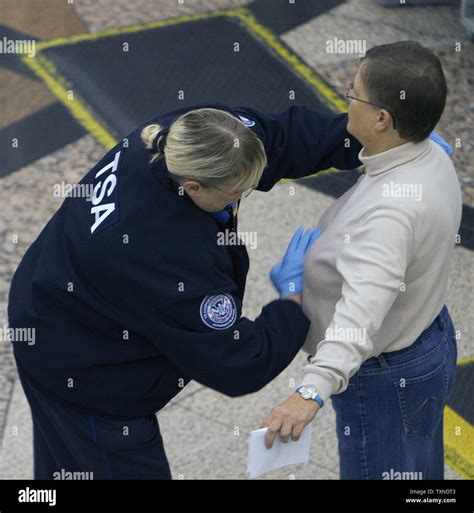
Duffy-Alfonso, who is currently pregnant, took to X (formerly Twitter) to detail her ordeal. Citing a desire to avoid radiation exposure from TSA body scanners, she opted instead for a manual pat-down—a right afforded to all travelers. But what should have been a routine accommodation, she alleges, quickly became a demeaning experience marked by passive-aggressive behavior from TSA agents, undue pressure to relent to scanning, and excessive delays that nearly cost her the flight.
The Airport Incident That Sparked Outrage
According to her post, Duffy-Alfonso was not alone in her frustration. She reported that another pregnant woman was also pressured to use the scanner, despite voicing similar concerns. Both women requested pat-downs, which are permitted under TSA policy, but were forced to wait for agents to become available—a delay that extended beyond 15 minutes.
Duffy-Alfonso described the pat-down as “absurdly invasive,” with her social media post recounting her discomfort and the indignity of the experience. She accused TSA staff of attempting to coerce her into compliance, implying that their behavior was an intentional effort to discourage opting out of body scanning protocols.
“If you’re going to make opt-outs legal,” she posted, “then train your agents not to retaliate against people who choose them.”
A Public Call for the TSA’s Abolishment
Following the incident, Duffy-Alfonso concluded that the TSA’s current model is untenable, calling it a relic that obstructs the evolution of efficient and respectful air travel. “The TSA should be abolished,” she stated unequivocally. Her call reverberated across social media, prompting thousands of reactions—both supportive and critical.
However, Duffy-Alfonso’s assertion overlooked a critical detail: the TSA is not under the Department of Transportation, but rather the Department of Homeland Security. One user was quick to point out the irony of her demands given her father’s Cabinet role, commenting, “Your father doesn’t run the TSA. You’re yelling into the wrong void.”
Who Oversees the TSA and Why That Matters
Despite her familial ties to the federal government, Duffy-Alfonso’s statement revealed a common misunderstanding among the public. The TSA is a branch of the Department of Homeland Security (DHS), not the Department of Transportation (DOT). Created in response to the 9/11 attacks, the TSA’s mission is to provide secure travel across the nation’s transportation systems.
If Duffy-Alfonso wishes to see changes implemented, she would need to lobby Congress or appeal directly to the DHS, led at the time of this writing by Secretary Kristi Noem, not her father. Sweeping reform or dissolution of the TSA would require bipartisan support and legislative action, a feat rarely achieved without coordinated advocacy campaigns.
How Long Are U.S. Security Wait Times, Really?
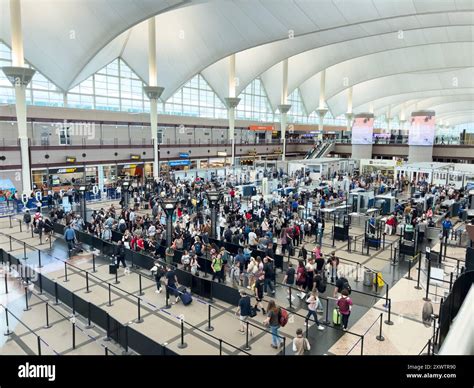
To assess the legitimacy of Duffy-Alfonso’s outrage, Simple Flying analyzed data compiled by WVTM 13 Birmingham on average TSA wait times across the U.S.’s busiest airports. The findings suggest that while delays exceeding 15 minutes are common, especially at larger hubs, the majority of travelers still clear checkpoints within 30 minutes.
For example:
- At JFK Airport, only 4.1% of passengers get through security in under 15 minutes; the remaining 95.9% wait between 15 and 30 minutes.
- Chicago O’Hare (ORD) sees 49% of travelers waiting under 15 minutes, and 50.3% between 15 and 30 minutes.
- At Las Vegas’ Harry Reid Airport (LAS), the experience is slightly better, with 51% of passengers clearing security in under 15 minutes.
These figures suggest that Duffy-Alfonso’s experience is far from unique, though it does raise questions about how prepared TSA is to accommodate travelers with medical or personal needs.
The Alternatives: Can CLEAR and TSA PreCheck Help?
One aspect of Duffy-Alfonso’s post included regret that she hadn’t enrolled in CLEAR, a biometric identity verification system that allows members to skip standard TSA lines. CLEAR, along with TSA PreCheck, is among the growing number of private and public sector initiatives aimed at expediting security clearance without compromising safety.
CLEAR uses iris and fingerprint scans to identify travelers, who are then escorted to the front of TSA screening lines. TSA PreCheck, meanwhile, allows for streamlined screening by letting travelers keep shoes, laptops, and belts on, reducing both time and inconvenience.
Still, these services come with an annual fee, and critics argue they introduce class-based inequalities into air travel, where convenience becomes a privilege of the affluent.
Understanding the TSA’s Body Scanner Controversy
At the heart of Duffy-Alfonso’s protest is a broader public discomfort with Advanced Imaging Technology (AIT) scanners, which use millimeter wave or backscatter x-rays to detect concealed threats. Although the TSA claims these are safe, many passengers—especially pregnant individuals—choose to opt out due to health concerns.
The opt-out policy is supposed to be respected without resistance, yet reports of aggressive or dismissive TSA behavior are not uncommon. The TSA has been repeatedly criticized for its lack of accountability, inconsistent training, and opaque complaint resolution processes.
What This Tells Us About Modern Air Travel and Bureaucracy
Duffy-Alfonso’s viral moment underscores a growing dissatisfaction with federal transportation security practices, particularly around personal rights, bodily autonomy, and customer service. While her privileged position brings added attention, the core complaint resonates widely.
Travelers are increasingly demanding reform, not only in terms of speed and efficiency but also in how respectfully they are treated. The TSA’s often robotic, zero-tolerance approach has made it a symbol of bureaucracy gone wrong for many Americans.
But abolishing the TSA altogether would raise monumental questions:
- What agency or system would replace it?
- Would safety standards be maintained or improved?
- How would airports ensure universal compliance and equal treatment?
These are not questions with simple answers. Any shift in federal transportation security would need to balance civil liberties with counterterrorism priorities—a challenge that has eluded policymakers for over two decades.
Final Thoughts: A Personal Outburst with Policy Implications
Evita Duffy-Alfonso’s impassioned complaint may not lead to the demise of the TSA, but it offers a window into the larger issues plaguing American airport security. Her high-profile position ensures the story gained traction, yet the experience mirrors countless others who’ve faced disrespect, delays, and discomfort at the hands of TSA.
While some may dismiss her outrage as privileged indignation, it has undeniably re-opened a national conversation. In a time when air travel is both a necessity and a stressor, calls for reform—or at the very least, greater accountability and training within the TSA—should not be taken lightly.
Unless systemic changes are introduced, frustrations like Duffy-Alfonso’s will persist, simmering just below the surface until another viral incident reignites the debate over how America handles airport security.