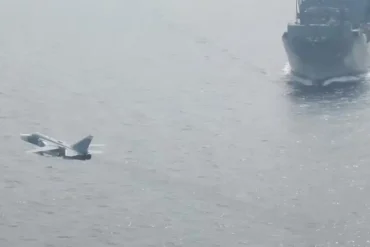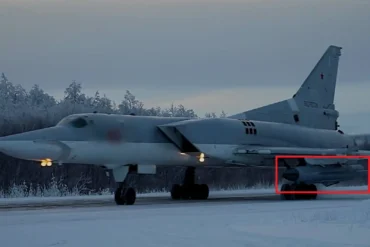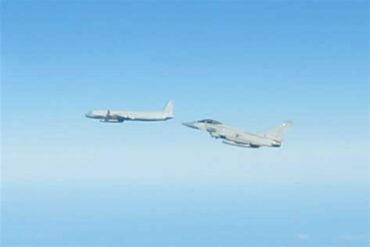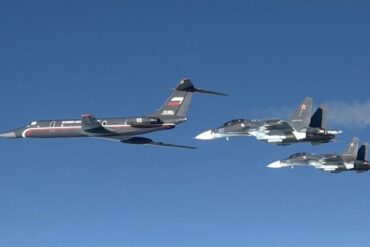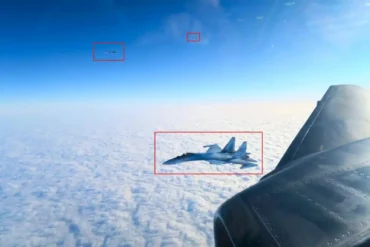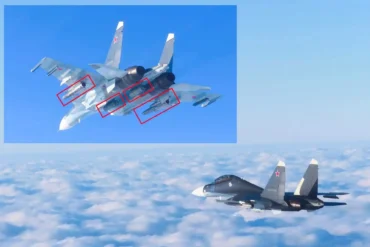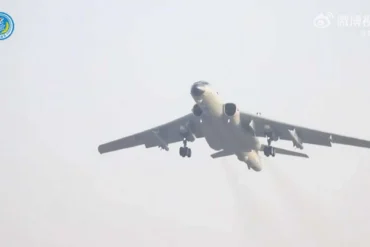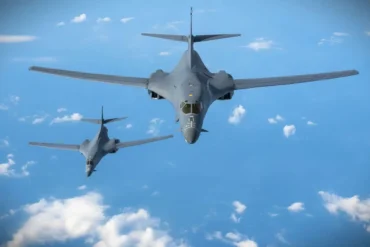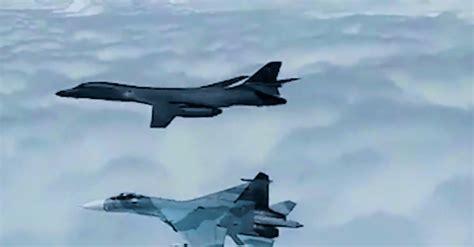
On Monday, November 25, 2024, two U.S. Air Force B-52H Stratofortress bombers were intercepted by a pair of Russian Su-27 fighter jets as they carried out a training mission over the Baltic Sea, according to a confirmation from a U.S. defense official. This high-profile interaction occurred near the Russian exclave of Kaliningrad, a strategically sensitive region that has become a focal point for NATO-Russia military posturing in recent years.
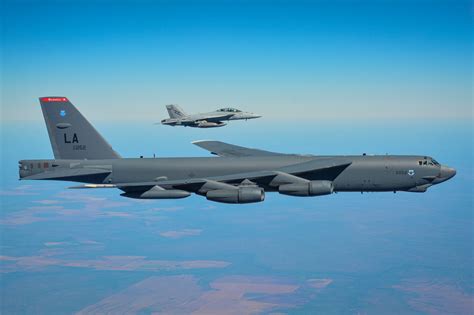
The B-52 bombers, part of the 20th Expeditionary Bomb Squadron, had departed from RAF Fairford in England earlier that day to participate in Exercise Apex Jet, a coordinated training operation with NATO allies. Despite the unexpected encounter with Russian fighters, the U.S. bombers continued their mission without deviation, underscoring the professionalism of both sides during the interception. The defense official noted that the Russian intercept was “safe and professional,” avoiding any escalation or aggressive maneuvers.
The Strategic Context Behind the Interception
The timing of this interception was anything but coincidental. It took place during a period of heightened geopolitical tension between the United States and Russia, particularly in the wake of the ongoing war in Ukraine and NATO’s expanding influence in northern Europe. With Finland officially joining NATO in 2023, the Baltic region has transformed into an increasingly critical theater for power projection.
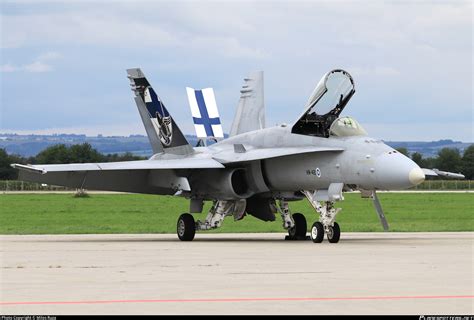
As part of the mission, the B-52s executed their first-ever simulated weapons drop over Finnish airspace, integrating with both Finnish F/A-18C Hornets and Swedish JAS 39 Gripens in joint exercises that highlight the growing interoperability among NATO members. This milestone marked Finland’s operational debut in a bomber task force exercise, signaling its deeper integration into NATO’s collective defense framework.
Gen. James Hecker, commander of U.S. Air Forces in Europe-Air Forces Africa, emphasized the symbolic weight of the mission, stating, “This bomber task force mission exemplifies our unwavering commitment to our European allies and partners. Together, we build stronger, more strategic relationships that reinforce security and stability across the region.” His remarks underscore the broader objective of such missions: not only to train but to send a clear message of deterrence and solidarity.
Kaliningrad: A Geopolitical Flashpoint
Kaliningrad, the site of the interception, is a heavily militarized Russian enclave wedged between NATO members Lithuania and Poland. Home to advanced air defense systems, ballistic missiles, and a significant naval presence, it serves as a forward outpost for Russian power projection into Europe. The interception near this region reflects Moscow’s sensitivity to NATO air operations encroaching on what it perceives as its immediate security perimeter.
Russian military doctrine has consistently prioritized the defense of Kaliningrad, making any foreign aircraft activity in its vicinity a trigger for rapid response. The appearance of Su-27 fighters is emblematic of Russia’s standing policy to intercept NATO aircraft operating near its borders, a practice that has intensified since the annexation of Crimea in 2014.
Operational Significance of the B-52 Stratofortress
The B-52H Stratofortress remains a linchpin of U.S. strategic bomber capability, even nearly seven decades after its introduction. With a combat radius exceeding 8,800 miles and the capacity to carry both conventional and nuclear ordnance, it represents a potent symbol of American military reach. Missions such as Exercise Apex Jet demonstrate its adaptability in modern joint operations.
The inclusion of B-52s in European airspace is a deliberate act of strategic signaling. By flying these bombers near Russia’s doorstep, the U.S. communicates its readiness to uphold NATO’s defense posture while reassuring Eastern European allies. Such flights are not simply routine exercises but are calibrated actions that serve both operational training and geopolitical messaging.
A Safe Yet Tense Encounter
While U.S. officials characterized Monday’s interception as “safe and professional,” the broader implications cannot be understated. Intercepts between NATO and Russian aircraft have become routine over the Baltic and Black Seas, yet each interaction carries inherent risks. A miscalculation or technical malfunction could quickly escalate into an international incident.
The Russian Su-27s reportedly approached the B-52s at a close distance before escorting them away from Kaliningrad’s airspace buffer zone. Both sides adhered to internationally recognized intercept procedures, avoiding aggressive posturing that could have sparked alarm in the volatile region.
Exercise Apex Jet: Integrating NATO’s Northern Flank
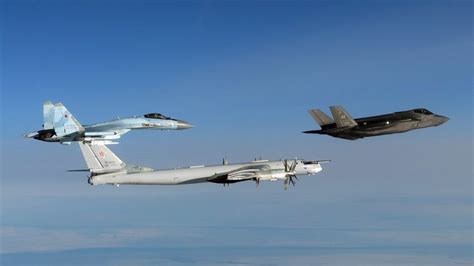
Exercise Apex Jet represents a pivotal evolution in NATO’s northern defense strategy. With Sweden and Finland integrating more closely into NATO’s defense planning, operations in the Baltic are becoming increasingly multinational. The exercise not only focused on simulated weapons delivery but also emphasized interoperability in contested environments, particularly in electronic warfare, air defense suppression, and command-and-control integration.
For Finland, hosting U.S. strategic bombers for training over its territory symbolizes a new era of security assurances under NATO’s collective defense umbrella. It also sends a cautionary signal to Russia that NATO’s northern flank is not only geographically expanding but also operationally synchronizing its assets to counter potential aggression.
Broader Geopolitical Implications
The interception unfolded against the backdrop of escalating U.S.-Russia tensions over Ukraine. The Biden administration, aiming to accelerate military support for Ukraine before the incoming Trump administration, recently authorized the transfer of Army Tactical Missile Systems (ATACMS) with explicit approval for use inside Russian territory. Simultaneously, Russia escalated its own military activities, including the launch of an experimental intermediate-range ballistic missile targeting Dnipro. Although Ukrainian sources reported the missile carried dummy warheads, the symbolic nature of the strike was clear.
The Baltic interception thus sits at the intersection of localized military routines and global power struggles. Each maneuver, intercept, and deployment is part of a broader chessboard where both NATO and Russia seek to assert influence without crossing the threshold into open conflict.
Looking Ahead: Maintaining Stability Amid Tension
As NATO continues to expand its operational reach in northern Europe, particularly with Finland and Sweden’s participation, the frequency of such interactions with Russian forces is likely to increase. Maintaining professional conduct during these encounters will be paramount to preventing escalation.
Moreover, exercises like Apex Jet illustrate a deliberate strategic recalibration toward the Arctic and Baltic theaters, regions that will play an outsized role in future NATO-Russia dynamics. For the U.S. Air Force, deploying bombers into these contested spaces reflects a commitment not just to readiness but to shaping the security environment through persistent presence.
Ultimately, the interception of U.S. bombers by Russian jets over the Baltic is not merely an isolated event but a manifestation of the larger security competition unfolding across Europe. It signals the delicate balance between deterrence and provocation, a balance that NATO and Russia will have to navigate carefully in the months and years ahead.