The diplomatic temperature between Washington and Ottawa has risen sharply after U.S. President Donald Trump withdrew an invitation for Canadian Prime Minister Mark Carney to join his newly announced “Board of Peace.” The move, abrupt and highly public, landed in the middle of an already volatile exchange of words that has exposed deeper fractures in one of the world’s most enduring bilateral relationships.
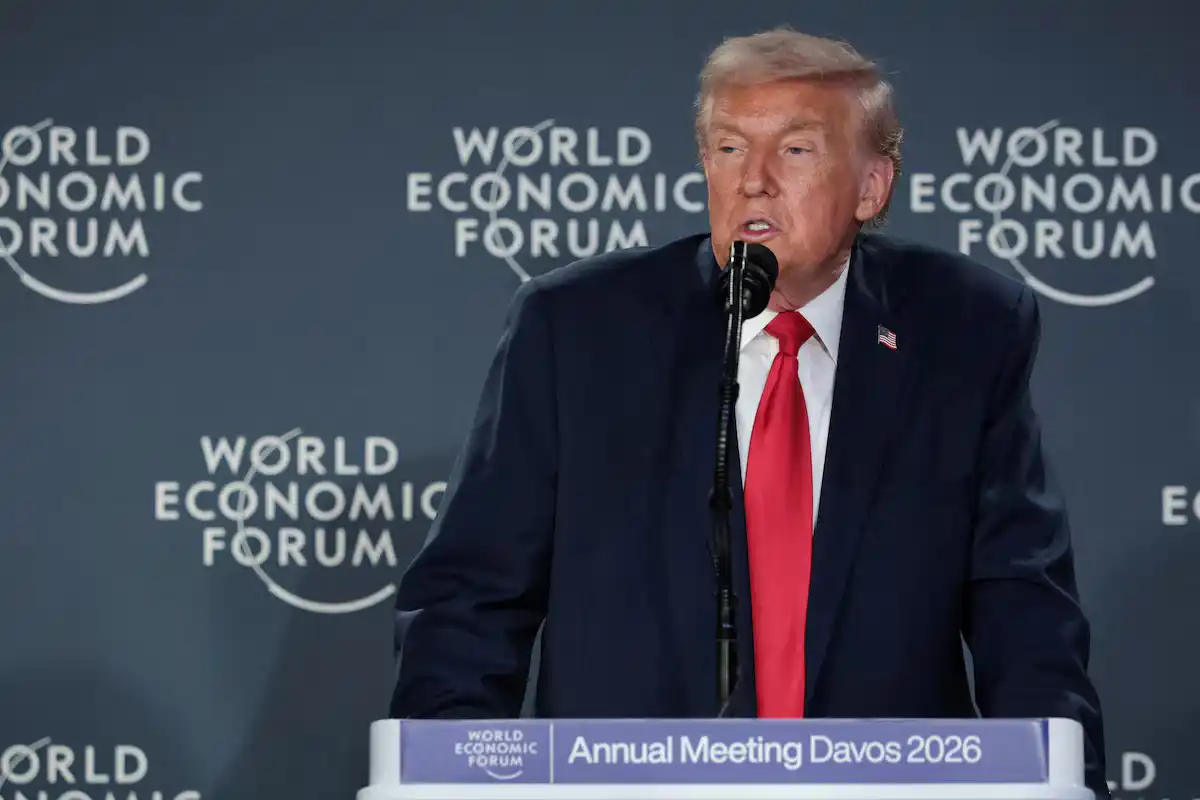
At the heart of the dispute lies a clash of narratives about power, sovereignty, and alliance in a changing global order. Trump’s remark at the World Economic Forum that “Canada lives because of the United States” struck a nerve north of the border, prompting a swift and unusually forceful response from Carney. Speaking to a domestic audience in Quebec City, the Canadian leader rejected the claim outright, emphasizing that Canada’s success flows from its own institutions, democratic resilience, and national identity.
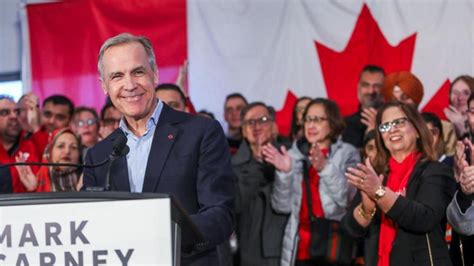
Carney’s rebuttal was not merely rhetorical. It followed a high-profile appearance in Davos, Switzerland, where he delivered a speech that resonated far beyond the conference halls. Without naming Trump, Carney described a “rupture” in the U.S.-led rules-based global order, arguing that middle powers like Canada could no longer rely on quiet compliance to guarantee security or prosperity. The address earned a standing ovation and was widely interpreted as a pointed critique of Washington’s increasingly transactional worldview.
Trump’s response came quickly and personally. From the Davos stage the following day, the U.S. president mocked what he characterized as Carney’s lack of gratitude, reiterating his claim that Canada’s existence depends on American power. The exchange marked a rare moment of open antagonism between leaders of two countries more accustomed to resolving disputes behind closed doors.
In his subsequent address at home, Carney leaned into the contrast. He framed Canada as a potential model in an era of democratic decline, arguing that pluralism and inclusion remain viable alternatives to authoritarian drift. Canada, he said, could not fix the world’s problems but could demonstrate that history is not inevitably bending toward exclusion and strongman politics. The message was calibrated for domestic unity, and the reaction suggested it hit its mark.
The backdrop to this rhetorical duel is a longer pattern of provocation. Trump has previously floated the idea of annexing Canada as the 51st U.S. state, and recently shared a social media image depicting Canada draped in the American flag alongside Greenland and Venezuela. While widely dismissed as bluster, such gestures have contributed to a sense in Ottawa that traditional assumptions about alliance stability can no longer be taken for granted.
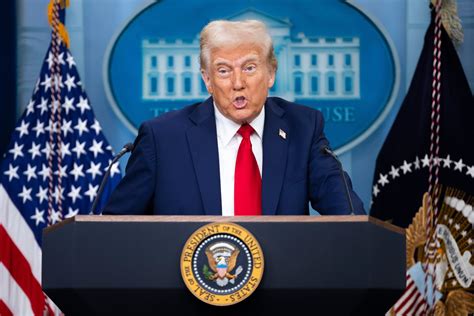
Against this tense backdrop came the withdrawal of Carney’s invitation to the “Board of Peace.” Announcing the decision on his Truth Social platform, Trump said the board was rescinding its offer for Canada to join. The body, still loosely defined, was initially conceived to oversee aspects of Gaza’s reconstruction but appears designed to operate with a far broader mandate.
Membership on the board carries financial implications. According to a draft charter, participating countries represented by their heads of government could secure multi-year seats by contributing more than $1 billion in cash during the first year. Canadian officials were quick to clarify that Canada would not pay for a seat, and that no such payment had been formally requested. The charter itself, they noted, remains under discussion, with many terms unresolved.
Before the invitation was withdrawn, Carney had indicated a willingness to participate, arguing that having a seat at the table was essential to shaping outcomes from within rather than reacting from the sidelines. That calculation reflects a long-standing Canadian approach to multilateral engagement, even when the framework is imperfect or politically fraught.
The revocation, however, underscores how personal and ideological friction can override procedural diplomacy. It also highlights a broader redefinition of alliances in a world Carney himself described as more divided, where former partnerships are being reworked or broken altogether. In this context, Canada has signaled plans to increase defense spending, strengthen border security, and reinforce sovereignty—moves that suggest preparation for a less predictable international environment.
The episode leaves lingering questions about the future of U.S.–Canada relations under renewed nationalist pressure. Trade, security cooperation, and cultural exchange remain deeply intertwined, yet the language exchanged in recent days signals a relationship under strain. What was once assumed to be unshakeable now appears contingent, shaped as much by personality and ideology as by shared history.
For now, the withdrawal from the “Board of Peace” stands as both a symbolic snub and a concrete illustration of how rapidly diplomatic norms can shift. Whether the dispute hardens into lasting estrangement or cools into pragmatic coexistence will depend on choices made in the months ahead. What is clear is that the era of quiet assumptions is over, replaced by a louder, more uncertain conversation about power, partnership, and national self-definition.