Venezuela’s aviation landscape has entered a new and volatile phase after the government moved to revoke operating rights for six foreign airlines, escalating a geopolitical confrontation already fueled by military maneuvering, diplomatic hostility, and conflicting aviation safety directives. The decision, announced by the National Institute of Civil Aviation (INAC), effectively bans these carriers from entering Venezuelan airspace after they suspended operations based on US safety warnings. What began as a regulatory caution from Washington has rapidly evolved into a multi-layered political dispute that now reshapes connectivity for one of South America’s most isolated aviation markets.
The catalyst came from a US Federal Aviation Administration (FAA) NOTAM urging foreign operators to avoid Venezuela due to “worsening security conditions and heightened military activity” around the country. Airlines quickly responded by suspending flights, but Caracas interpreted the move as political alignment with the United States rather than adherence to international safety protocols. The Maduro administration issued a blunt ultimatum: resume flights or lose rights. When carriers held their ground, Venezuela followed through—revoking access entirely.
In the government’s own words, these airlines participated in “actions of state terrorism promoted by the US government”, a charge that mirrors the increasingly combative rhetoric between Caracas and Washington as US naval forces mass off Venezuela’s coastline.
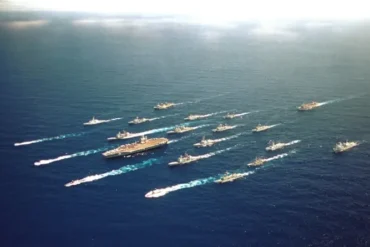
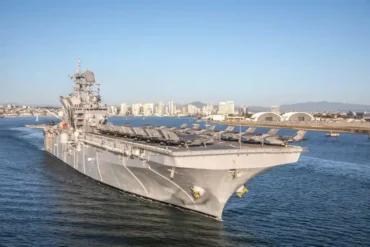
The FAA’s advisory marked a significant shift in how the US publicly characterizes risk in the region. The NOTAM explicitly cited the deteriorating security environment in Venezuelan-controlled airspace—particularly the Maiquetía Flight Information Region (FIR)—and warned all operators to increase caution. While NOTAMs typically carry technical phrasing, this one landed with geopolitical force. Its timing coincided with a major US military deployment involving 15,000 personnel and the USS Gerald R. Ford, the world’s largest aircraft carrier, stationed near Venezuelan waters. Officially, the mission targets drug-trafficking, but the Venezuelan government sees it as a prelude to destabilization or regime change.
Caracas reacted sharply. Within days, INAC issued an ultimatum to foreign carriers, accusing them of abandoning service in lockstep with Washington’s agenda. The directive demanded a full resumption of flights or risk permanent revocation of operating authority. When no airline reversed course, Venezuela immediately followed with bans.
Major European Airlines Among Those Banned
The fallout includes three prominent European carriers—Iberia, TAP Air Portugal, and Turkish Airlines—all of which provide long-haul connectivity to Simón Bolívar International Airport (CCS), Venezuela’s busiest aviation hub and the country’s primary global gateway since 1945. Their suspension represents a major blow for passengers relying on transatlantic links.
Operational data shows these carriers relied on widebody fleets tailored for long-distance sectors: TAP operated Airbus A330-200s and A330-900neos, Turkish Airlines deployed Boeing 787s and occasional 777s, while Iberia used A330s supplemented by wet-lease operators like Wamos Air and Privilege Style. Their absence further restricts already-limited access for Venezuelans traveling to Europe.
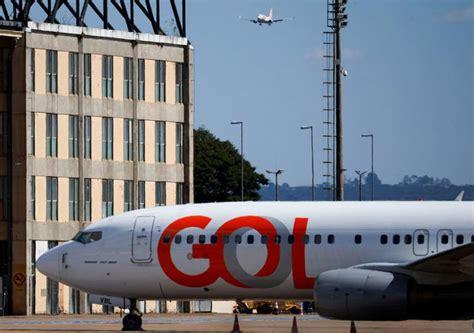
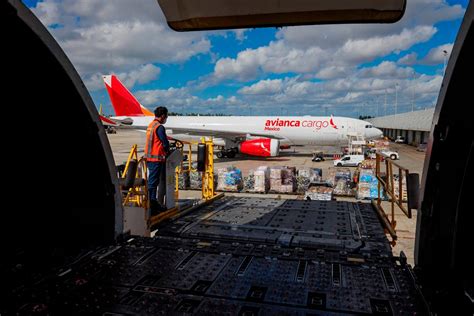
Regionally, the bans extend to Avianca, GOL, and LATAM Colombia, compounding a continental retreat that began earlier in the year when Caribbean Airlines halted flights from Trinidad and Tobago. Venezuela’s airspace had already been sparsely served; now it faces one of its most isolated periods in decades.
Airlines Affected and Their Former Routes
- Iberia: Madrid → Caracas
- TAP Air Portugal: Lisbon and Funchal → Caracas
- Turkish Airlines: Istanbul → Caracas
- Avianca: Bogota → Caracas
- GOL: São Paulo → Caracas
- LATAM Colombia: Bogota → Caracas
The loss of these routes leaves Venezuela with drastically reduced international connectivity, with only a handful of carriers still serving Caracas amid rising diplomatic tension.
Why the Situation Has Reached a Boiling Point
The backdrop is unmistakably geopolitical. The US-led deployment off Venezuela’s coast—Washington’s largest Latin American presence since 1989—has triggered heightened anxiety in Caracas. Although the Pentagon frames the mission as counter-narcotics enforcement, the Maduro government considers it a direct threat aimed at toppling the regime. This context amplifies every subsequent action, including the FAA’s NOTAM, which Venezuelan officials interpret not as a safety advisory but as a strategic pretext to justify future military activities.
With that perception, airlines suspending operations were seen not as companies protecting crew and passengers, but as entities participating in a broader pressure campaign. INAC’s retaliatory revocations reflect the Venezuelan government’s heightened sensitivity and the political symbolism of airspace sovereignty.
What Comes Next for Venezuela’s Isolated Aviation Market
The uncertainty now centers on whether airlines will concede to Venezuela’s demands or whether the government will modify its stance under economic pressure. Airlines typically avoid politically volatile regions, especially when advised to do so by major regulators like the FAA. Returning prematurely exposes them to legal liability, crew risk, and insurance complications. Conversely, Venezuela depends on foreign connectivity for commerce, migration flows, and humanitarian access. Neither side appears ready to compromise.
One thing is clear: this episode reinforces Venezuela’s rapidly shrinking aviation footprint, complicating travel for millions and deepening its isolation at a moment of intense international scrutiny. Future developments will hinge on both diplomatic negotiations and whether military activity near Venezuela intensifies or stabilizes.
If conditions continue to deteriorate, the global aviation community will likely see further cautionary directives, solidifying Venezuela as one of the world’s most restricted airspaces at a time when geopolitical turbulence is already reshaping global flight corridors.