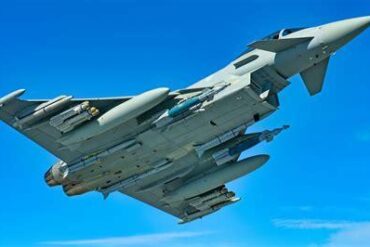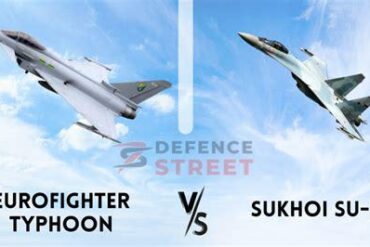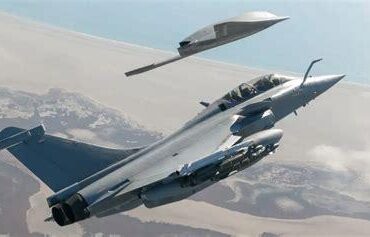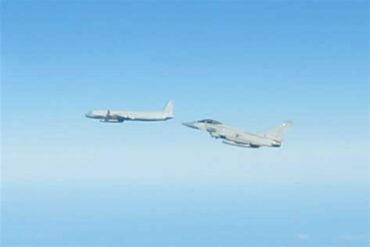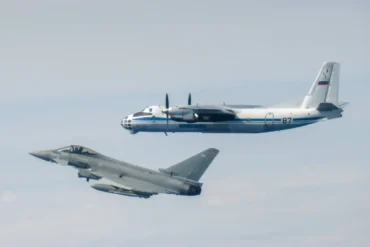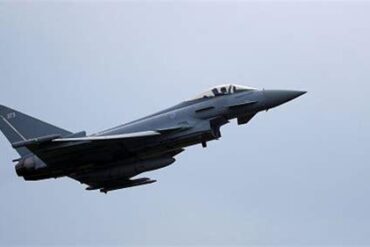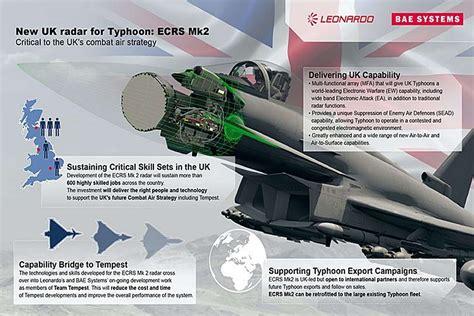
The United Kingdom has taken a decisive step in advancing its air combat capabilities by investing £204.6 million in the development and integration of the cutting-edge European Common Radar System (ECRS) Mk2 for the Royal Air Force’s Eurofighter Typhoon aircraft. This significant funding initiative aims to enhance the Typhoon’s ability to dominate both airspace and surface engagements through sophisticated radar technology capable of simultaneous detection, identification, and tracking of multiple air and ground targets. The move signals the UK’s strategic commitment to future-proofing its combat air fleet amid evolving global threats.
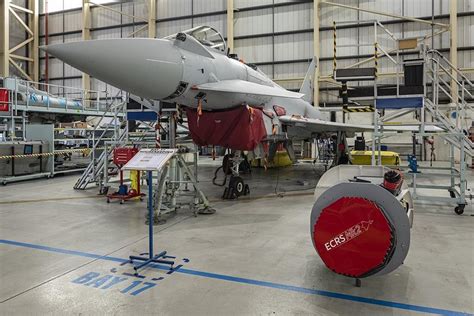
The investment supports long-lead production components necessary for the radar’s manufacturing and integration, with delivery efforts spearheaded by BAE Systems and Leonardo UK. The announcement follows the successful flight and ground trials of a prototype radar system at BAE Systems’ Warton facility in February 2025, a key milestone validating the radar’s performance under real-world conditions.
UK’s Radar Programme: A Leap in Electronic Warfare Capabilities
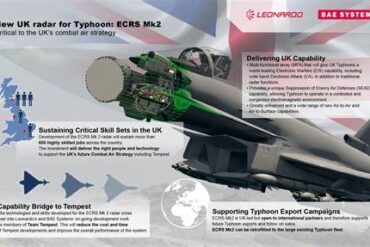
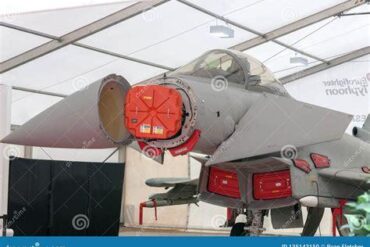
The ECRS Mk2 radar represents a transformative leap in electronic warfare (EW) and sensor technology for the Eurofighter Typhoon. The radar’s design incorporates a multi-functional array with embedded EW functions, making it the first of its kind developed in Europe. This configuration allows Typhoon pilots to conduct advanced electronic attacks while maintaining unrivalled situational awareness.
According to Richard Hamilton, Managing Director – Europe & International at BAE Systems’ Air sector, “With modern conflict demonstrating the central importance of electronic warfare to combat operations, we are proud that the UK’s onshore combat air industry is the first in Europe to offer a radar with embedded electronic warfare capabilities through a multi-functional array, with development running several years ahead of other international efforts.” Such advancements place the UK ahead of parallel developments globally, solidifying its position as a leader in combat air systems technology.
Strategic Industrial Collaboration and Economic Impact
The radar’s production and integration are expected to sustain approximately 1,300 highly skilled jobs across the UK, including 400 at Leonardo’s sites in Edinburgh and Luton, and over 300 at BAE Systems’ Lancashire facilities. This funding not only underpins national security but also delivers tangible economic benefits, supporting the broader UK aerospace and defence sector. The Typhoon programme itself is a cornerstone of the UK’s defence industry, with BAE Systems employing around 5,000 individuals directly on Typhoon-related activities in the North West, contributing to over 20,800 jobs across the UK economy.
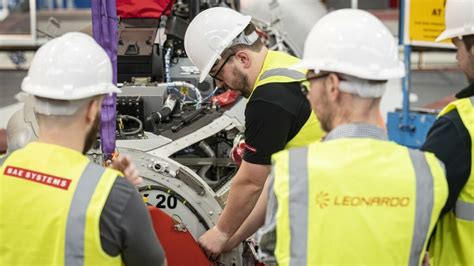
Mark Hamilton, Managing Director Electronics UK at Leonardo, highlighted the significance of the government’s backing: “The UK’s commitment to these long-lead packages in support of series production reflects the growing confidence in the progress being made by UK industry in developing this state-of-the-art radar and growing maturity of the system design.” This confidence stems from meticulous development and testing phases that have demonstrated the system’s robustness and technological superiority.
Integration Timeline and Operational Goals
Initial production radars are anticipated to become available by 2028, with concerted efforts underway to accelerate their integration into the four-nation Eurofighter programme. The Ministry of Defence’s Defence Equipment & Support (DE&S) unit, led by Lyndon Hoyle, is overseeing the delivery of this critical capability. Hoyle emphasized the urgency of the integration phase, stating, “The race is now on to get them integrated as soon as possible through the four-nation Eurofighter programme and deliver the battle-winning capability into the hands of the war fighter.” This underscores the strategic imperative of equipping frontline Typhoon squadrons with next-generation radar technology to maintain operational edge.
ECRS Mk2: Technical Superiority and Battlefield Edge
The ECRS Mk2 radar’s technical attributes represent a significant evolution from existing Typhoon radar systems. It provides the ability to locate, monitor, and engage threats at greater distances, with faster target acquisition and more precise tracking. The radar’s active electronically scanned array (AESA) architecture enables it to perform multiple roles simultaneously, including long-range air surveillance, ground mapping, and high-power jamming of adversary sensors and communications. These capabilities are pivotal for contested environments where electronic dominance is essential for mission success.
What sets the ECRS Mk2 apart is its integrated electronic warfare capability. The radar’s multi-functional array can seamlessly switch between traditional radar functions and high-power electronic attack modes, disrupting or deceiving enemy systems without compromising its primary sensor duties. This dual-role functionality reduces the need for additional dedicated EW platforms, streamlining operations and reducing fleet support requirements.
Global and Export Significance
Beyond bolstering the RAF’s combat capabilities, the ECRS Mk2 radar enhances the export attractiveness of the Eurofighter Typhoon. The UK’s share of Typhoon export sales already exceeds twice its £12 billion investment in the programme. With this radar upgrade, the platform becomes even more appealing to potential international customers seeking modern, flexible, and future-proof combat air solutions.
The Eurofighter consortium partners — the UK, Germany, Italy, and Spain — are all key stakeholders in this effort, but the UK’s proactive funding and technological lead with ECRS Mk2 place it at the forefront of the programme’s evolution. The radar’s success will likely shape future Eurofighter export campaigns and collaborations with partner nations.
Sustaining the UK’s Combat Air Power for the Future
This £204.6 million investment forms part of the broader strategic vision for the UK’s combat air sector, ensuring the Eurofighter Typhoon remains a relevant and potent force well into the 2030s and beyond. With global airpower dynamics shifting and adversaries investing heavily in advanced sensor and EW technologies, the ECRS Mk2 radar ensures the RAF’s Typhoon fleet will not only keep pace but set new standards for capability.
As production ramps up and integration milestones are met, the UK’s defence industry will continue to demonstrate its ability to deliver world-leading technology that safeguards national security while driving economic prosperity. The success of this programme reaffirms the vital role of sovereign industrial capability in securing the UK’s defence and technological future.