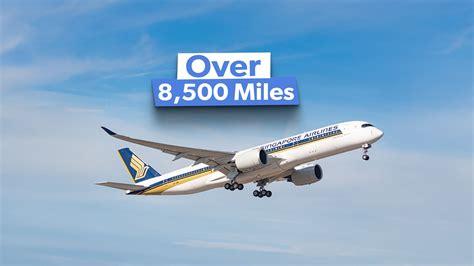
Modern commercial aviation has quietly slipped into the realm of science fiction. Journeys that once demanded multiple refueling stops, crew swaps, and a patient relationship with airport lounges are now flown nonstop, smoothly and routinely, by a single aircraft. At the center of this transformation sits the Airbus A350, a long-range widebody designed not merely to cross oceans, but to erase them.
These ultra-long-haul flights are not novelties. They are daily, revenue-generating services that bind continents together in ways that were operationally impossible just two decades ago. For airlines, these routes are strategic weapons—high-visibility statements about fleet efficiency, network ambition, and global relevance. For passengers, they are endurance tests softened by quieter cabins, higher humidity, better lighting, and an onboard experience designed for life measured in half-days, not hours.
What follows is a deep exploration of the seven longest Airbus A350 flights in the world, ranked by distance and duration. These are routes that stretch toward 18 hours, brushing against the physiological and technical limits of modern air travel, and redefining what “long haul” truly means.
The Airbus A350’s role in this story is not accidental. Built with extensive use of carbon-fiber composites, powered by ultra-efficient Rolls-Royce Trent XWB engines, and optimized for extreme range, the aircraft allows airlines to attempt routes that once lived only in network planners’ spreadsheets. Each flight below is a case study in how technology, geography, and commercial strategy intersect at cruising altitude.
7. Atlanta – Johannesburg: The Southern Hemisphere Shortcut
Delta Air Lines’ nonstop service between Atlanta (ATL) and Johannesburg (JNB) represents a quiet revolution in transcontinental connectivity. Covering approximately 8,433 miles, this route bypasses Europe entirely, linking the southeastern United States directly with southern Africa. Operated by the Airbus A350-900, the flight typically schedules around 15 hours, depending on seasonal wind patterns over the Atlantic.
This route matters because it rewrites legacy travel behavior. For decades, journeys between the US and southern Africa almost universally required a European stop. Delta’s A350 operation collapses that complexity into a single segment, saving time while introducing a new long-haul axis that avoids crowded European hubs.
Onboard, Delta’s A350 cabins are tuned for duration rather than spectacle. Delta One offers fully lie-flat suites with direct aisle access, while Premium Select provides a meaningful middle ground for travelers unwilling to endure economy for nearly two-thirds of a day. Cabin humidity and reduced noise levels play an outsized role here; on flights of this length, incremental comfort improvements compound into real physiological benefits.
6. Singapore – San Francisco: Where Time Zones Do the Heavy Lifting
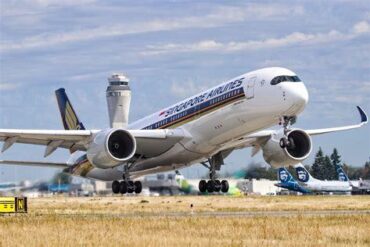
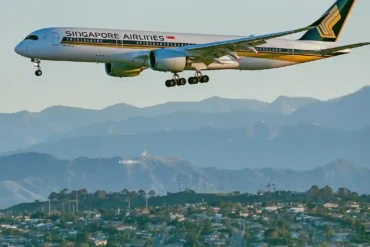
At roughly 8,440 miles, Singapore Airlines’ daily Singapore–San Francisco route is a masterclass in long-range network design. Westbound flights usually land in California after 14 to 15 hours, while the eastbound return frequently pushes beyond 17 hours, slowed by Pacific headwinds and polar routing constraints.
The aircraft assigned is the Airbus A350-900, not the specialized ULR variant, yet still perfectly capable of sustaining these marathon segments. Singapore Airlines leverages cabin design as a fatigue-management tool, using adaptive lighting, higher cabin pressure, and curated meal timing to align passengers’ circadian rhythms with their destination.
This route is particularly punishing psychologically. Crossing the Pacific compresses or stretches calendar days in unsettling ways, and Singapore Airlines counters this with consistency: predictable service flow, restrained cabin aesthetics, and an entertainment library deep enough to outlast multiple sleep cycles. The result is a flight that feels long, but never chaotic.
5. Singapore – Los Angeles: The Trans-Pacific Marathon
Stretching 8,758 miles, Singapore–Los Angeles sits firmly in the realm where aircraft range margins matter. Scheduled flight times typically range from 15 to 16 hours westbound, with eastbound returns creeping closer to 17 hours. This route tests the A350-900’s efficiency envelope while remaining commercially viable year-round.
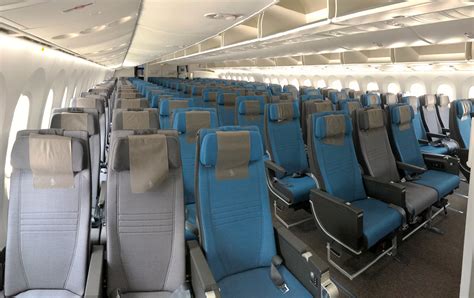
Singapore Airlines treats this service as a flagship corridor. Business class passengers experience lie-flat seating engineered for extended rest, while premium economy absorbs much of the demand from travelers seeking relief from standard economy’s spatial constraints. Even economy class benefits from thoughtful seat ergonomics and a service cadence that avoids overwhelming passengers during prolonged wakefulness.
The success of this route illustrates a broader industry truth: ultra-long-haul flights no longer succeed solely on novelty. They succeed when airlines engineer predictability, minimizing surprises in an environment where human tolerance is already stretched thin.
4. Doha – Los Angeles: The A350-1000 Flex
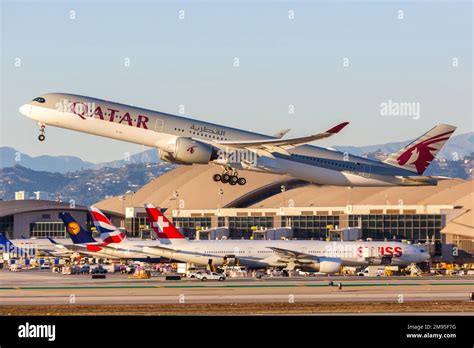
Qatar Airways’ Doha–Los Angeles service covers around 8,301 miles, typically exceeding 15 hours westbound. The route is flown by the Airbus A350-1000, the stretched, higher-capacity sibling of the A350-900, optimized for payload flexibility on long missions.
This flight stitches together the Middle East and the US West Coast without compromise. Qatar’s hub-and-spoke model relies on long, uninterrupted sectors, and the A350-1000’s performance allows the airline to maintain cargo capacity alongside full passenger loads.
Cabin experience is central to Qatar’s brand identity. Long-haul passengers encounter lie-flat business class seating, expansive entertainment screens, and service pacing that acknowledges the mental fatigue of ultra-long travel. The aircraft’s quieter cabin becomes an invisible luxury here; when noise drops, time feels shorter.
3. Shenzhen – Mexico City: One Direction, One Record
China Southern’s Shenzhen–Mexico City flight is among the most technically intriguing on this list. At approximately 8,778 miles, the eastbound leg operates nonstop, clocking around 15 to 16 hours. The westbound return, however, requires a technical stop in Tijuana, driven by Mexico City’s high-altitude performance constraints.
This asymmetry reveals the delicate balance of fuel, payload, and runway performance that defines ultra-long-haul planning. Mexico City’s elevation reduces maximum takeoff weight, making a nonstop return across the Pacific impractical under many conditions.
Passengers onboard experience China Southern’s standard A350 long-haul product: multiple cabin classes, in-flight entertainment, and service structured for extended duration. Beyond comfort, this route stands as proof that the A350 enables nontraditional intercontinental pairings, linking Asia and Latin America without transiting Europe or North America’s major hubs.
2. Newark – Singapore: The ULR Experiment
At 9,484 miles, Newark–Singapore is one of aviation’s most audacious scheduled services. Operated by the Airbus A350-900ULR, this flight routinely exceeds 18 hours, placing it near the physiological limits of both passengers and crew.
The ULR configuration is radical by airline standards. Economy class is removed entirely, replaced by business and premium economy seating to reduce weight and extend range. This design choice transforms the cabin into a calmer, less densely populated space—an intentional trade-off between capacity and endurance.
Singapore Airlines uses environmental control systems aggressively here. Higher humidity, optimized cabin pressure, and tailored lighting sequences work together to reduce dehydration and jet lag. This flight is not about indulgence; it is about sustainability of the human body over extreme duration.
1. New York – Singapore: The Longest of Them All
The crown belongs to New York (JFK)–Singapore, the longest Airbus A350 flight in regular commercial service. Covering 9,487 miles, scheduled block times often surpass 18 hours, making this route a benchmark for modern aviation capability.
Flown exclusively by the A350-900ULR, this service embodies a decade of incremental progress in aerodynamics, materials science, and engine efficiency. Every kilogram saved, every drag coefficient reduced, contributes to making this route viable.
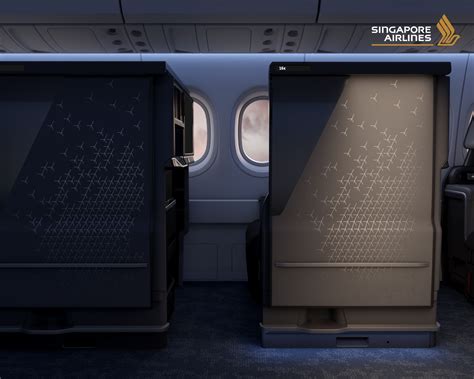
The onboard experience mirrors Newark’s configuration: business and premium economy only, deliberate service pacing, and an emphasis on wellness over spectacle. Passengers are not rushed through meals or sleep cycles. Instead, the flight unfolds like a carefully managed experiment in long-duration human comfort.
This route is not merely long. It is symbolic. It marks the point where geography bends to engineering, where two of the world’s great cities are connected by a single, uninterrupted arc through the stratosphere.
In these seven flights, the Airbus A350 proves that ultra-long-haul travel is no longer an exception. It is a mature, repeatable capability—one that quietly reshapes the global map, one 18-hour flight at a time.