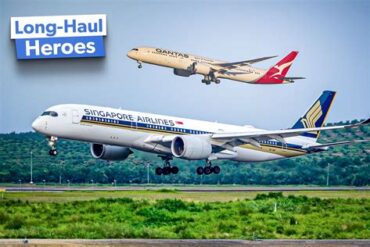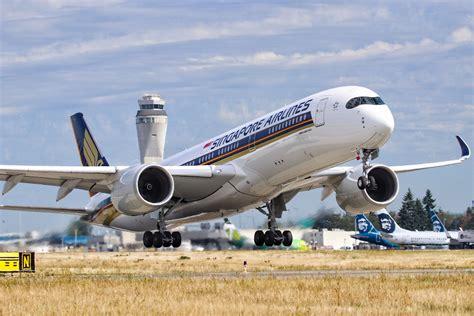
The era of ultra-long-haul aviation has redefined the frontiers of commercial flight. At the heart of this revolution lies the Airbus A350, particularly the A350-900ULR, a technological marvel that enables airlines to stretch the boundaries of time, distance, and passenger experience. Flights now routinely span over 18 hours, unlocking city pairs that were once thought unreachable in a single journey.
The Evolution of Ultra-Long-Haul: Singapore Airlines as the Pioneer
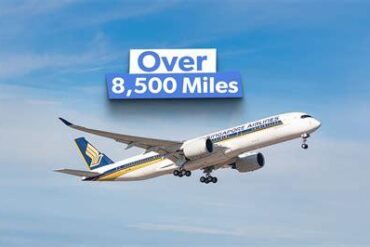
Singapore Airlines, the flag carrier of one of Asia’s most globally connected city-states, has long been synonymous with innovation in air travel. The carrier first made headlines in 2004 with its non-stop flights between Singapore and Newark using the Airbus A340-500. These services, lasting up to 18 hours, shattered the limits of endurance, both for passengers and aircraft.
However, the A340-500’s high fuel consumption—courtesy of its four-engine design—eventually made these routes financially untenable. By 2013, despite consistent demand from premium travelers, Singapore Airlines suspended the flights, awaiting a more efficient solution.
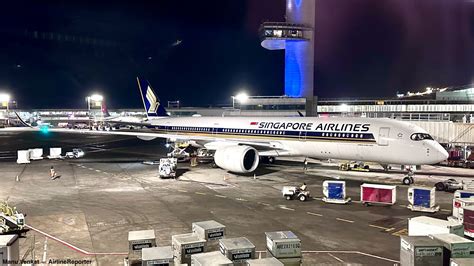
That solution materialized in 2018 in the form of the Airbus A350-900ULR, designed from the ground up for ultra-long-haul performance. It marked a turning point not just for Singapore Airlines, but for global aviation strategy.
A Technical Masterpiece: Why the A350-900ULR Changed the Game
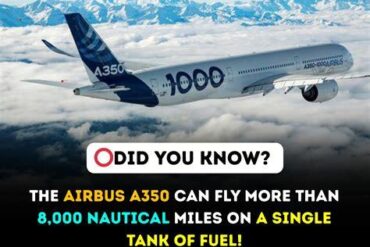
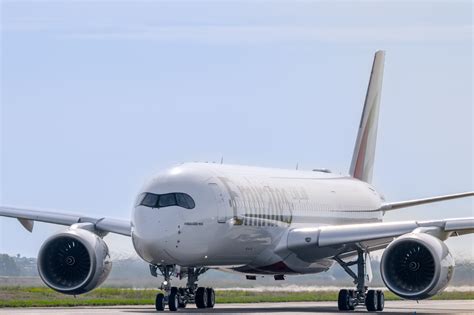
The Airbus A350-900ULR is engineered with increased fuel capacity, improved aerodynamics, and Rolls-Royce Trent XWB engines that offer record-breaking efficiency. Capable of flying up to 9,700 nautical miles, it delivers the range needed to connect distant global cities with non-stop convenience.
Unlike the fuel-hungry A340-500, the A350-900ULR burns 25% less fuel per seat. It achieves this through its twin-engine configuration and use of composite materials that reduce weight and improve durability. Singapore Airlines was the first to configure these aircraft with a premium-heavy cabin, ditching economy class in favor of business and premium economy. This strategic move optimizes profitability by targeting travelers willing to pay a premium for convenience and comfort on flights nearing 19 hours.
Within the cabin, the aircraft is a sanctuary for long-distance travel. Features like lower cabin altitude, higher humidity levels, and a quieter interior mitigate fatigue and jet lag, redefining the passenger experience.
The Longest Flights in the World: SIN–JFK and SIN–EWR
Today, Singapore Airlines operates the longest scheduled commercial flights on Earth: non-stop services from Singapore Changi Airport to New York’s JFK and Newark. Each flight is a logistical ballet, requiring precision in fuel loading, crew management, and airspace coordination.
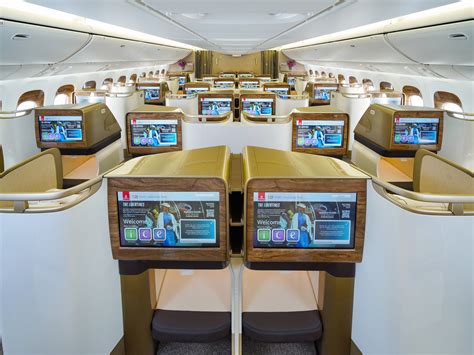
The Singapore–Newark (SIN–EWR) route stretches 8,285 nautical miles, clocking in at approximately 18 hours and 30 minutes depending on winds. Its sibling, the Singapore–JFK (SIN–JFK) service, covers a nearly identical distance, often running for 18 hours.
These flights aren’t just aviation records—they’re commercial marvels. Operating to both JFK and Newark allows Singapore Airlines to capture distinct market segments:
- JFK appeals to international premium travelers and corporate clients, particularly in Manhattan and Long Island.
- Newark, as a Star Alliance hub via United Airlines, offers seamless U.S. domestic connections, especially across the Midwest and West Coast.
By leveraging both airports, Singapore Airlines maximizes load factors and revenue while offering unmatched flexibility in the competitive transpacific corridor.
Why No Economy Class?
The decision to exclude economy class from these record-breaking flights is both economic and ergonomic. Ultra-long-haul services face tight weight restrictions, and the fuel load required leaves little room for heavy configurations. Moreover, passengers in economy class are less likely to pay the premium fares necessary to make such flights profitable.
Instead, the A350-900ULR features:
- 67 Business Class seats with lie-flat beds
- 94 Premium Economy seats with extra recline and legroom
This configuration balances weight savings with revenue potential, offering comfort to travelers who are most likely to endure 18+ hours in the sky.
The Future Arrives Early: Qantas and Project Sunrise
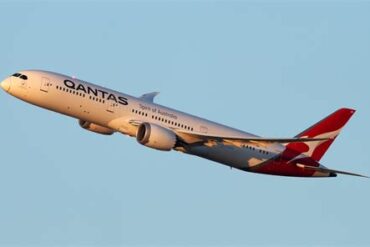
Just as Singapore Airlines defined today’s ultra-long-haul norms, Qantas is set to redefine tomorrow’s. Through its ambitious Project Sunrise, the Australian carrier aims to launch Sydney–London and Sydney–New York services by 2027.
These flights, planned to exceed 9,200 nautical miles and run for over 20 hours, will be operated using the Airbus A350-1000ULR, a new variant tailored for even greater distances. Qantas’ aircraft will feature wellness zones, fewer seats, and more premium offerings, pushing in-flight health and comfort to unprecedented levels.
Project Sunrise is more than a technological feat—it’s a strategic challenge to the hub-and-spoke model. By connecting continents directly, Qantas bets on the growing preference for point-to-point travel over lengthy transits.
Strategic Implications for Global Air Travel
The Airbus A350 isn’t just a plane—it’s a strategic enabler. For Singapore Airlines, it revives previously unviable routes. For Qantas, it allows routes never before attempted. For passengers, it represents a new age of travel defined by speed, comfort, and directness.
A few years ago, an 18-hour non-stop flight would have been deemed extreme. Today, it’s a daily occurrence. Tomorrow, 22-hour flights will be marketed as the new premium standard. Airlines are betting on these services not just as novelties but as core components of global connectivity.
Airlines that adopt ultra-long-haul strategies using aircraft like the A350 must focus on:
- Cabin wellness innovation: Passengers demand more than seat pitch—they seek in-flight wellbeing.
- Operational precision: These flights allow no room for errors in fuel, weather, or crew logistics.
- Yield optimization: Profitability depends on premium cabin sales and strategic partnerships (e.g., alliances and corporate contracts).
The A350 Legacy: A Redefinition of Range and Comfort
As aviation continues to evolve, the Airbus A350 stands out as the aircraft that made ultra-long-haul sustainable. With its advanced materials, superior fuel economy, and customer-centric cabin design, it has become the aircraft of choice for globe-spanning routes.
Airlines embracing the A350’s capabilities are pushing boundaries once considered unattainable. From the lush tropics of Singapore to the steel canyons of Manhattan, from Sydney’s harbors to London’s skyline, the longest A350 flights are not just routes—they are milestones of modern civilization, bridging continents with a single flight.
And as the world demands faster, more direct travel, the question is no longer “How far can we fly?”, but rather “How far should we fly—comfortably, efficiently, and sustainably?” The A350 gives us the answer.