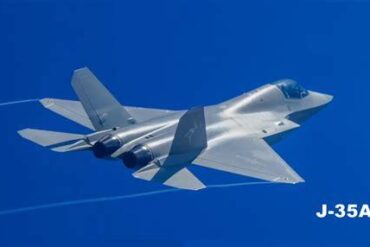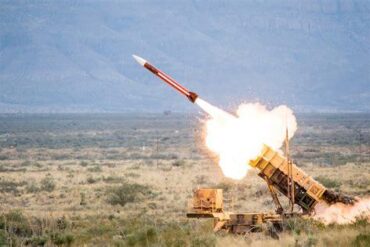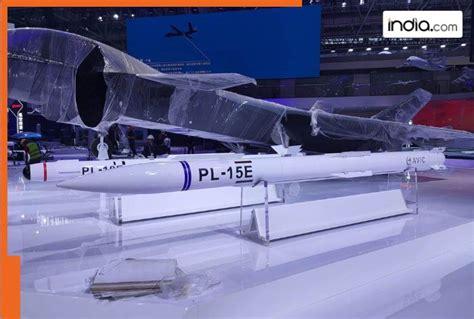
The balance of air superiority is quietly shifting, not through new aircraft alone, but through the missiles they carry. In 2026, the United States Air Force finds itself confronting a stark reality: its most advanced fighters, the F-22 Raptor and F-35 Lightning II, may no longer hold the decisive edge in beyond-visual-range (BVR) combat. At the center of this concern lies a widening gap in missile reach, with China’s PL-15 emerging as a formidable challenger that threatens to redefine aerial engagement dynamics.
This is not a marginal technological difference. In modern air warfare, the aircraft that fires first often determines the outcome. Range is no longer just a specification—it is a tactical advantage that shapes decision-making, survivability, and mission success. For decades, the United States relied on superior sensors, stealth, and networked warfare to dominate the skies. Now, those advantages risk being blunted by a simple but critical factor: being outranged.
The implications are particularly severe in the Indo-Pacific, where vast distances and highly contested airspace demand long-range engagement capabilities. In scenarios involving the South China Sea or the Taiwan Strait, the side that can engage earlier holds a decisive upper hand. As China’s missile technology matures rapidly, the U.S. is being forced into a reactive posture—one that could reshape the future of air combat doctrine.
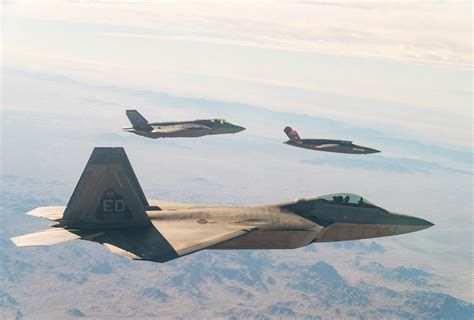
Why Missile Range Now Defines Air Superiority
The evolution of aerial warfare has steadily shifted from close-range dogfights to long-distance engagements guided by sensors, data links, and precision weapons. In this environment, missile range becomes the first and most critical layer of dominance. The AIM-120 AMRAAM, long considered the backbone of U.S. air-to-air capability, has served reliably across multiple conflicts. However, even its latest AIM-120D variant is increasingly viewed as insufficient against next-generation threats.
The problem is not just raw distance but effective engagement range. A missile’s ability to maintain speed, maneuverability, and targeting accuracy at long distances determines whether it remains lethal. Reports suggest that China’s PL-15 significantly exceeds the operational reach of the AIM-120D, enabling Chinese fighters to launch attacks before U.S. aircraft can respond in kind.
This imbalance disrupts a fundamental advantage of stealth fighters. The F-22 and F-35 are designed to detect adversaries first, remain unseen, and strike before being targeted. But if opposing missiles can reach them earlier, these aircraft are forced into defensive maneuvers sooner than intended. That shift—from hunter to evader—undermines the very philosophy behind fifth-generation air combat.
Combat Signals: Real-World Evidence of a Growing Threat
Theoretical concerns about Chinese missile capabilities have been reinforced by emerging combat data. A notable aerial engagement between India and Pakistan provided a rare glimpse into how Chinese-origin missile systems perform under operational conditions. During the confrontation, Pakistan deployed missiles from its J-10C fighters at distances approaching 200 kilometers against Indian aircraft.
While full details remain classified, the engagement revealed something critical: these missiles demonstrated both extended reach and flexible engagement envelopes. Pilots and analysts observed that the weapons retained energy deep into their flight paths, making evasive maneuvers more difficult and less effective.
This was not a laboratory test or a simulated exercise. It was a real-world validation of concepts that had long been discussed in defense circles. The takeaway was clear—Chinese missile technology is no longer theoretical. It is operational, credible, and increasingly sophisticated.
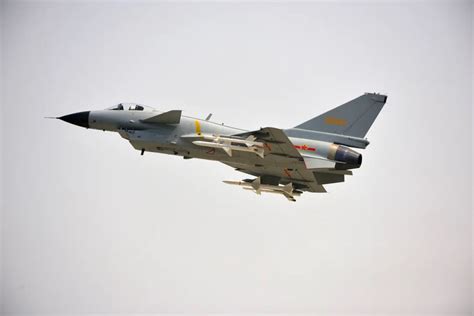
Inside the PL-15: Engineering a Long-Range Advantage
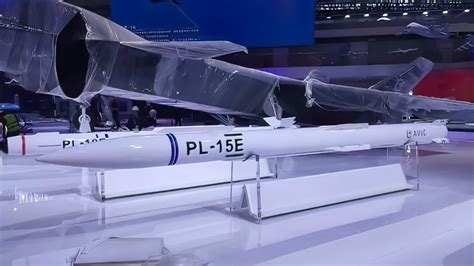
The PL-15 represents a significant leap in missile design, combining advanced propulsion, guidance, and targeting systems into a single platform optimized for long-range engagements. Its estimated range, often cited as exceeding 200 kilometers, places it among the most capable air-to-air missiles currently deployed.
One of its defining features is the dual-pulse rocket motor. Unlike traditional single-burn propulsion systems, which expend their energy early in flight, the dual-pulse design allows for a second burst of thrust during the terminal phase. This means the missile can accelerate again as it closes in on its target, maintaining high speed and maneuverability when it matters most.
This capability dramatically increases the missile’s “no-escape zone,” the area within which a target cannot evade interception. Even if an aircraft detects the incoming threat, the PL-15’s sustained energy makes it far more difficult to outrun or outmaneuver.
Equally important is its active electronically scanned array (AESA) radar seeker. This advanced guidance system enhances resistance to electronic warfare measures such as jamming and spoofing. It allows the missile to maintain lock-on even in contested electromagnetic environments, where traditional guidance systems might struggle.
The PL-15 is not just a weapon—it is a reflection of China’s broader strategic approach. By prioritizing long-range engagement and high-value target interception, it aligns with an anti-access/area denial (A2/AD) doctrine designed to keep adversaries at a distance.
The Strategic Impact on F-22 and F-35 Operations
For the U.S. Air Force, the implications extend far beyond technical specifications. The F-22 and F-35 are built around the concept of first-look, first-shot, first-kill. Their stealth characteristics, advanced sensors, and networked capabilities are designed to create a decisive engagement advantage.
However, if adversary missiles can be launched from outside the effective range of U.S. weapons, that advantage begins to erode. Pilots may be forced to disengage, reposition, or rely on defensive countermeasures before they can even enter firing range. This not only reduces mission effectiveness but also increases operational risk.
In highly contested environments, where multiple threats converge simultaneously, this dynamic becomes even more dangerous. Tankers, AWACS aircraft, and support platforms—critical to sustaining air operations—are also vulnerable to long-range interception. The PL-15’s design specifically targets these high-value assets, amplifying its strategic impact.
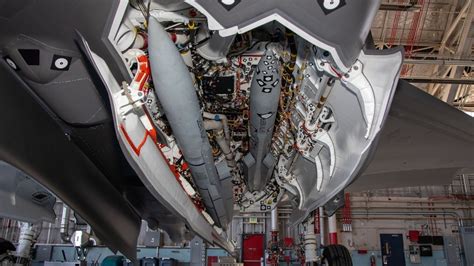
Western Countermeasures: Racing to Close the Gap
Recognizing the urgency of the situation, the United States and its allies are accelerating efforts to restore parity—or regain superiority—in missile range. Incremental upgrades to the AIM-120D continue, focusing on improved guidance systems, enhanced data-link capabilities, and modest range extensions. These improvements, while valuable, are not sufficient to fully address the gap.
The more transformative response lies in the development of the AIM-260 Joint Advanced Tactical Missile (JATM). This next-generation weapon is designed to exceed the capabilities of the PL-15 while remaining compatible with existing aircraft platforms. Although its exact specifications remain classified, expectations are clear: it must deliver greater range, better energy management, and improved resistance to countermeasures.
Europe, meanwhile, has taken a different technological path with the Meteor missile. Instead of relying on traditional rocket propulsion, Meteor employs a ramjet engine that allows it to sustain high speeds over extended distances. This continuous thrust provides a consistent energy advantage throughout the engagement, rather than relying on a single boost phase.
The contrast between these approaches highlights a broader strategic divergence. The United States is focused on rapid integration and compatibility, while Europe emphasizes propulsion innovation. Both paths aim to solve the same problem—ensuring that Western air forces can strike first and decisively.
Missile Range as the New Metric of Air Power
The growing emphasis on missile range reflects a deeper transformation in how air power is defined. Stealth, sensors, and electronic warfare remain essential, but they are no longer sufficient on their own. Without weapons capable of exploiting those advantages, even the most advanced aircraft risk being outmatched.
This shift is driving a new phase of investment and innovation in air-to-air munitions. Future conflicts are likely to occur in environments where access is contested, communications are disrupted, and threats emerge from multiple directions. In such scenarios, the ability to engage from a distance—while maintaining energy and accuracy—becomes the decisive factor.
The challenge posed by the PL-15 is not just a technical issue; it is a strategic inflection point. It forces a reassessment of assumptions that have guided Western air combat doctrine for decades. The notion that superior aircraft alone can guarantee dominance is giving way to a more nuanced reality—one where missiles, not just platforms, determine the outcome.
A New Era of Aerial Competition
The emerging missile range disparity between the United States and China marks the beginning of a new era in aerial warfare. It is an era defined not by visible dogfights but by invisible engagements fought across vast distances. In this environment, milliseconds matter, and kilometers decide survival.
The U.S. Air Force is not standing still. The development of the AIM-260 and continued modernization efforts signal a clear recognition of the stakes involved. Yet the pace of technological change demands urgency. Every advancement by one side compels a response from the other, creating a continuous cycle of innovation and adaptation.
What is unfolding is more than a competition between weapons—it is a contest of doctrines, strategies, and visions of future warfare. As missile technology continues to evolve, the question is no longer whether range matters, but how much advantage it confers.
For now, the PL-15 stands as a powerful reminder that the balance of power in the skies is never static. It shifts with each breakthrough, each deployment, and each lesson learned in both training and combat. The side that adapts fastest will shape the future of air dominance—and the outcome of the conflicts that may define it.