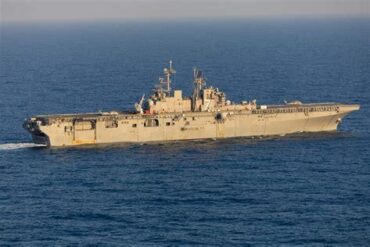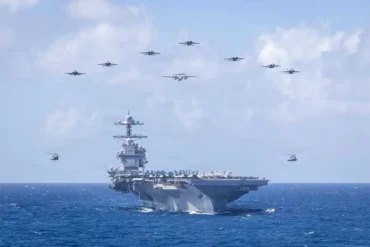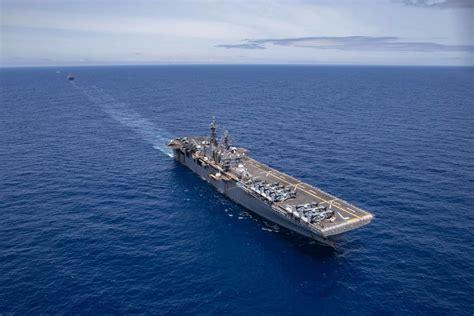
The U.S. Navy’s strategic evolution continues to accelerate as another major warship prepares to join the growing network of vessels capable of deploying the F-35B Lightning II. The amphibious assault ship USS Iwo Jima is now set for a comprehensive upgrade, reflecting a broader shift toward distributed, flexible airpower at sea—a doctrine that prioritizes adaptability over sheer size.
Unlike traditional aircraft carriers, which dominate through scale and capacity, amphibious assault ships like the Iwo Jima represent a more agile approach. Their transformation into F-35B-capable platforms is not just a technical upgrade—it’s a recalibration of how modern naval warfare is conducted, especially in contested and rapidly changing environments.
The contract awarded to BAE Systems, valued at $204.1 million, underscores the scale and seriousness of the effort. Scheduled to begin in 2026 at Norfolk Naval Shipyard, the project is expected to run through early 2028, with potential costs rising to $255 million as additional enhancements are implemented. This investment signals confidence in the long-term operational value of STOVL aircraft integration.
F-35B Integration Demands Advanced Ship Modifications
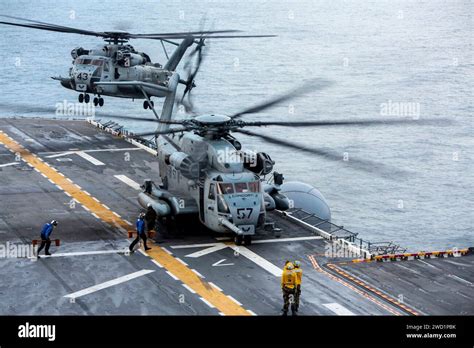
Transforming the USS Iwo Jima into an F-35B-ready warship involves far more than simply clearing deck space. The flight deck itself must be reinforced to withstand the extreme heat and downward thrust generated during vertical landings. Specialized coatings, upgraded landing systems, and heat-resistant materials are essential to prevent structural degradation.
Beyond the deck, the ship’s aviation support infrastructure will undergo extensive modernization. This includes:
- Enhanced maintenance facilities tailored for stealth aircraft
- Upgraded fueling and weapons handling systems
- Advanced communications and data-sharing networks
These improvements ensure the F-35B can operate at full capability, leveraging its stealth profile, sensor fusion, and real-time battlefield awareness. Without such upgrades, the aircraft’s technological advantages would be significantly limited.
Why Amphibious Assault Ships Are Perfect for F-35B Operations
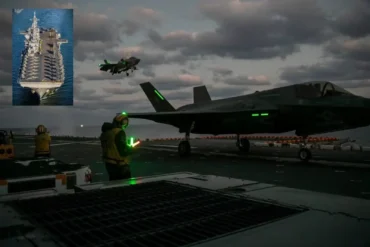
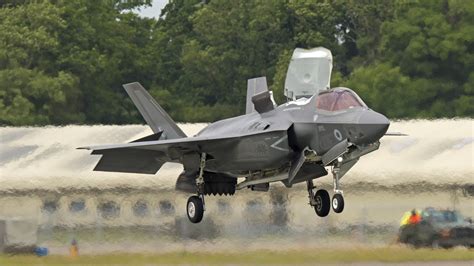
The F-35B variant, developed for the U.S. Marine Corps, is uniquely suited for amphibious assault ships due to its short takeoff and vertical landing (STOVL) capabilities. Unlike conventional jets that require long runways, the F-35B can operate in confined spaces, making it ideal for smaller vessels.
This compatibility transforms ships like the Iwo Jima into mobile airbases, capable of launching advanced fighter missions without reliance on fixed infrastructure. In scenarios where traditional airfields are unavailable or vulnerable, this flexibility becomes a decisive advantage.
Additionally, the F-35B’s cutting-edge sensor suite enables it to act as an intelligence hub in the sky. Data collected during missions can be instantly shared across naval fleets and allied forces, enhancing situational awareness and coordinated response. This capability effectively multiplies the combat power of every asset within the network.
A Growing Fleet of F-35B-Capable Warships
The USS Iwo Jima is not alone in this transformation. Several amphibious assault ships have already undergone similar upgrades, including the USS Essex, USS Boxer, and USS Kearsarge. Meanwhile, the USS Bataan is expected to complete its modifications by the end of 2026.
Some vessels, like the USS America, were designed from the outset with F-35B operations in mind, eliminating the need for extensive retrofitting. This progression illustrates a clear trajectory: the Navy is steadily building a distributed network of F-35 launch platforms, reducing reliance on a handful of large carriers.
This approach enhances survivability. Instead of concentrating airpower in a few high-value targets, the Navy can disperse its capabilities across multiple ships, complicating enemy targeting and increasing operational resilience.
Strategic Impact: Smaller Ships, Smarter Warfare
While aircraft carriers remain unmatched in terms of scale and sustained air operations, they are not always the most efficient solution. Amphibious assault ships provide a leaner, mission-focused alternative, particularly for regional conflicts or precision strike missions.
Historical operations, such as Operation Odyssey Lightning in 2016, demonstrated the effectiveness of this model. The USS Wasp successfully launched targeted strikes against ISIS positions in Libya, showcasing how smaller platforms can deliver high-impact results without the logistical footprint of a carrier strike group.
The upgrade of the USS Iwo Jima reinforces this doctrine. By equipping more ships with F-35B capabilities, the Navy is embracing a future where speed, flexibility, and distributed power projection outweigh traditional notions of dominance through size alone.
In an era defined by rapid technological advancement and unpredictable threats, that shift isn’t just smart—it’s essential.