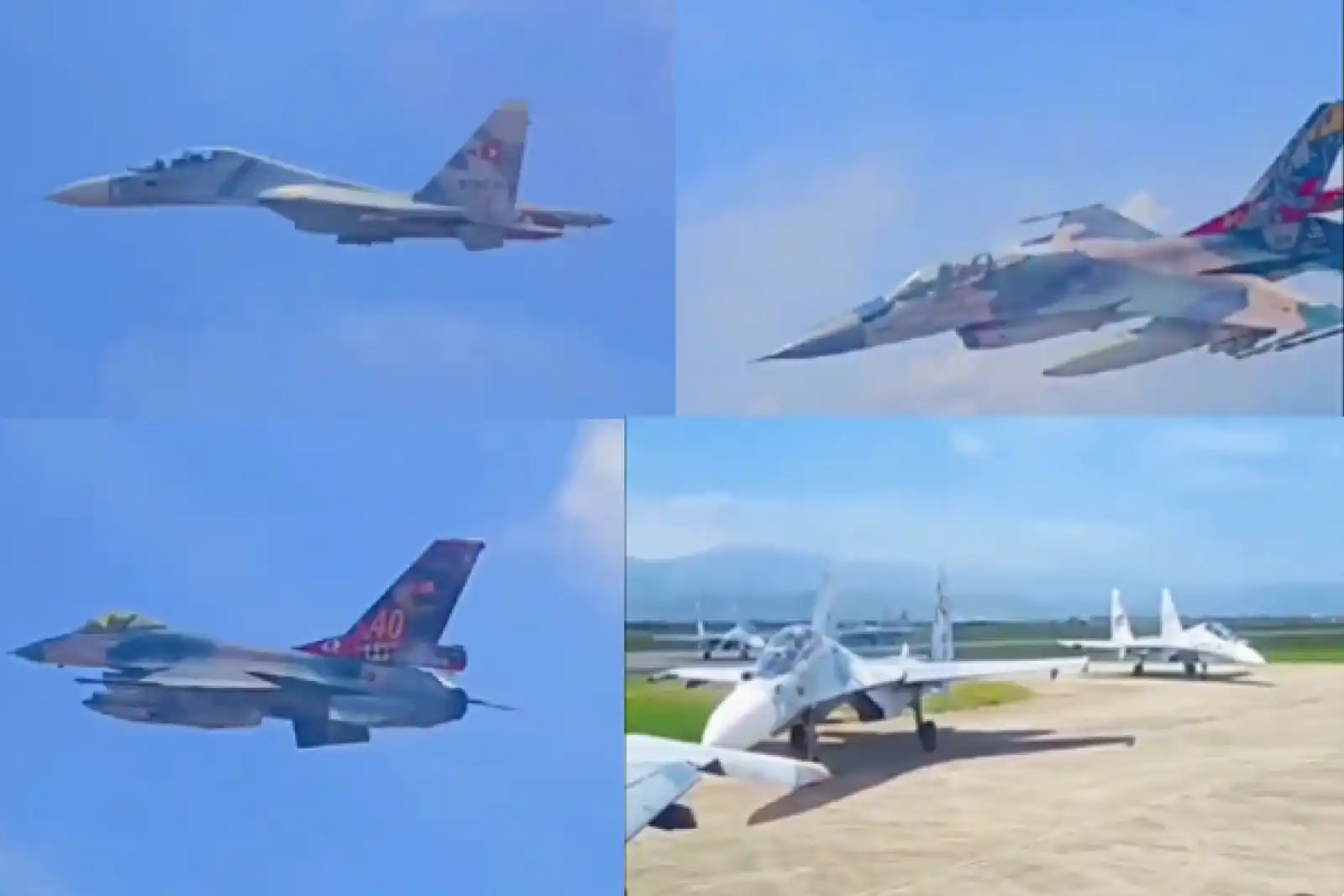
On 14 November 2025, Venezuela released cockpit footage of F-16 Fighting Falcons and Su-30MK2 Flanker multirole fighters conducting coordinated aerial maneuvers, a move clearly timed to coincide with increased U.S. military presence in the Caribbean. Shared through the Venezuelan Air Force’s official social media channels, the footage signals more than a mere exercise—it is a calculated display of capability and intent in the face of external pressure.
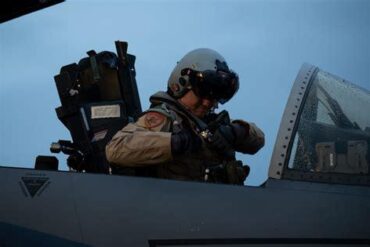
From the outset, the video exudes a raw authenticity. Shot on a pilot’s mobile phone, it offers viewers a first-person glimpse into Venezuelan skies filled with blended formations of American and Russian aircraft, a rare sight even in countries with diverse defense partnerships. The footage captures mid-altitude tactical movements—tight turns, strategic rejoins, and formation changes—indicating a functioning level of operational training and aircraft availability.
This release is part of a broader messaging strategy. On 8 November, similar footage over Maracay showed four F-16s in flight, reinforcing the narrative that Venezuela still possesses a capable fighter wing. The strategic layering of these videos suggests an effort to portray resilience and readiness amid deteriorating geopolitical conditions and decades-long sanctions-induced maintenance hardships.
Legacy and Transformation: The Symbolism of F-16s and Su-30MK2s
The two aircraft types featured are emblematic of Venezuela’s evolving military doctrine. The F-16s, acquired in the 1980s under the U.S.-sponsored “Peace Delta” program, once symbolized Caracas’s strategic alignment with Washington. Over the years, however, U.S. sanctions cut off access to critical support, reducing the fleet’s operability. While only a handful remain mission-capable, their presence in the video speaks volumes—not only as machines of war but also as political symbols of defiance.
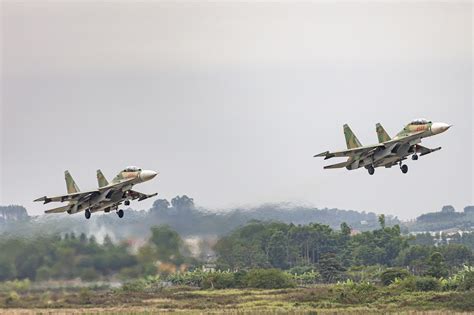
Conversely, the Su-30MK2s reflect a deliberate pivot toward Russia. Acquired in the 2000s following the U.S. blockade on F-16 support, these twin-engine fighters represent a shift in defense posture. The Su-30s boast longer range, higher payload, and the ability to carry sophisticated anti-ship and guided munitions. Open-source data suggests around 21 units remain, though airworthiness is uncertain due to logistical constraints. That multiple Su-30s appear airborne, and in joint operation with F-16s, reinforces Venezuela’s commitment to a “mixed fleet” strategy.
Combat Readiness or Strategic Signaling?
Operationally, this mixed fleet offers flexible mission profiles. The F-16s, despite their age, are suitable for quick reaction alerts, airspace policing, and tactical ground support. Their small radar cross-section and agility at low altitudes make them effective for surprise interceptions or shadowing naval units—like the recent flyby near a U.S. Navy destroyer.
In contrast, the Su-30MK2s deliver Venezuela’s strategic punch. Their endurance and weapons capabilities allow for deep strike missions, long-range patrols, and targeting of U.S. maritime or communications infrastructure. Theoretically, F-16s could screen for Su-30s, complicating U.S. early warning systems and forcing a broader defensive posture.
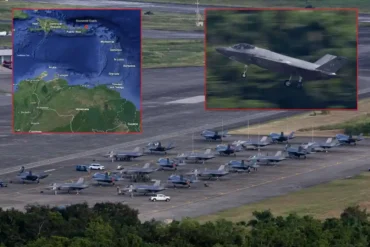
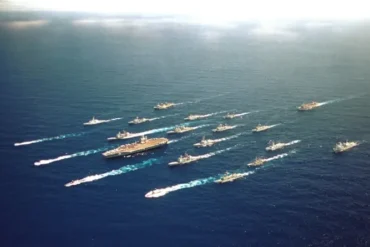
Still, these capabilities exist under a shadow. The U.S. has deployed a carrier strike group, fifth-generation fighters, submarines, and ISR (Intelligence, Surveillance, and Reconnaissance) assets to the region under counter-narcotics and security missions. Any Venezuelan sortie would occur under overwhelming radar, electronic, and kinetic threat. Hence, the true purpose of these drills is not sustained deterrence, but signaling resolve and readiness to act when provoked.
Messaging on Multiple Fronts
The video serves a multi-layered strategic function:
- Domestically, it reinforces the narrative of sovereign strength despite economic malaise.
- Regionally, it signals to Colombia and Caribbean nations that Venezuela retains credible airpower.
- To Washington, it delivers a pointed message: escalation would trigger a response not just from ground forces but from a still-active combat aviation corps.
Notably, the unpolished nature of the footage lends authenticity. This is not a parade reel but a pilot’s-eye view of a functioning operation. While it lacks visible advanced weaponry or complex tactics, its very existence counters the image of a grounded, hollowed-out air force.
Airpower as Political Theater
Beyond military relevance, this footage is a case study in geostrategic communication. Venezuela is leveraging its limited assets to project strength, not just via payload but via perception warfare. As media become a battleground in their own right, short-form airpower videos have evolved into tools of diplomatic leverage and domestic cohesion.
The decision to highlight both American-built F-16s and Russian Su-30s is no coincidence. It reflects a decades-long policy of defense diversification, one now reinforced by growing military-technical cooperation with Moscow. Reports hint at expanded Russian support, ranging from air defense to naval assets, which, if realized, would reshape strategic balances in the region.
Final Analysis: A Message Wrapped in Jet Wash
Ultimately, Venezuela’s video release is more than a show of force—it is a calculated exercise in psychological operations. While it cannot offset U.S. military dominance, it introduces friction, complexity, and risk into any escalation calculus. In doing so, it reasserts Caracas’s position as a regional actor capable of influencing both airspace and narrative space.
For external observers and U.S. planners, the lesson is clear: underestimating a constrained adversary’s ability to shape perception is a strategic misstep. With every frame, Venezuela reminds the world that it has not disappeared—it has adapted, survived, and is still willing to fight for its image and sovereignty in a world where power increasingly resides not just in firepower, but in the stories nations tell with their machines in the sky.