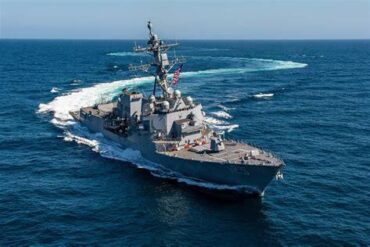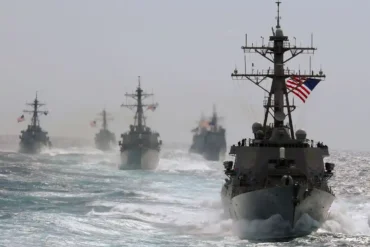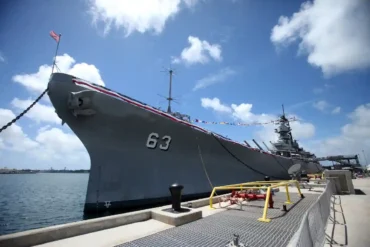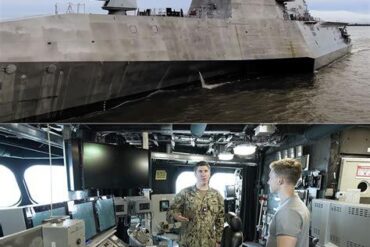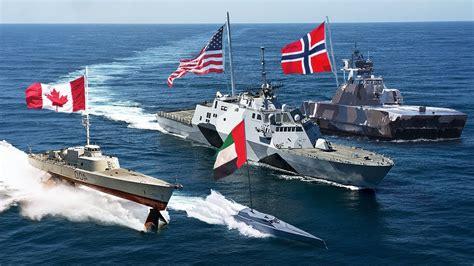
The United States Navy maintains the most advanced fleet in the world, with ships designed for power projection, endurance, and survivability. Yet among these massive carriers, destroyers, and submarines, one question stands out: what is the fastest U.S. Navy ship in service in 2025? The answer is the Freedom-class Littoral Combat Ship (LCS), a warship engineered for high-speed maneuvers in littoral zones — the near-shore regions where naval warfare requires both agility and striking power.
This vessel is not only a technological marvel but also a reflection of the Navy’s push toward modular, flexible, and fast-response combat ships in the 21st century. Unlike traditional warships that focus on heavy armor and massive firepower, the LCS sacrifices some defensive bulk in favor of speed, agility, and mission adaptability.
Freedom-Class LCS: The Fastest US Navy Ship
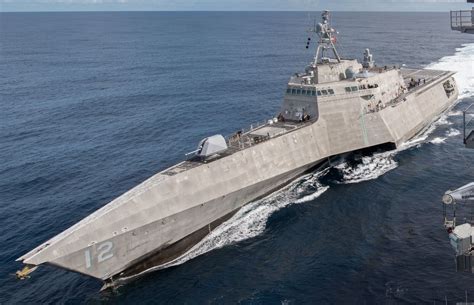
The Freedom-class Littoral Combat Ship, designed by Lockheed Martin, holds the crown as the fastest operational ship in the U.S. Navy today. Officially, the Navy only acknowledges its maximum speed as “40+ knots”, but credible open-source estimates place its true top speed at 47 knots — the equivalent of about 54 miles per hour. For a vessel measuring nearly 400 feet in length and displacing over 3,000 metric tons, such speed is extraordinary.
This performance allows the Freedom-class to rapidly reposition, evade threats, and engage in missions where quick response is critical. In naval warfare, speed translates directly into tactical flexibility — giving commanders the ability to outmaneuver slower adversaries.
Engineering Behind the Speed
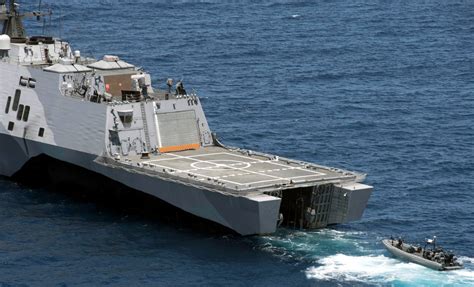
Achieving such speeds in a warship requires innovative engineering. The Freedom-class LCS uses a Combined Diesel and Gas Turbine with Waterjet Propulsion (CODAG WARP) system. This hybrid system includes:
- Two Rolls-Royce MT30 gas turbines generating 48,000 horsepower
- Two Colt-Pielstick diesel engines producing 17,370 horsepower
- Four steerable waterjets that provide high-thrust propulsion and maneuverability
Unlike propeller-driven warships, waterjets allow the LCS to operate in shallow waters while also reducing cavitation, which makes the ship quieter — an advantage in both combat and stealth operations.

Performance and Limitations
While the Freedom-class LCS is the fastest U.S. Navy ship in service, its speed advantage has not come without drawbacks. In 2020, multiple vessels suffered failures in their combining gear — the critical gearbox that links the ship’s engines and waterjets. This led the Navy to temporarily limit their speeds to 34 knots until modifications could be applied.
The USS Detroit (LCS-7) was one of the most affected, withdrawn from operations for extensive maintenance. Investigations confirmed that the entire class shared the same gearbox flaw, forcing a Navy-wide response. By 2023, upgrades had been underway to restore the fleet’s full performance.
Despite these challenges, the Freedom-class continues to serve as the fastest ship available in 2025, fulfilling its mission as a quick-strike vessel.
Independence-Class: The Retired Competitor
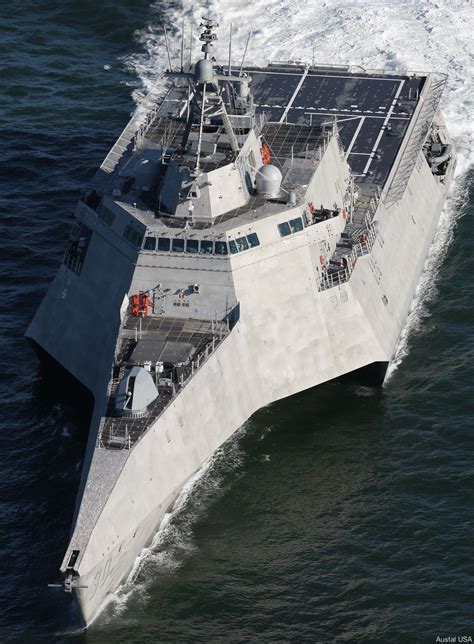
Parallel to the Freedom-class, General Dynamics designed the Independence-class LCS, another high-speed littoral combat ship with a trimaran hull. It too could reach 40+ knots, with similar propulsion systems. The trimaran design provided greater stability and a larger flight deck, but by 2021, the Navy began retiring this class due to budget constraints and evolving priorities.
The USS Independence (LCS-2) was decommissioned in July 2021, marking the decline of this once-promising design. While the Independence-class matched the Freedom-class in speed, only the Freedom-class remains in active U.S. Navy service as of 2025.
A Look at Speed in Historical US Navy Ships
The U.S. Navy has experimented with speed-focused vessels for decades. Notable examples include:
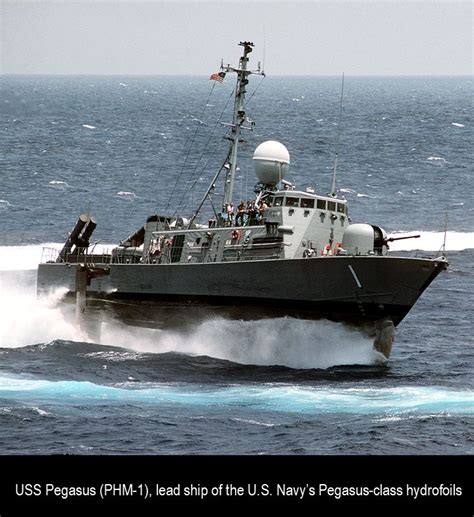
- Pegasus-class hydrofoils (1977–1993): Capable of 48+ knots, these small missile-equipped patrol boats were once among the fastest U.S. combat ships.
- USS Tucumcari (PGH-2): An experimental hydrofoil in service during the Vietnam War, achieving 50 knots.
- PT boats of World War II: While not directly comparable to modern ships, they often exceeded 40 knots, making them formidable in close-range operations.
These historical designs highlight the Navy’s long-standing fascination with speed, though most were experimental or specialized and lacked the versatility needed for modern operations.
International Comparisons
The United States does not hold the absolute record for naval speed. International examples include:
- Canada’s HMCS Bras d’Or (1969): An experimental hydrofoil reaching 63 knots, the fastest warship ever built, though never fully operational.
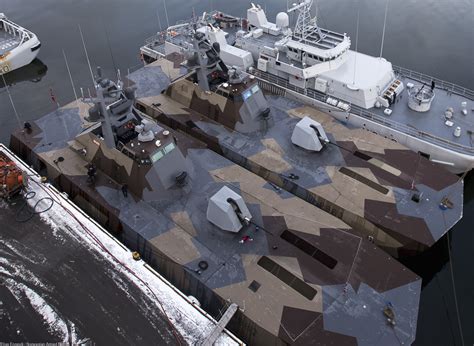
- Norway’s Skjold-class corvette: An air-cushion catamaran design that achieved speeds over 60 knots and earned a place in the Guinness World Records.
While these ships demonstrate what is technically possible, they were either experimental (Canada) or limited in deployment (Norway). The Freedom-class remains the fastest actively deployed U.S. Navy ship in 2025, balancing speed with combat capability.
Why Speed Matters in Modern Naval Warfare
In the 21st century, speed is more than just a performance statistic. It provides:
- Rapid force projection: The ability to quickly deploy where threats arise.
- Evasion capability: Outrunning missile boats or submarines in coastal waters.
- Flexibility in littoral operations: Operating effectively in shallow, near-shore combat zones.
- Support for modular missions: The LCS can swap mission packages for anti-submarine warfare, surface combat, or mine countermeasures, and speed ensures quick repositioning.
The LCS reflects the Navy’s recognition that future conflicts may not always be deep-ocean battles but fast, near-shore engagements requiring agile, high-speed ships.
Fastest U.S. Navy Ships (Past and Present)
| Ship/Class | Type | Speed (Knots) | Service Status (2025) | Notes |
|---|---|---|---|---|
| Freedom-class LCS | Littoral Combat Ship | 47 (est.) | Active | Fastest U.S. Navy ship in service |
| Independence-class LCS | Littoral Combat Ship | 40+ | Retired (2021) | Trimaran design |
| Pegasus-class Hydrofoil | Missile Patrol Boat | 48+ | Retired (1993) | Small, fast attack craft |
| USS Tucumcari (PGH-2) | Experimental Hydrofoil | 50+ | Retired (1970s) | Vietnam War deployment |
| PT Boats (WWII) | Patrol Torpedo Boat | 40–45 | Retired | Light, fast WWII craft |
Conclusion
As of 2025, the title of fastest U.S. Navy ship in service belongs to the Freedom-class Littoral Combat Ship, capable of 47 knots under optimal conditions. Despite its mechanical challenges, it represents the Navy’s commitment to high-speed, modular, and agile warfighting capability in littoral zones. While other nations have built faster experimental ships, the Freedom-class stands as the fastest operational warship in the United States fleet today.
Frequently Asked Questions
What is the fastest US Navy ship in service in 2025?
The Freedom-class Littoral Combat Ship (LCS) is the fastest active U.S. Navy ship in 2025, with an estimated top speed of 47 knots (54 mph).
Has the U.S. Navy ever built ships faster than the Freedom-class?
Yes, experimental vessels like the Pegasus-class hydrofoils and the USS Tucumcari achieved speeds above 48 knots, but these ships were retired and are no longer in service.
Which country has the fastest naval ship ever built?
Canada holds the record with the HMCS Bras d’Or, a hydrofoil that reached 63 knots in 1969. However, it never entered full operational service.