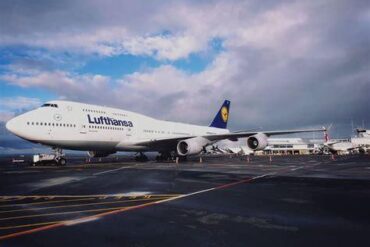
For more than half a century, the Boeing 747 stood as the undisputed symbol of global air travel. Its upper-deck hump, four-engine silhouette, and immense size transformed commercial aviation from an exclusive luxury into a mass-market experience capable of moving hundreds of passengers across oceans in a single flight. The aircraft carried heads of state, transported millions of vacationers, and became one of the most recognizable machines ever built. Yet even legends eventually face retirement.
When airlines began phasing out their Boeing 747 fleets in favor of more fuel-efficient twin-engine aircraft like the Boeing 777 and Airbus A350, many travelers assumed the iconic jumbo jet was disappearing forever. In reality, retirement from passenger service is only the beginning of a surprisingly complex second life. Some aircraft continue flying cargo across continents for decades. Others sit quietly in desert storage facilities waiting for uncertain futures. Many are dismantled piece by piece in a global recycling chain worth millions of dollars. A select few are reborn as museums, restaurants, hotels, or even office buildings.
The story of a retired Boeing 747 is rarely simple. Every airframe follows a different path shaped by economics, engineering, maintenance history, and market demand. Long after carrying its final passengers, the Queen of the Skies often continues serving the aviation industry in ways most travelers never see.
By the mid-2020s, the number of active passenger 747s had fallen dramatically, but the aircraft itself remained deeply embedded in global logistics and aerospace operations. The retirement process reveals not only how airlines manage aging fleets, but also how remarkably adaptable the 747 has proven to be since entering service in 1970.
The End Of Passenger Operations Does Not Mean The Aircraft Is Finished
When a commercial airline retires a Boeing 747, the aircraft does not immediately head to a scrapyard. In most cases, airlines spend months evaluating the jet’s remaining value before deciding what happens next. Engineers inspect structural fatigue, maintenance records, engine condition, and modification potential. A relatively young and well-maintained 747-400 may still possess enormous economic value despite leaving passenger service.
The reason is simple: the aircraft itself remains exceptionally capable. While modern twin-engine aircraft outperform the 747 in fuel efficiency for passenger operations, the jumbo jet still excels in several specialized areas that newer designs cannot fully replace. Its enormous internal volume, long-range capability, and nose-loading cargo configuration give it a niche that remains highly valuable in freight and oversized cargo transportation.
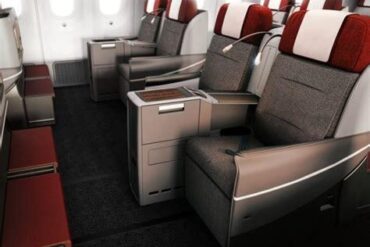
Many retired aircraft are purchased by leasing companies, cargo operators, or aftermarket aviation firms almost immediately after leaving airline fleets. In some cases, passenger interiors are stripped within weeks of retirement. Thousands of seats, overhead bins, galley systems, lavatories, and entertainment units are removed before the aircraft moves to its next role.
What surprises many aviation enthusiasts is how carefully planned these retirements often are. Airlines do not simply abandon aircraft. Every component on a Boeing 747 represents potential revenue, and even aging airframes can generate millions of dollars through resale, reuse, or recycling.
Why The Boeing 747 Became One Of The World’s Most Valuable Cargo Aircraft
The most common second life for a retired Boeing 747 is cargo conversion. This transformation has allowed the aircraft to remain commercially relevant decades after many expected it to disappear from the skies.
The defining feature behind the 747’s success as a freighter is its nose-loading door system. Boeing originally designed the cockpit above the main deck so the aircraft could theoretically function as a freighter if passenger demand declined during the early jet age. That decision proved remarkably forward-thinking. The upward-hinged nose section allows oversized cargo to slide directly into the aircraft without the dimensional restrictions imposed by standard side cargo doors.
That capability remains extremely valuable in modern logistics. Industries transporting turbine blades, aircraft engines, satellites, military equipment, industrial machinery, and oil-field infrastructure often rely on nose-loading freighters because many cargo items simply cannot fit through traditional aircraft doors.
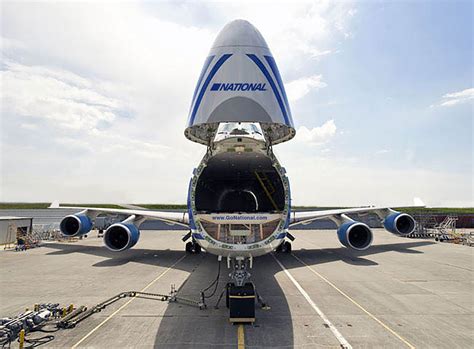
The conversion process itself is extensive. Passenger windows are sealed, the cabin floor is reinforced to support massive cargo weights, fire suppression systems are upgraded, and large cargo handling rollers are installed throughout the main deck. The resulting aircraft can carry enormous payloads across intercontinental distances while operating profitably in markets where passenger demand would no longer justify the aircraft’s fuel consumption.
Major cargo operators including Atlas Air, Cargolux, and UPS Airlines continue operating large fleets of Boeing 747 freighters well into the 2020s. Many of those aircraft previously served as passenger jets for airlines across Asia, Europe, and North America before conversion extended their working lives by another two decades.
The economics behind these conversions are compelling. A fully depreciated passenger aircraft converted into a freighter can generate substantial revenue at a fraction of the acquisition cost of a brand-new cargo aircraft. For cargo carriers, the 747 remains one of the few aircraft capable of balancing high payload volume with true long-haul capability.
Inside The Aircraft Boneyards Of The Mojave Desert
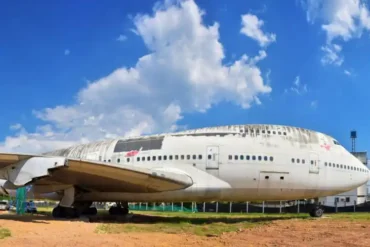
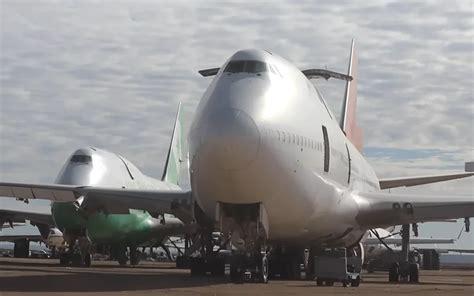
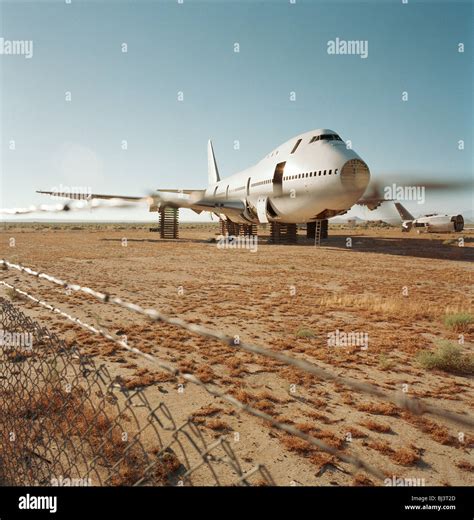
Not every retired Boeing 747 immediately finds a second career. Many aircraft are flown to desert storage facilities in the American Southwest, where dry climates dramatically slow corrosion and structural deterioration.
Facilities such as Mojave Air and Space Port and Southern California Logistics Airport have become famous for their vast rows of parked airliners stretching across the desert landscape. These aircraft graveyards are not chaotic scrapyards filled with abandoned jets. They function more like carefully managed storage and preservation centers.
Aircraft arriving in storage undergo extensive preparation procedures. Fuel systems are stabilized, engines are sealed against dust contamination, hydraulic systems are protected, and sensitive avionics are preserved against environmental damage. In “flyable storage” conditions, aircraft remain technically capable of returning to service if economic conditions improve.
During the COVID-19 pandemic, hundreds of widebody aircraft flooded into desert facilities as global travel collapsed. Airlines parked Boeing 747s in large numbers, uncertain whether international demand would recover quickly enough to justify permanent retirement decisions. Some aircraft eventually returned to limited operations, while others never flew passengers again.
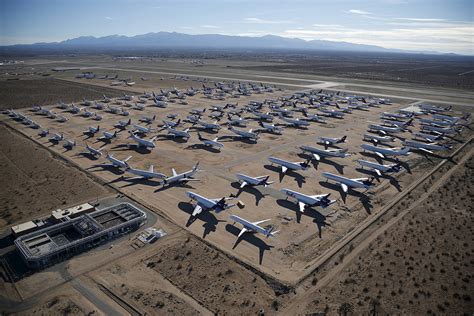
The desert environment plays a critical role in preserving these airframes. Low humidity prevents the aggressive corrosion that would rapidly damage aircraft parked in wetter coastal climates. Without these dry storage conditions, maintaining retired aircraft for possible future use would become vastly more expensive.
Still, the longer a 747 remains parked, the less likely it is to return to service. Reactivating a long-stored aircraft requires major inspections, system overhauls, engine maintenance, and regulatory certification checks. Eventually, the cost of restoration exceeds the aircraft’s market value, and dismantling becomes the only financially rational outcome.
The Multi-Million-Dollar Business Of Aircraft Dismantling
When a Boeing 747 reaches the true end of its operational life, dismantling begins. Yet the term “scrapping” fails to capture how sophisticated and valuable this process actually is.
Modern aircraft recycling is an enormous global industry involving airlines, leasing companies, maintenance firms, parts brokers, metal recyclers, and logistics specialists. Up to 85 percent of a Boeing 747 can be recovered, reused, or recycled in some form.
The most valuable components are removed first. Engines alone can be worth millions of dollars depending on their maintenance condition and remaining certified service life. Landing gear assemblies, avionics computers, navigation systems, auxiliary power units, and hydraulic components are carefully extracted and inspected before entering secondary aviation markets.
Airlines operating aging fleets frequently purchase used serviceable materials because they cost significantly less than newly manufactured replacement parts. For carriers still flying older 747 variants, salvaged components provide a crucial supply chain that helps keep aircraft economically viable.
Even cabin interiors possess surprising value. Seats, galleys, overhead compartments, cockpit instruments, and lighting systems are routinely sold to aviation training centers, museums, collectors, and refurbishment companies.
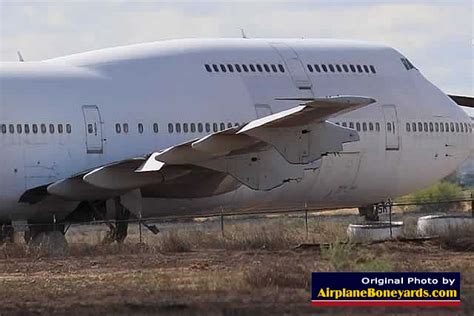
Once valuable systems are removed, dismantling crews begin cutting apart the airframe itself. The Boeing 747 contains large quantities of high-grade aluminum alloys, titanium, copper wiring, and composite materials that can be melted down or processed into new industrial products.
Sections of fuselage often become raw material for entirely different industries. Recycled aircraft aluminum may eventually appear in automobiles, electronics, construction materials, or even consumer goods. What once crossed oceans at 35,000 feet can quietly reenter the industrial economy in completely different forms.
The dismantling process also reflects the astonishing engineering lifespan of the 747. Many aircraft entering recycling facilities have already logged more than 100,000 flight hours and carried millions of passengers during decades of global operations before yielding valuable components for continued reuse.
How Retired Boeing 747s Become Museums, Hotels, And Office Buildings
A small number of Boeing 747s escape dismantling entirely through preservation and creative reuse projects. These aircraft become physical monuments to the golden age of long-haul aviation.
Museums around the world have preserved retired jumbo jets as historical exhibits, allowing visitors to walk through aircraft that once defined international travel. Aviation museums recognize the 747 as one of the most culturally significant aircraft ever produced, comparable to the Concorde or Douglas DC-3 in historical importance.
But some retired aircraft have entered even stranger second lives.
One of the most remarkable projects emerged in downtown Seattle, where developers integrated a retired United Airlines Boeing 747-400 fuselage into a commercial office complex. Engineers cut the aircraft into dozens of transportable sections before reconstructing it within the building structure itself. Suspended above a pedestrian space, the fuselage became functional office space rather than static decoration.
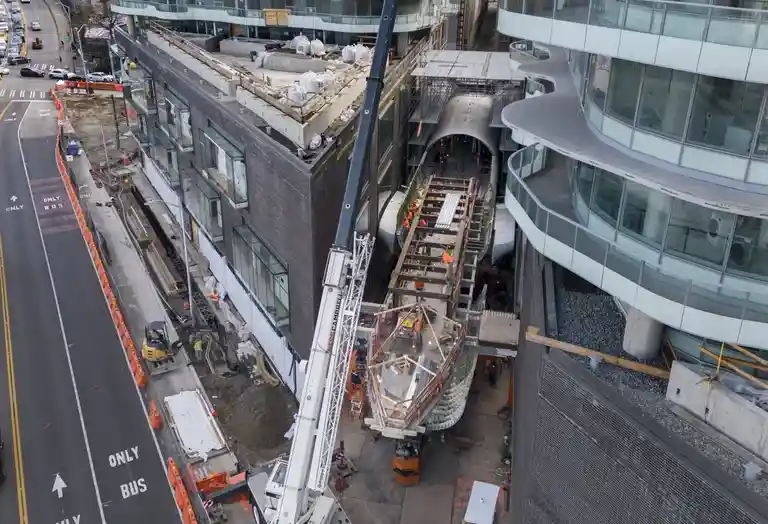
The engineering required for such projects is extraordinary. Aircraft fuselages are designed for pressurized flight loads, not stationary architectural use. Structural modifications, reinforcement systems, and transportation logistics all become immensely complicated when repurposing a jumbo jet into a permanent building feature.
Another famous example involved a retired Trans World Airlines Boeing 747 whose wing structures became part of a private residence in California. The aircraft’s enormous wings created architectural forms impossible to replicate through conventional residential construction.
Hotels, restaurants, training facilities, and entertainment venues have also experimented with retired aircraft reuse. The visual identity of the Boeing 747 remains powerful enough that even grounded airframes continue attracting public fascination decades after their operational retirement.
Specialized Government And Aerospace Roles Keep Some 747s Flying
Even after commercial retirement, several Boeing 747s continue operating in specialized government and aerospace missions where their unique characteristics remain unmatched.
Engine manufacturers frequently use modified 747s as flying testbeds for experimental propulsion systems. The aircraft’s four-engine layout provides a major safety advantage because engineers can mount a fifth experimental engine while relying on the remaining standard engines for normal flight operations.
Companies such as GE Aerospace have long relied on Boeing 747 platforms to test next-generation jet engines under real atmospheric conditions before certification.
Certain governments also continue using 747s for VIP transport and strategic logistics. The aircraft’s enormous cabin space and intercontinental range make it highly suitable for head-of-state transport missions, military charter operations, and humanitarian relief flights requiring large payload capacity.
These specialized missions demonstrate something important about the Boeing 747’s legacy. While passenger airlines largely moved toward more fuel-efficient twinjets, the 747 still performs tasks that relatively few aircraft can replicate effectively. Its immense size, structural strength, and operational flexibility continue giving the platform relevance long after its dominance in commercial passenger aviation faded.
The Boeing 747’s Legacy Continues Long After Retirement
The retirement of the Boeing 747 from passenger service marked the end of one of aviation’s most influential eras, but it did not mark the disappearance of the aircraft itself. Across cargo terminals, desert storage facilities, recycling centers, museums, and engineering projects, the jumbo jet continues evolving into new forms long after carrying its final airline passengers.
Few machines in modern history have demonstrated such adaptability. A retired 747 may become a freighter hauling industrial cargo across continents, a source of vital spare parts supporting active fleets, a museum exhibit preserving aviation history, or an architectural centerpiece suspended inside a skyscraper.
For an aircraft introduced in 1970, that continued relevance speaks volumes about the original design. The Boeing 747 was never simply another airliner. It was an engineering platform so ambitious and versatile that even retirement became only another transition rather than a final destination.
Long after disappearing from most passenger terminals, the Queen of the Skies still refuses to completely leave the world stage.