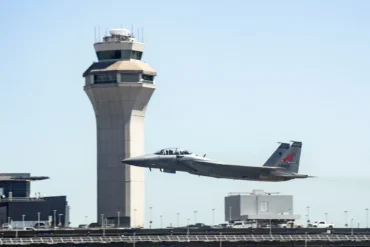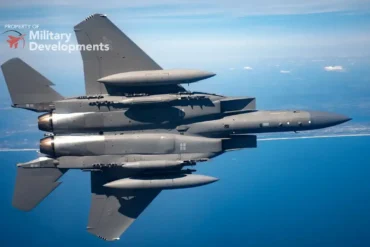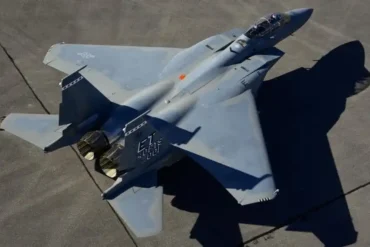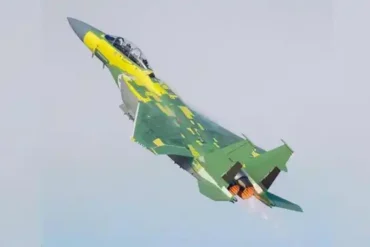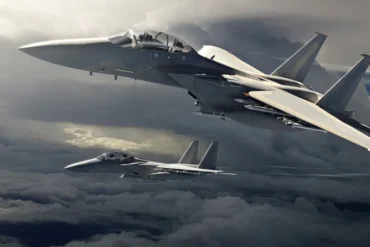
The F-15EX Eagle II, Boeing’s advanced 4.5-generation multirole fighter, was introduced as a rapid solution to aging legacy airframes and missile-defense shortfalls. Despite boasting cutting-edge avionics, powerful payload capacity, and significant export potential, its delivery remains frustratingly limited. Although the F-15QA variant—its near twin—has been delivered in numbers to Qatar, the U.S. Air Force (USAF) has shown little appetite for large-scale procurement. The reasons behind this are deeply entwined in defense politics, budgetary priorities, shifting strategic doctrines, and internal procurement inefficiencies.
USAF Never Wanted the F-15EX in the First Place
The central reason for the limited delivery of the F-15EX lies in the USAF’s fundamental disinterest in acquiring it. Unlike most modern military platforms, the F-15EX was not the product of a detailed acquisition plan. The USAF never issued a requirement or Request for Proposal (RFP) for the EX. Rather, Boeing directly pitched the aircraft to the Air National Guard (ANG) as a stopgap replacement for aging F-15Cs whose airframes were nearing structural limits.
This pitch succeeded largely due to urgent need and political opportunity. With the F-35 program delayed, and advanced platforms like the F-22 Raptor and NGAD (Next Generation Air Dominance) either capped or still in development, the ANG faced the risk of losing its flying missions. Boeing seized the moment. Leveraging congressional lobbying and connections—particularly with Patrick Shanahan, a former Boeing executive who was then Acting Secretary of Defense—the EX program was inserted into the FY2020 defense budget despite not being part of the USAF’s original plan.
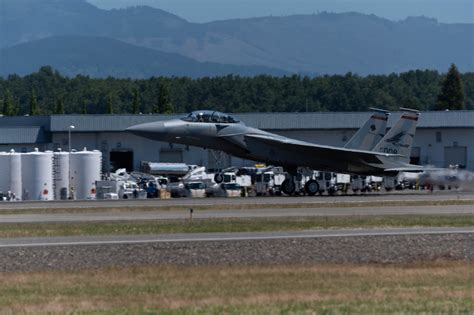
The Air National Guard’s Fighter—Not the Air Force’s
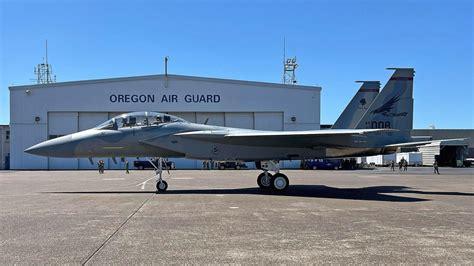
The F-15EX is primarily a Guard acquisition, not a broader USAF fleet solution. This guard-only status inherently limits its procurement scope. The platform is designed to fulfill homeland defense missions such as air sovereignty and air base protection, rather than high-end, peer-conflict operations.
That said, the EX is no slouch. It carries up to twelve AIM-120 AMRAAMs, providing exceptional magazine depth for air-to-air defense. In scenarios involving massive drone swarms or cruise missile attacks, such as the downing of 80+ Iranian drones and six cruise missiles by U.S. and coalition fighters, the EX’s capacity and endurance would offer critical value. But logistics constrain such theoretical power: forward-deployed AMRAAM stockpiles are limited, and restocking high-end munitions in conflict zones is expensive and difficult.
A Workhorse in Need of More Tools: The APKWS Proposal
To mitigate the AMRAAM dependency and enhance battlefield flexibility, experts have proposed integrating APKWS (Advanced Precision Kill Weapon System) rocket pods on the F-15EX. By mounting eight to twelve pods on underwing pylons and combining them with standard AMRAAMs, each EX could potentially field 56 to 84 laser-guided rockets per sortie.
This configuration would be ideal for counter-drone and cruise missile defense, offering cheaper, scalable firepower for saturation threats. Unlike high-end AAMs, APKWS rounds are far more cost-effective, allowing broader usage without depleting critical missile stocks. The Viper (F-16) has already demonstrated operational APKWS loadouts—there is little reason the larger and more powerful EX couldn’t follow suit.
Built on Export Lessons: The Evolution from E to EX
The F-15EX is the culmination of a design path that began with the F-15E Strike Eagle and evolved through foreign-funded upgrades:
- F-15E → F-15SA (Saudi Arabia, 2013)
- F-15SA → F-15QA (Qatar, 2017)
- F-15QA → F-15EX (US ANG, 2019)
This lineage mirrors the F-16’s export trajectory. In both cases, foreign partners paid for the development of advanced variants, which the U.S. later adopted in modified forms. The F-15QA and F-15EX differ mostly in mission software and warning systems, with the EX sporting a more modern AN/APG-82V1 radar, anti-jamming systems, LADs, and an upgraded mission computer.
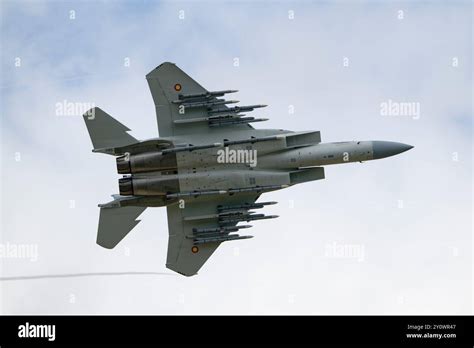
Saudi Arabia’s F-15SAs are expected to be upgraded to EX standards, further cementing the export-driven foundation of the aircraft’s development.
The F-35, NGAD, and the Pentagon’s Eyes on the Future
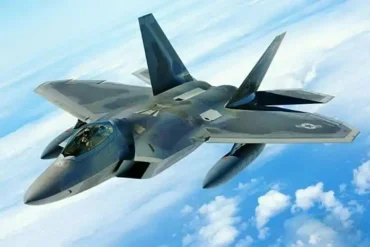
Despite the EX’s potential, the USAF remains focused on its strategic priorities: scaling F-35 acquisition, maintaining and upgrading the F-22, and accelerating the NGAD (also dubbed the F-47). In this future-oriented context, large investments in another 4.5-generation fighter seem like a step sideways, if not backward.
Furthermore, the USAF already fields a substantial fourth-generation inventory. F-15Es, F-16s, and F/A-18s still populate the force in large numbers and can fulfill most roles the EX would. From a strategic point of view, replacing legacy airframes only when absolutely necessary is the more sustainable approach.
When it comes to foreign customers, the F-15EX has been positioned as a second-best option to the F-35. Countries like Saudi Arabia, Egypt, Thailand, and Indonesia expressed F-35 interest but were either denied by the U.S. State Department (due to QME laws or Chinese military ties) or decided not to proceed. Boeing offered the EX as an alternative. Confirmed foreign buyers include:
- Qatar (F-15QA)
- Israel (F-15IA)
- Indonesia (MOU for F-15ID)
- Egypt (interest likely stalled due to regional instability)
In contrast, Poland and Germany were offered both the F-15EX and F-35. Both chose the F-35.
Boeing’s Production Bottlenecks and Certification Delays
Even if the political and strategic roadblocks didn’t exist, Boeing’s own production constraints would still hinder mass deliveries. Like other Boeing defense programs, the F-15EX has suffered from:
- Subcontractor quality issues, with components failing to meet standards
- Supply chain cost-cutting, which reduced resilience and reliability
- Delays in USAF certification, as the service conducts its own rigorous testing
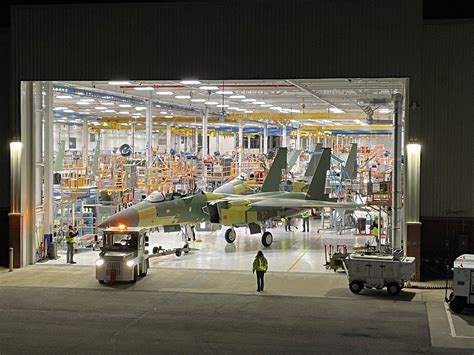
At present, only ~24 aircraft have been ordered out of an initial 80 planned. Boeing is maintaining a low-rate production line, deliberately avoiding acceleration until more contracts are confirmed. Scaling production without guarantees would risk creating unsold airframes and unviable inventory buildup.
The Strategic Dilemma: Is the F-15EX Already Obsolete?
From a military doctrine standpoint, the relevance of the F-15EX is debated. While it’s a potent airframe with 4.5-generation capabilities, critics argue its window of utility is shrinking fast. The next-generation air combat environment—shaped by stealth, autonomy, and advanced networking—demands more than legacy-derived platforms.
Both of the U.S.’s major geopolitical adversaries, China and Russia, are fielding serial production fifth-generation fighters, and China has two different sixth-generation programs already prototyping. In this context, spending billions on a non-stealth platform seems increasingly misaligned with future threat environments.
Additionally, F-35s are cheaper than many believe, especially when economies of scale kick in. In lower-intensity missions, cheaper legacy aircraft and drones are often preferable. With F-47 development looming, defense dollars are spread thin—and the EX is not a priority.
Conclusion: A Jet Without a Home
The F-15EX is a powerful, capable fighter trapped in procurement limbo. It was born of expediency, not long-term strategy; pitched, not requested. While technically formidable, its guard-only role, lack of USAF buy-in, foreign buyer hesitation, and Boeing’s production issues all combine to cap its reach.
Unless geopolitical or industrial shifts reopen the door for wider adoption, the F-15EX is likely to remain a niche solution, valued for specific homeland defense roles but sidelined from the front lines of next-generation air warfare.