Private aviation represents the pinnacle of convenience, speed, and luxury, but there’s a glaring absence in this space: supersonic private jets. In a world where billionaires routinely crisscross continents and time is money, it seems intuitive that a faster-than-sound option would dominate the ultra-elite skies. Yet, decades after the Concorde’s retirement, no viable supersonic business jet exists. The answer lies at the intersection of physics, regulation, economics, infrastructure, and technology.
Supersonic Flight and the Concorde Legacy
The Concorde was the poster child of supersonic civilian travel, capable of cruising at Mach 2.04 and slashing transatlantic travel times in half. However, it came with enormous baggage—extreme fuel consumption, deafening noise levels, and cost-prohibitive maintenance. These factors, while somewhat manageable at a large airline scale, are untenable in the realm of private aviation.
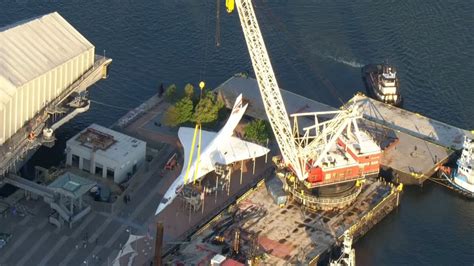
The Concorde’s legacy remains a double-edged sword: proof that supersonic flight is possible, but also a case study in why it’s not economically sustainable under traditional aviation business models. Most notably, it revealed how noise pollution, especially from sonic booms and afterburners required during takeoff, would quickly trigger public backlash and regulatory resistance.
Noise Regulations and Airport Access Restrictions
Supersonic jets, by their very nature, are noisy. The boom created when breaking the sound barrier can travel dozens of miles, often sounding like an explosion or thunderclap. This makes flying at supersonic speeds over land almost universally banned, especially in North America and Europe.
Even if one were to design a private jet that mostly flies over oceans, there’s still the matter of landing and takeoff noise. Many private jets are prized for their ability to operate from smaller airports, close to city centers or secluded retreats. Supersonic aircraft, however, require longer runways, more robust infrastructure, and generate significantly more noise on takeoff and landing, often necessitating afterburners—another red flag for airport compatibility.
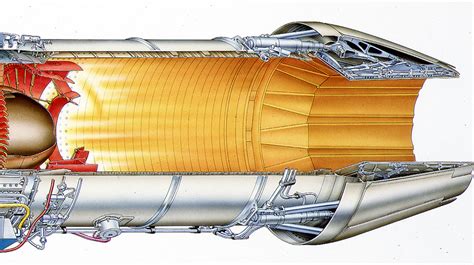
This limitation eliminates the core advantage of private aviation: point-to-point convenience. If a supersonic jet must operate only out of major international airports, users may end up combining multiple flights—one supersonic and one subsonic—to reach their destination. This defeats the purpose entirely.
Fuel Efficiency, Range, and Engineering Constraints
One of the largest hurdles in developing supersonic private jets is the inefficiency of high-speed flight. Traveling at Mach 1.5 to Mach 2 burns significantly more fuel than subsonic cruising. At these speeds, drag increases exponentially, requiring specialized engines and materials to withstand heat and pressure, driving up both development and operational costs.
Unlike commercial jets, private aircraft generally cater to shorter routes and lower passenger counts. This introduces a serious engineering trade-off: either limit the supersonic range or drastically increase the aircraft’s fuel capacity, which in turn adds weight and reduces payload flexibility.
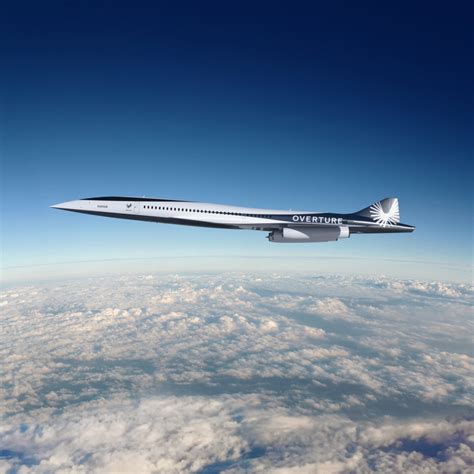
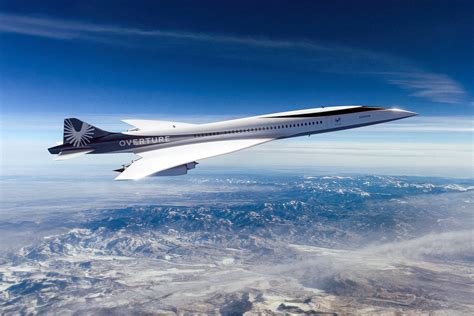
Even optimistic designs like Boom Supersonic’s “Overture” or the now-defunct Aerion AS2 struggled with this balance. Aerion’s concept, which promised Mach 1.4 speeds and 5,000 nautical miles range, folded in 2021, unable to secure enough investment to overcome the engineering and regulatory gauntlet.

Extreme Operating Costs and Low ROI
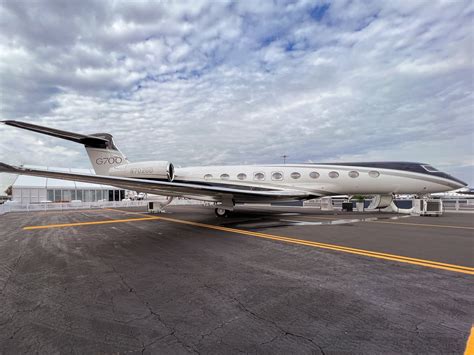
A traditional Gulfstream G700 costs approximately $75 million and offers ultra-long-range comfort with predictable maintenance and fuel costs. A comparable supersonic aircraft would likely exceed $150–$200 million, even before factoring in higher operating costs per hour, possibly 4x or more than existing subsonic jets.
Moreover, private jets often spend long periods on standby, ready for instant deployment but flying relatively few hours annually. That underutilization magnifies the financial impracticality of a supersonic variant, especially when those costs can’t be amortized over many high-yield routes like in commercial aviation.
Even among ultra-high-net-worth individuals, the appeal of spending hundreds of millions for a jet that can only save a couple hours on specific routes quickly fades under financial scrutiny.
Loss of the Private Jet’s Key Advantage
Perhaps the most damning issue is that supersonic aircraft inherently contradict the main advantage of private jets: flexibility. The very premise of business jets is that they can operate from smaller airports, land closer to final destinations, and avoid the time-consuming dance of international terminals and long customs lines.
Supersonic aircraft sacrifice this agility for speed. Without the ability to land at most regional airports due to runway length, noise restrictions, or insufficient infrastructure, a supersonic private jet would often force its owner to connect via another aircraft or ground transportation, completely eroding time savings.
Stalled Innovation and Corporate Retreats
The dream of a supersonic private jet has seen various attempts, most notably:
- Aerion Supersonic, backed at one time by Boeing and GE, folded in 2021 after failing to raise sufficient capital.
- Boom Supersonic, initially partnered with Rolls-Royce, has pivoted from private to commercial ambitions with its Overture project.
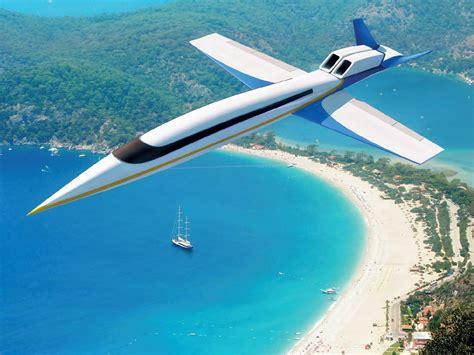
- Spike Aerospace, which proposed the S-512 supersonic business jet, remains largely conceptual.
The engineering, regulatory, and economic barriers have caused many major aerospace firms to quietly retreat from the segment, opting to focus on long-range subsonic luxury, which still sees increasing demand.
Market Size and Diminishing Returns
Ultimately, the market just isn’t big enough. Private jet demand is driven not just by wealth but practical usage frequency, and the number of individuals flying intercontinental routes regularly enough to justify the cost of a supersonic jet is vanishingly small.
Additionally, the rise of real-time videoconferencing—accelerated by global digitalization—has reduced the frequency of urgent business travel, undermining one of the few compelling use-cases for supersonic speed: closing high-stakes international deals in person.
A supersonic private jet would represent an incredibly narrow niche within a niche. And in an industry where certification costs billions, manufacturers are unlikely to chase such a sliver of a market—especially when subsonic offerings already deliver unparalleled convenience and comfort.
The Regulatory Web: A Patchwork of Prohibitions
Current FAA and ICAO regulations heavily restrict supersonic flight over land due to noise. Certification processes for new airframes—especially those involving high-performance supersonic travel—are lengthy, costly, and politically fraught. No manufacturer can risk billions in R&D only to be stuck in an endless regulatory spiral.
The lack of international standardization further complicates things. An aircraft certified for supersonic flight in one country may not be allowed to fly at speed in another. Without a coordinated global framework, such jets face severe operational limitations even before considering airport access.
Hope for the Future? Still on the Horizon
While no viable supersonic private jet exists today, that doesn’t mean the dream is entirely dead. Agencies like NASA are working on low-boom technology, such as the X-59 Quesst, which could eventually allow quiet supersonic travel over land. If successful, these innovations might pave the way for civilian and private SSTs with broader route access.
Meanwhile, startups like Hermeus are exploring hybrid propulsion systems aimed at Mach 5+ performance, potentially redefining what’s possible. However, such aircraft remain years—if not decades—from commercial readiness.
Conclusion: A Supersonic Dream Grounded by Reality
Despite significant technological progress and growing wealth at the top end of society, no supersonic private jets exist today for a reason: they violate the economic and operational logic of private aviation. Their design limitations undermine core advantages like flexibility, discretion, and airport access. With high noise levels, inefficient fuel use, and minimal demand, the return on investment simply doesn’t justify the effort—for either buyers or builders.
Until the regulatory environment evolves and quiet supersonic technology matures, the next era of elite flight will continue to play out at subsonic speeds—comfortably, efficiently, and privately.